
 listicle
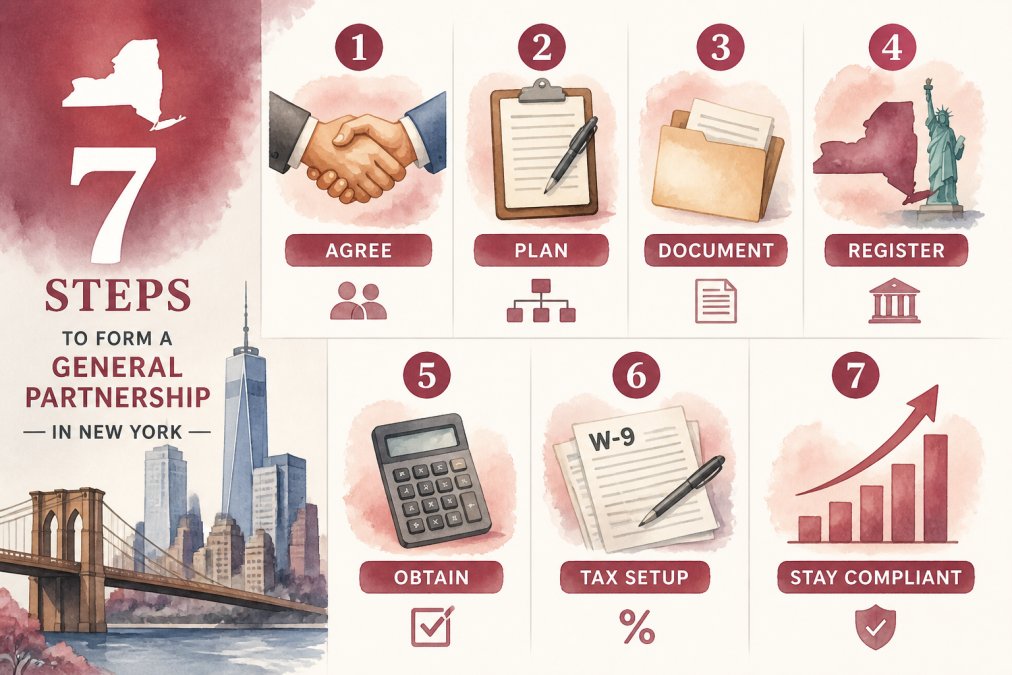
7 Steps to Form a General Partnership in New York
Table of Contents
- Step 1: Choose Your Partners Carefully
- Step 2: Develop a Written Partnership Agreement
- Step 3: Obtain an Employer Identification Number (EIN)
- Step 4: Register Your Partnership with New York State
- Step 5: Obtain Required Business Licenses and Permits
- Step 6: Open a Business Bank Account
- Step 7: Set Up Accounting and Tax Compliance Systems
- Pros and Cons of General Partnership vs LLC
- Next Steps: Get Professional Guidance
- Frequently Asked Questions
Last Updated: September 19, 2026
Understanding the 7 steps to form a general partnership in New York ensures proper structure and compliance.
Step 1: Choose Your Partners Carefully
Select partners who share your vision and discuss financial contributions, profit-sharing, and decision-making authority upfront.
Step 2: Develop a Written Partnership Agreement
A partnership agreement should address capital contributions, profit/loss distribution, management roles, dispute resolution, and dissolution terms. Resources like Nolo's partnership agreement templates and ZenBusiness partnership formation guides can help, and consider having an attorney review it before signing.
Step 3: Obtain an Employer Identification Number (EIN)
An EIN is required to open a business bank account and file partnership tax returns. Apply online through the IRS website at no cost; you'll receive your number immediately.
Step 4: Register Your Partnership with New York State
File a Certificate of Partnership with the New York Department of State, Division of Corporations] including partnership name, principal place of business, partner names and addresses, and start date. Processing typically takes 1-2 weeks.
Step 5: Obtain Required Business Licenses and Permits
Contact your local county clerk's office for industry-specific licenses or permits required for your business type.
Step 6: Open a Business Bank Account
Bring your EIN, Certificate of Partnership, and government-issued ID to your bank to open a dedicated business account.
Step 7: Set Up Accounting and Tax Compliance Systems
Partnerships file Form 1065 annually; each partner receives a Schedule K-1. Work with a CPA to establish bookkeeping and ensure compliance. Set up quarterly estimated tax payments early, as partners are responsible for taxes on their share of profits even if cash isn't distributed.
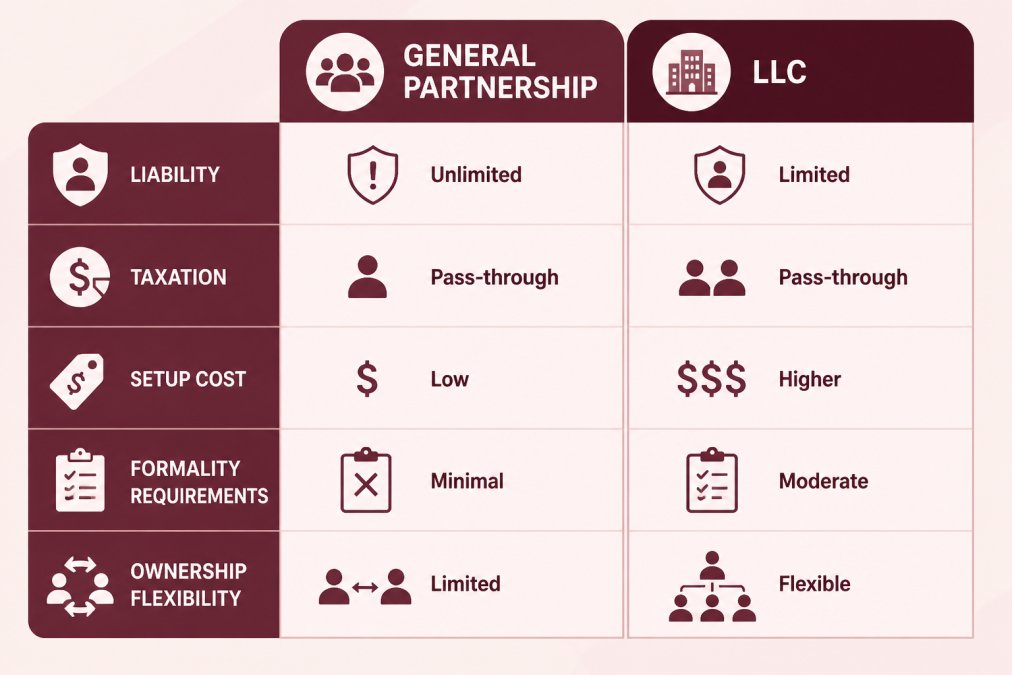
Pros and Cons of General Partnership vs LLC
| Aspect | General Partnership | LLC |
|---|---|---|
| Personal Liability | Partners liable for debts and obligations | Members typically protected from liability |
| Setup Cost | Lower filing fees | Higher filing and ongoing fees |
| Taxation | Pass-through (Form 1065) | Flexible (can choose entity type for taxes) |
General partnerships work best for professional service firms where partners have similar risk profiles and trust each other completely. LLCs are better for businesses with significant assets or higher liability risk.
Next Steps: Get Professional Guidance
At Paldino Company CPA, we help entrepreneurs navigate partnership formation, tax planning, and compliance. Schedule an Appointment for guidance on partnership structure and accounting systems.
Frequently Asked Questions
Do I need to register a general partnership with the New York Secretary of State?
Yes. You must file a Certificate of Partnership with the New York Department of State, Division of Corporations. This document includes the partnership name, principal place of business, and names of all partners. Filing creates an official public record and is required before you can legally operate as a general partnership in New York.
Do I need a written partnership agreement in New York?
While New York law does not require a written partnership agreement, having one is strongly recommended. A written agreement clarifies each partner's rights, responsibilities, profit-sharing percentages, and dispute resolution procedures. Without it, partners are subject to default state partnership laws, which may not reflect your intentions.
How do general partners pay taxes in New York?
General partnerships are pass-through entities. The partnership files an informational return (Form 1065) with the IRS, but does not pay income tax itself. Instead, profits and losses pass through to each partner's personal tax return, where they report their share of income and pay individual income taxes. New York also requires partnerships to file state partnership returns and pay applicable state taxes based on partnership income.
Forming a general partnership requires more than filing documents, it requires the right structure for your business and clear financial systems from day one. The choices you make now affect your liability, taxes, and ability to scale. Schedule an appointment with Paldino Company CPA and let us help you build a partnership foundation that protects your interests and positions your business for growth.