 comparison
Alternatives to Sole Proprietorship for Small Businesses
Table of Contents
- Business Structure Comparison Table
- LLC vs Sole Proprietorship Tax Benefits
- How to Form an LLC in New York State and Liability Protection for Small Business Owners
- Frequently Asked Questions
Last Updated: September 20, 2026
Business Structure Comparison Table
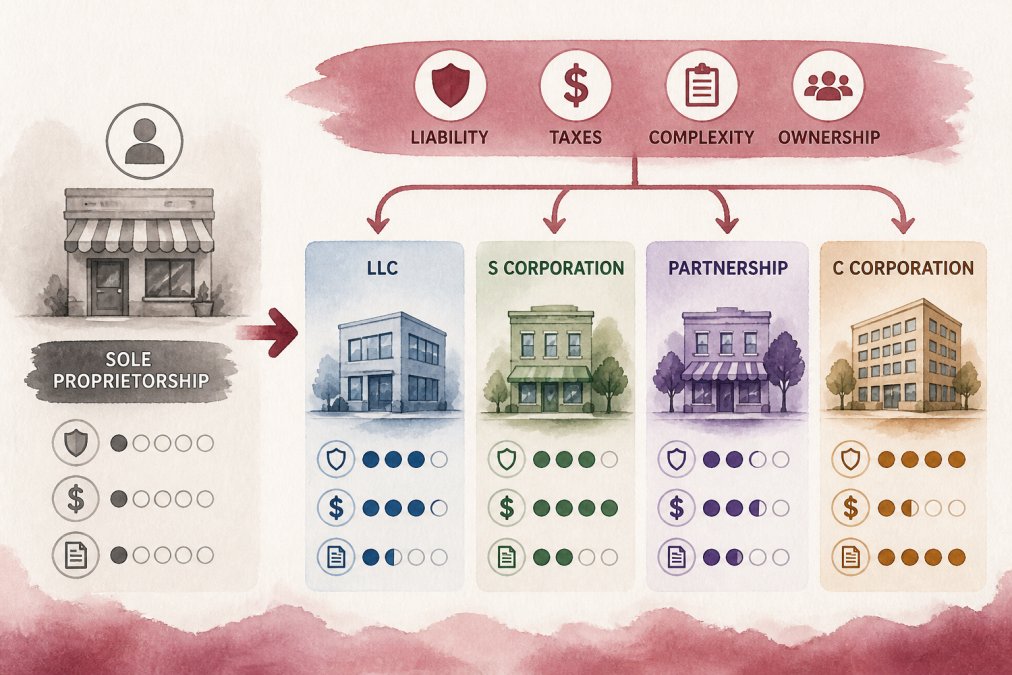
Choosing the right legal structure protects your personal assets and optimizes taxes. Alternatives to sole proprietorship, LLCs, S-Corporations, and C-Corporations, offer liability protection that sole proprietorships don't.
| Structure | Liability Protection | Taxation | Formation Cost | Compliance | Best For |
|---|---|---|---|---|---|
| Sole Proprietorship | None, personal assets at risk | Pass-through (Schedule C) | $0-$200 | Minimal | Solo freelancers, low-risk services |
| LLC | Personal assets protected | Pass-through or corporate | $100-$500+ state fees | Annual filings required | Most small businesses |
| S-Corporation | Personal assets protected | Pass-through with salary requirement | $150-$800+ | Payroll, quarterly filings | Profitable businesses ($40K+) |
| C-Corporation | Personal assets protected | Corporate (double taxation) | $200-$1,000+ | Extensive compliance | Growth-focused businesses, investors |
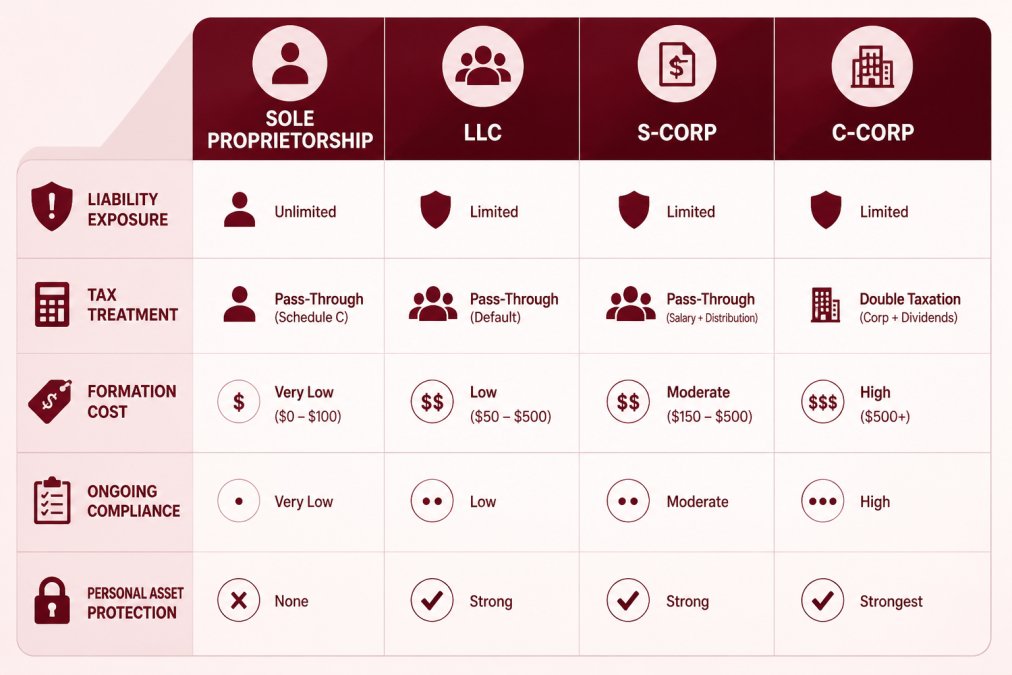
An LLC is the most popular choice because it offers liability protection without corporate complexity.
LLC vs Sole Proprietorship Tax Benefits
As a sole proprietor, you pay 15.3% self-employment tax on all profits. With an LLC, you can elect S-Corporation taxation to reduce self-employment tax on distributions.
S-Corporation elections require payroll processing and quarterly filings, so verify with an accountant if savings justify the complexity.
How to Form an LLC in New York State and Liability Protection for Small Business Owners
Form an LLC in New York by filing Articles of Organization with the Department of State.
Create an operating agreement to establish your LLC as a separate legal entity for liability protection.
Maintain liability protection by keeping business finances separate, use a dedicated bank account and document decisions, as mixing funds voids protection.
Formation services like IncAuthority, InCorp, and BizFilings handle LLC filings and compliance.
The right structure protects your personal assets, optimizes taxes, and positions your business for growth. Paldino Company CPA helps entrepreneurs evaluate alternatives to sole proprietorship and implement the best structure for their goals. Schedule an Appointment to discuss which alternative makes sense for your business.
Frequently Asked Questions
What are the main legal differences between a sole proprietorship and an LLC?
A sole proprietorship is an unincorporated business with no legal separation between you and your company. An LLC (Limited Liability Company) is a registered business entity that separates your personal assets from business liabilities. With an LLC, creditors cannot pursue your personal savings or property to settle business debts. Both require registration, but an LLC involves filing Articles of Organization with your state and typically requires ongoing compliance filings. The LLC structure also offers more flexibility in how income is taxed.
How does LLC vs sole proprietorship tax benefits differ?
As a sole proprietor, all business income is taxed as personal income at your individual tax rate. An LLC can choose to be taxed as a sole proprietorship, partnership, S-Corp, or C-Corp, giving you flexibility to minimize taxes. Many small business owners elect S-Corp taxation to avoid self-employment taxes on distributions. An LLC also allows you to deduct business expenses more clearly and potentially claim home office deductions. The right choice depends on your income level and business structure.
What is the process for forming an LLC in New York State?
To form an LLC in New York State, file Articles of Organization with the Department of State, Division of Corporations. You'll need to choose a business name, designate a registered agent, and pay the filing fee. The state processes most filings within 2-3 business days for standard service. You may also want to obtain an Employer Identification Number (EIN) from the IRS, create an operating agreement, and register for any required state or local licenses. A CPA or business formation service can guide you through these steps to ensure compliance.