 comparison
CPA vs Tax Preparer for Small Business
Table of Contents
- CPA vs Tax Preparer: Core Differences
- When to Hire a CPA for Your Business
- IRS Representation and Tax Planning Services
- Frequently Asked Questions
Last Updated: September 22, 2026
CPA vs Tax Preparer: Core Differences
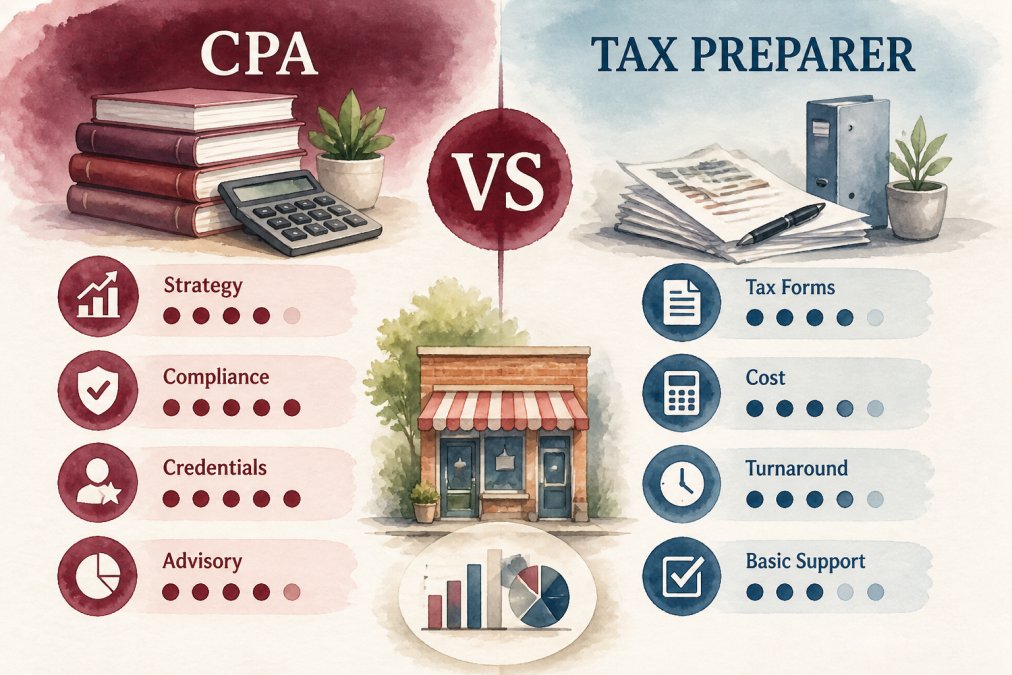
A CPA vs tax preparer decision comes down to scope, authority, and what your small business actually needs. Both handle tax filing, but they operate under different credentials and offer different services.
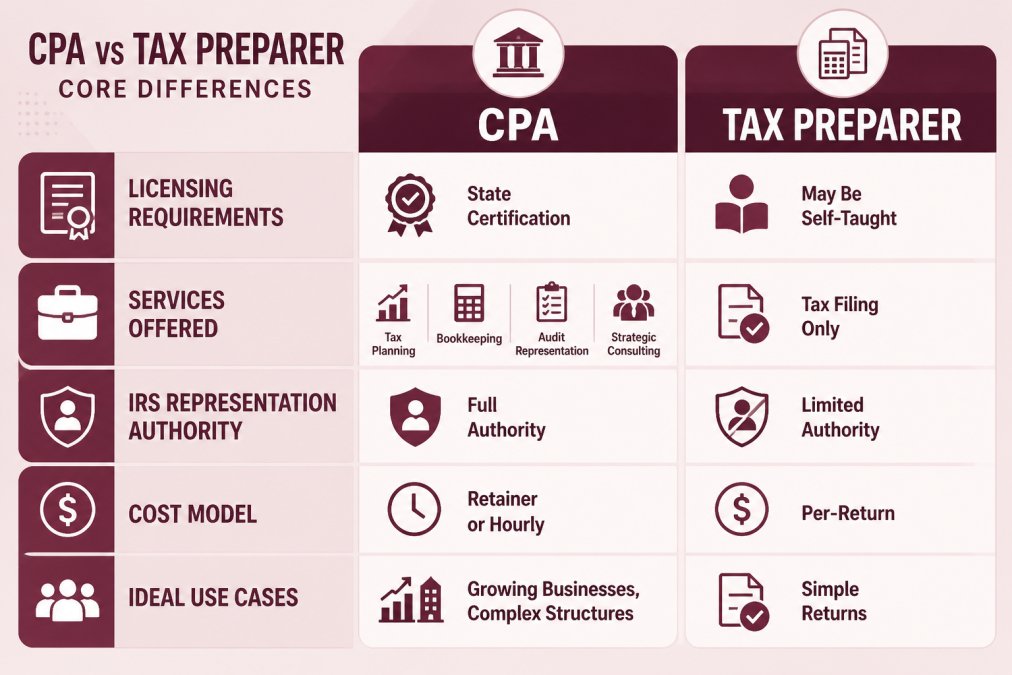
CPAs hold state licenses requiring extensive education and ongoing requirements, while tax preparers may hold credentials like Enrolled Agent (EA) status or operate with experience alone. The core difference: CPAs provide strategic business advice, represent you before the IRS, and handle complex accounting; tax preparers typically focus on filing returns.
For small business owners, a tax preparer costs less upfront but offers limited guidance; a CPA provides ongoing tax planning, entity structure advice, and proactive strategies to reduce your tax burden.
When to Hire a CPA for Your Business
Hire a CPA when your business complexity exceeds basic tax filing, multiple revenue streams, entity restructuring, or payroll management all warrant CPA-level expertise.
Hire a CPA when tax decisions start costing you money, not after you've "made it." A CPA identifies the right business structure, spots missed deductions, and plans quarterly payments and year-end strategies.
CPAs handle bookkeeping cleanup and accounting systems setup, building a foundation for accurate reporting. A tax preparer files returns based on provided numbers but won't identify accounting errors or inefficiencies.
IRS Representation and Tax Planning Services
Only CPAs, Enrolled Agents, and tax attorneys can represent you before the IRS during audits, back tax disputes, or payment plan negotiations, tax preparers cannot.
CPAs provide year-round tax planning, reviewing business structure, estimated payments, retirement options, and deductions, often saving far more than their fee.
Working with a CPA like Paldino Company CPA provides year-round support, you can call in July with business questions, not just at tax time. A dedicated CPA becomes familiar with your business and offers tailored advice.
The choice between a CPA and tax preparer depends on your business stage and complexity. A tax preparer works for simple sole proprietorships; as your business grows, a CPA provides strategic guidance and IRS authority that protects your bottom line. At Paldino Company CPA, we combine professional precision with a personal approach. Schedule an appointment to discuss your business needs.
Frequently Asked Questions
What is the legal difference between a CPA and a tax preparer?
A CPA (Certified Public Accountant) holds a state license requiring four-year accounting degree, passing the Uniform CPA Exam, and meeting experience requirements. Tax preparers have fewer formal requirements and typically prepare tax returns only. CPAs can provide broader services including bookkeeping, audit representation, and strategic tax planning. Tax preparers focus primarily on accurate return preparation and may hold Enrolled Agent credentials for IRS representation, but lack the comprehensive scope a CPA offers.
Can a tax preparer represent my business before the IRS?
Tax preparers cannot represent clients before the IRS unless they hold an Enrolled Agent credential or other qualifying certification. Only CPAs, Enrolled Agents, and attorneys can officially represent small businesses in IRS matters. If your business faces audit issues or needs IRS representation, you'll need one of these qualified professionals. A tax preparer who prepared your return can answer questions about it, but cannot formally advocate on your behalf during disputes or audits.
When should a small business hire a CPA instead of a tax preparer?
Hire a CPA when your business needs year-round strategic planning, faces complex tax situations, requires IRS representation, or wants proactive tax strategies to reduce liability. Tax preparers work well for straightforward annual filings. CPAs become essential as your business grows, operates multiple entities, has significant investment income, or needs guidance on entity structure and payroll compliance. If you're unsure whether your business qualifies, a consultation clarifies what level of professional support fits your situation.