 Comparison
Fee-Only vs. Big Bank Financial Advisors: 2026
Table of Contents
- Fee-Only Financial Advisors vs. Big Bank Services: Key Differences
- Fee-Only vs. Fee-Based Financial Advisor: Understanding Compensation Models
- Financial Advisor Compensation Models Explained
- Pros and Cons: Fee-Only Financial Advisors
- Pros and Cons: Big Bank Financial Services
- Frequently Asked Questions
Last Updated: October 21, 2026
Fee-Only Financial Advisors vs. Big Bank Services: Key Differences
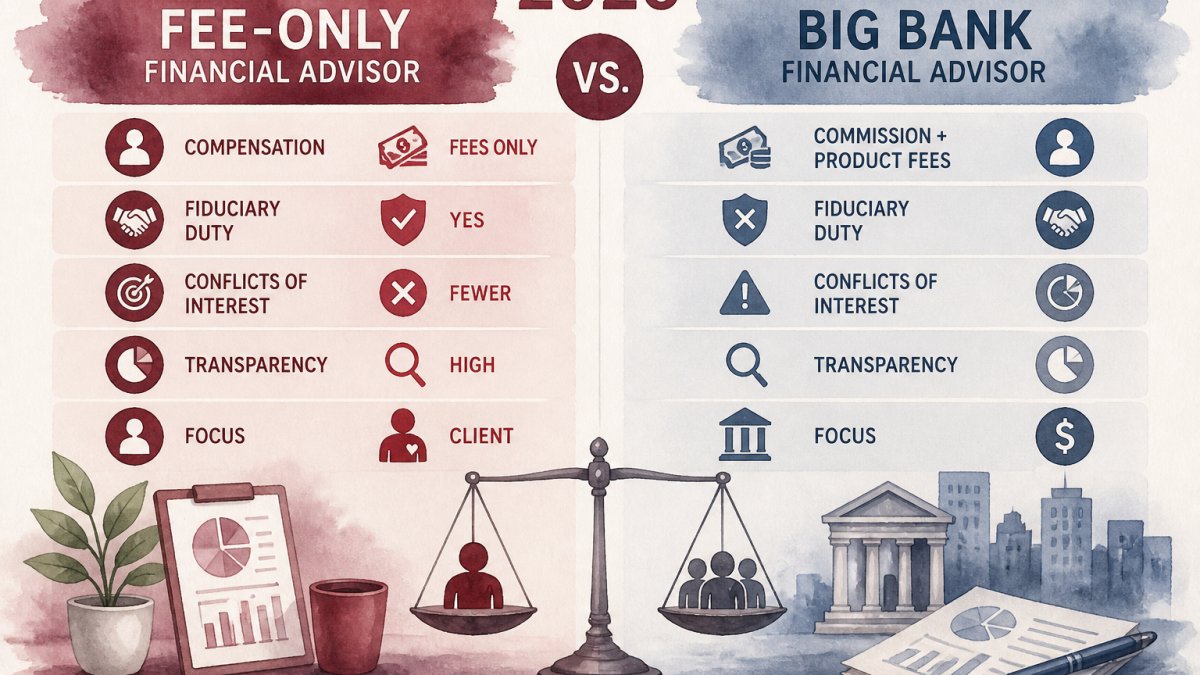
A fee-only financial advisor is paid directly by clients through hourly fees, flat fees, retainers, or a percentage of assets under management, earning no commissions from product sales. Big banks often use fee-based or commission models where advisors earn from the products they recommend.
At Paldino Company CPA, we help individuals and small business owners in Mamaroneck and Westchester County understand how their advisor gets paid before trusting them with financial guidance.
Fee-only advisors carry a fiduciary duty to act in your best interest. Big banks may operate under a looser "suitability" standard, recommending products that are suitable but not necessarily optimal.
Fee-Only vs. Fee-Based Financial Advisor: Understanding Compensation Models
Fee-only vs. fee-based describes two compensation structures. Fee-only means the advisor is paid exclusively by clients; fee-based means the advisor collects client fees AND commissions from selling financial products.
Fee-based advisors face a potential conflict of interest, since they may recommend commission-generating products even when other options suit you better. Fee-only advisors earn nothing from product sales, so that temptation doesn't exist.
Big banks typically employ fee-based or commission-based advisors whose revenue depends partly on selling mutual funds, annuities, insurance products, and other investments, which may lead them to favor those over lower-cost alternatives.
Fee-only advisors in Mamaroneck succeed by keeping clients satisfied and managing their money well, with no product commission to offset a lost client.
Financial Advisor Compensation Models Explained
Understanding each compensation structure helps you spot where conflicts of interest might hide.
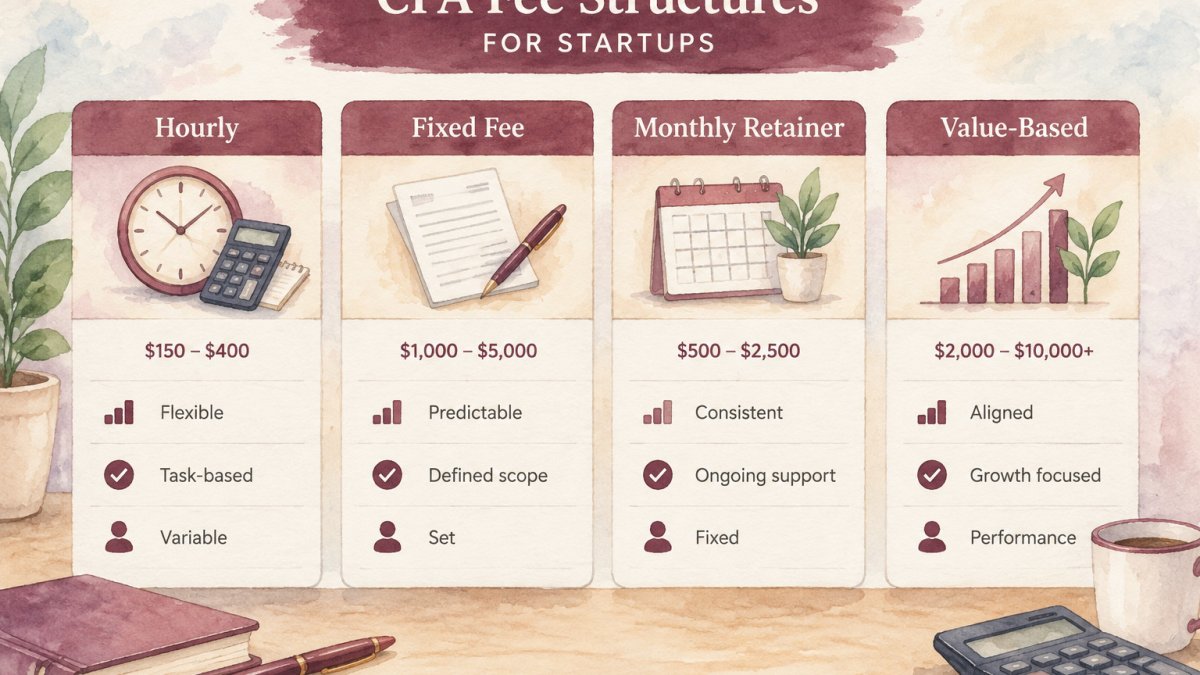
Hourly fees charge you for time spent, similar to hiring a lawyer or accountant, and work well for specific questions or project-based work.
Flat fees charge a set amount for a defined scope of work, so you know the cost upfront and the advisor is incentivized to deliver value efficiently.
Retainers charge a recurring monthly or annual fee for ongoing advice and management, common in Mamaroneck for business owners needing year-round guidance.
Assets under management (AUM) charge a percentage of the money managed for you, aligning incentives since the advisor benefits when your wealth grows.
Commissions pay the advisor a percentage of products sold, as with insurance agents, some mutual fund advisors, and many bank advisors. The higher the commission, the stronger the incentive to sell.
Fee-based combinations mix two or more of the above, such as a retainer plus AUM, or hourly fees plus commissions on certain products.
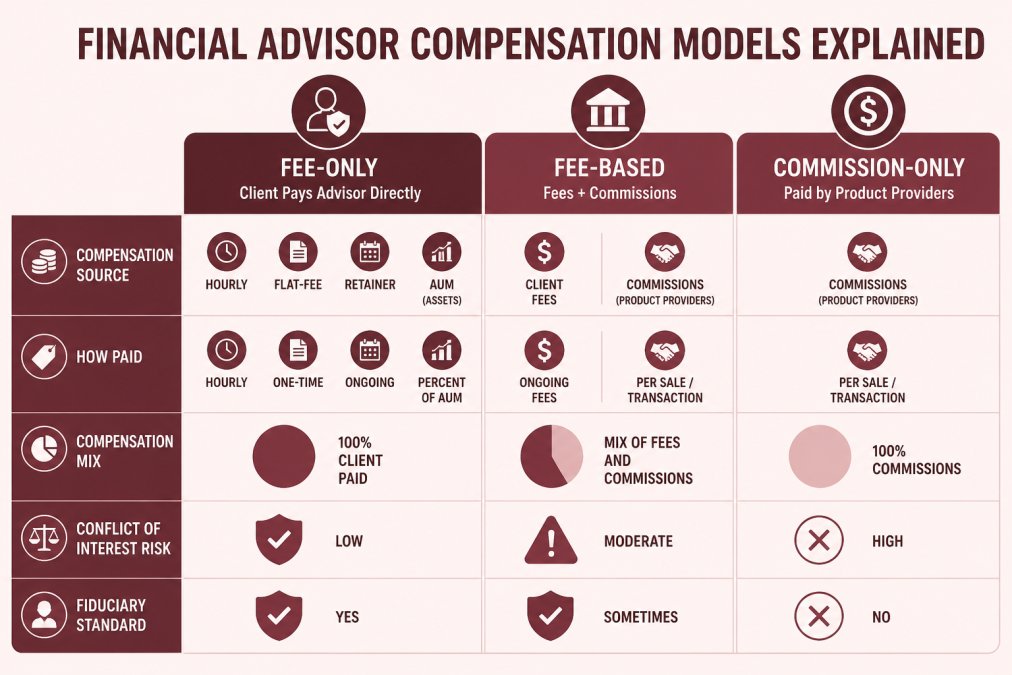
Big banks typically use fee-based or commission models because they generate revenue from product sales, while a fee-only advisor in Mamaroneck working with small business owners may charge a retainer or AUM percentage.
Pros and Cons: Fee-Only Financial Advisors
Pros: fiduciary duty legally required; no incentive to sell unnecessary products; transparent, often negotiable compensation; well suited to complex situations needing objective advice.
Cons: you pay out of pocket for all advice; fewer advisors than big banks; may require minimum assets to manage; less brand recognition; fewer integrated banking or lending services.
Pros and Cons: Big Bank Financial Services
Pros: banking, lending, and investing in one place; established brand and regulatory oversight; easier access to credit and loans; more advisors available.
Cons: advisors may earn commissions, creating conflicts of interest; may not be true fiduciaries; advice often tied to products the bank sells; less personalized attention for smaller accounts.
| Factor | Fee-Only Advisor | Big Bank Services |
|---|---|---|
| Legal Obligation | Fiduciary duty | Suitability standard |
| Compensation Source | Client fees only | Fees + commissions |
| Conflict of Interest | Minimal | Potential |
Choosing between a fee-only financial advisor and big bank services depends on your situation, assets, and comfort with how advisors are paid. If you value objectivity and have complex needs, fee-only advisors often deliver clearer guidance; if you prioritize convenience and integrated banking, big banks offer that, though you'll want to understand how your advisor is compensated.
For business owners and individuals in Mamaroneck seeking comprehensive financial and tax guidance, the right advisor combines professional expertise with transparent incentives. At Paldino Company CPA, we provide year-round tax planning and advisory services designed to simplify your financial life. Schedule an Appointment to discuss how we can help you navigate your financial strategy with clarity and confidence.
Frequently Asked Questions
What is the difference between a fee-only financial advisor and a bank advisor?
A fee-only financial advisor is paid directly by you through hourly fees, flat fees, retainers, or a percentage of assets under management. They have no incentive to sell you products. Bank advisors are often employed by or affiliated with the bank and may earn commissions on products the bank sells, even if those products aren't the best fit for you. Fee-only advisors operate under a fiduciary duty to act in your best interest, while bank advisors may not.
How do fee-only financial advisors get paid?
Fee-only advisors use several compensation methods: hourly rates (you pay for time spent), flat fees (a set price for a specific service or plan), retainers (ongoing monthly or annual fees for continuous advice), or assets under management (AUM), where you pay a percentage of the money they manage. The key is that all compensation comes directly from you, not from product sales or commissions.
Is a fee-only advisor a good fit for a small-business owner?
Yes. Fee-only advisors can help small-business owners with cash flow planning, tax strategy, business structure decisions, and growth planning without the pressure to buy products that benefit the advisor. Many offer retainer or flat-fee models that work well for businesses with limited budgets. You get strategic insight tailored to your business without paying asset-based fees that may not apply to your situation.
What questions should I ask before choosing a financial advisor?
Ask how they are compensated (fees, commissions, or both), whether they are a fiduciary 100% of the time, what credentials they hold (CFP, CFA, etc.), what services they provide, who their typical clients are, and how they handle conflicts of interest. Request their Form ADV (filed with the SEC or state regulators) to verify registrations and disclosures. Also ask about their process for understanding your specific situation and how often you'll communicate.