 How-to
How to Calculate Overtime Pay in New York State
Last Updated: November 9, 2026
Quick Summary
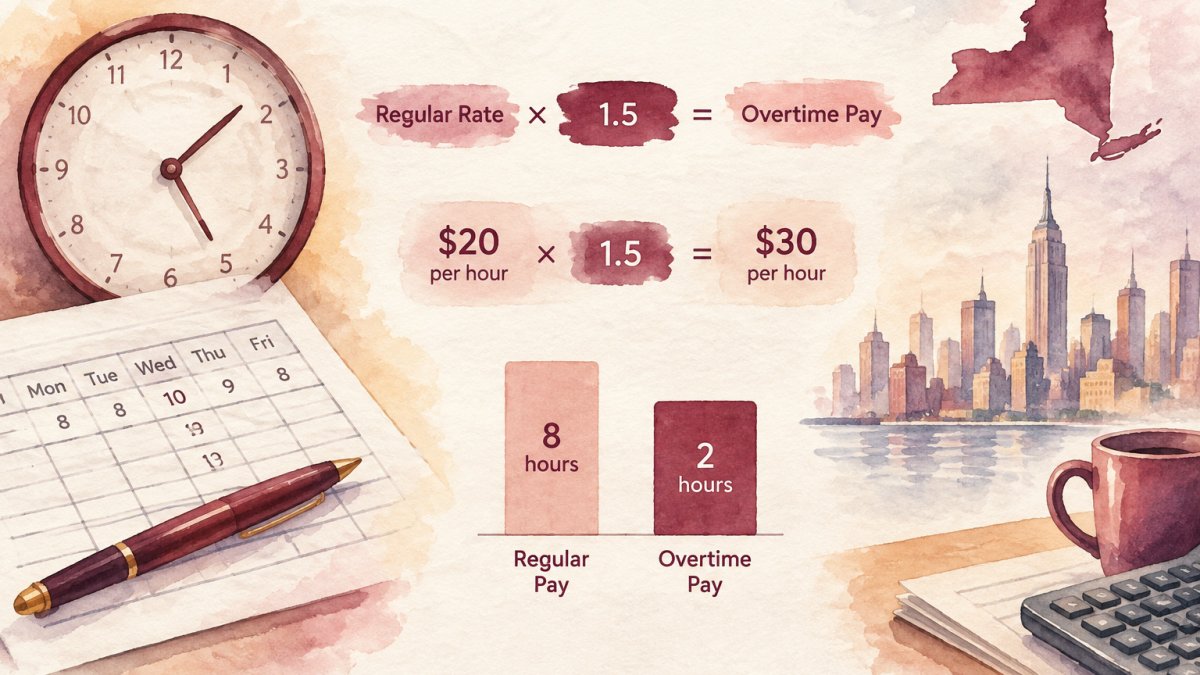
In New York, overtime pay is due at 1.5 times your regular rate for every hour worked over 40 in a workweek. To calculate it, subtract 40 from your total weekly hours, then multiply those overtime hours by 1.5 times your regular rate.
- Most employees earn overtime pay after 40 hours in one workweek.
- Your regular rate is usually your hourly wage, but some bonuses may be included.
- Check your pay stub before calculating to confirm your regular rate.
- Some residential employees follow different thresholds under state rules.
- Exemption from overtime depends on job duties and pay, so check your eligibility.
Table of Contents
- Find Your Regular Rate of Pay and Overtime Threshold
- Calculate New York Overtime Pay Step by Step
- Check Your Eligibility, Exemptions and Next Steps With Paldino Company CPA
- Frequently Asked Questions
Find Your Regular Rate of Pay and Overtime Threshold
Overtime pay in New York starts with two numbers: your regular rate of pay and the hours that trigger the premium. For most employees, overtime is due at 1.5 times the regular rate for every hour worked over 40 in a workweek. New York State Department of Labor overtime FAQ
Your regular rate is usually your hourly wage. Some pay adds to it, though. Non-discretionary bonuses and certain other compensation may need to be folded into the regular rate. Check your pay stub before you calculate anything.
Some residential employees follow a different threshold under state rules. Check the New York State Department of Labor for the threshold that applies to your job.
-
Most employees: overtime after 40 hours
-
Overtime rate: 1.5 times the regular rate
Calculate New York Overtime Pay Step by Step
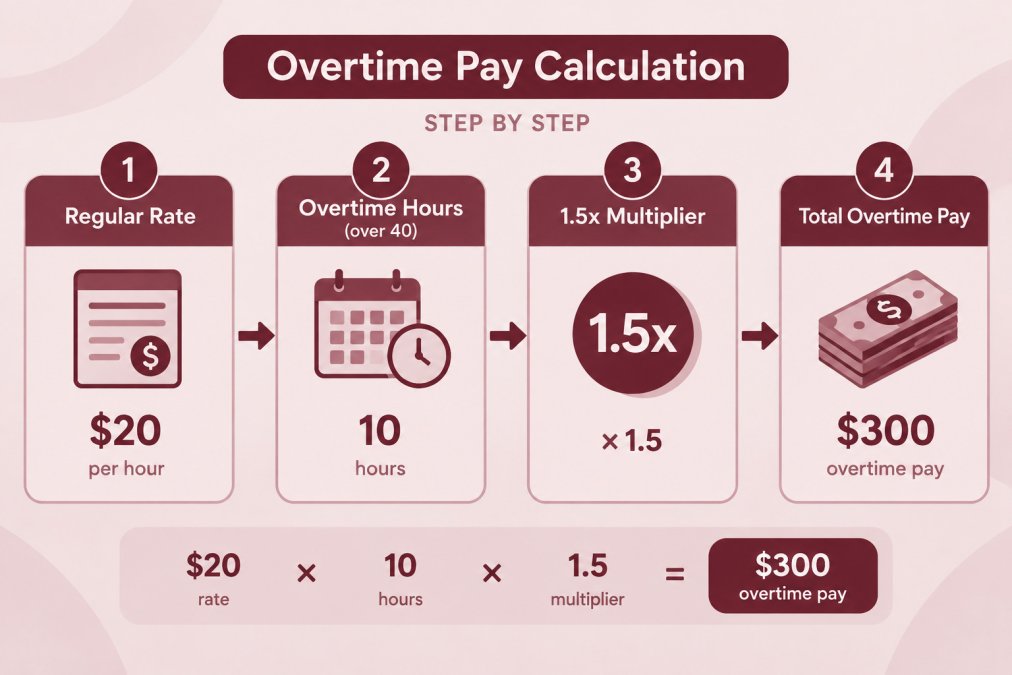
Start with your total hours worked in the workweek. Subtract your overtime threshold, which is generally 40 hours under current rules. Multiply the overtime hours by the applicable overtime rate.
Here is the basic process:
- Add up total hours worked in the workweek.
- Subtract 40 to find overtime hours.
- Multiply your regular rate by the applicable overtime multiplier.
- Multiply the overtime hours by that overtime rate.
For federal rules, the same 1.5x standard applies to hours beyond 40 per week. U.S. Department of Labor overtime guidance
Check Your Eligibility, Exemptions and Next Steps With Paldino Company CPA
Not every worker qualifies for overtime. Exemption status depends on job duties and pay, so check your situation before assuming you are owed or not owed overtime. Paldino Company CPA can help you review your overtime eligibility.
For a direct conversation, you can contact Paldino Company CPA in Mamaroneck, New York, at (914) 253-6857 or joe@paldinocompanycpa.com.
Frequently Asked Questions
How is overtime calculated in New York State?
Most covered employees in New York State earn overtime for hours worked over the threshold set by current state rules. Your regular rate is generally your hourly wage, adjusted if you receive other compensation such as certain bonuses or commissions. Residential employees may have a different threshold under New York rules. Check the New York State Department of Labor for the rules that apply to your job.
Is overtime in New York based on hours over 8 in a day or 40 in a week?
Under New York State rules, overtime for most employees is based on hours worked over the weekly threshold in a single workweek. A workweek is a fixed, recurring period set by the employer. Confirm your employer's workweek definition and your classification with the New York State Department of Labor.
Who is exempt from overtime pay in New York State?
Some workers, such as certain executive, administrative and professional employees who meet salary and duty tests, may be exempt from overtime. Exemption depends on job duties and pay level, not job title alone. Because the rules are specific, review the New York State Department of Labor guidance or speak with a qualified accountant before assuming you are exempt.