
 how-to
How to Create a Personalized Financial Plan in New York
Table of Contents
- Step 1: Set Goals and Gather Your Financial Documents
- Step 2: Tackle New York State Tax Planning for Individuals
- Step 3: How to Choose a Financial Advisor in Westchester County
- Frequently Asked Questions
Last Updated: September 15, 2026
Step 1: Set Goals and Gather Your Financial Documents
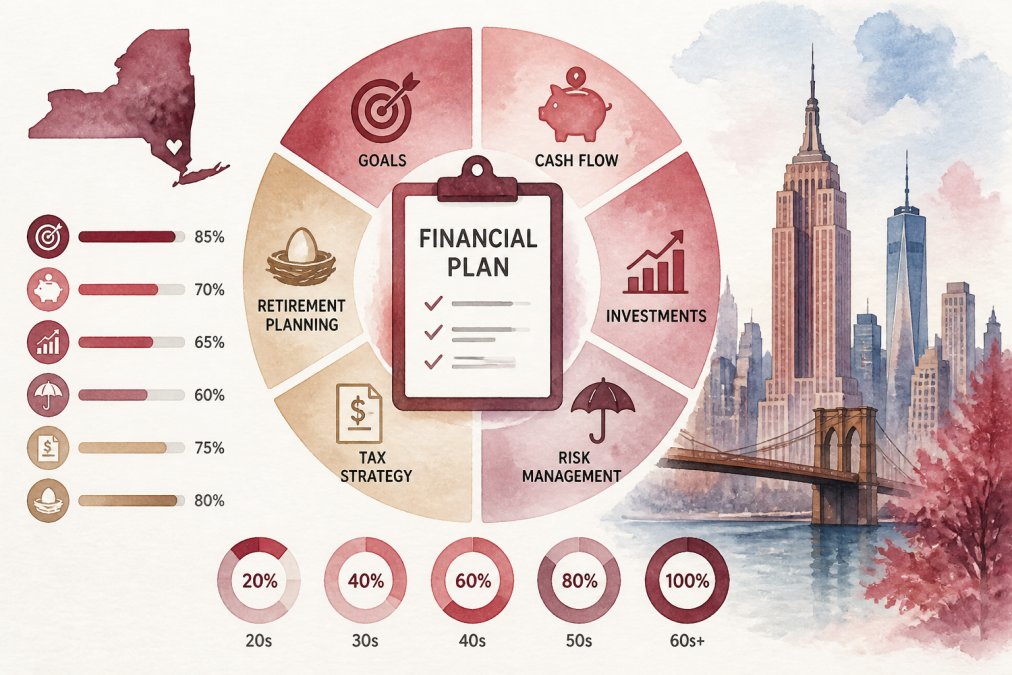
A personalized financial plan is a written roadmap matching your income, tax situation, and long-term goals to specific actions. At Paldino Company CPA in Mamaroneck, NY, we build these plans around three inputs: your goals, your documents, and your tax picture.
Write down what the money is for: retirement, a home in Westchester County, a child's education, or a business launch each demand a different structure. Then gather the paperwork that proves where you stand: recent tax returns, W-2s or 1099s, brokerage and retirement statements, mortgage documents, and estimated tax payment records.
- Last two years of filed federal and New York State returns
- Current income documentation (W-2, 1099, K-1)
- Retirement, brokerage, and bank statements
- Mortgage, property tax, and insurance records
- Estimated tax payment records and IRS notices
Step 2: Tackle New York State Tax Planning for Individuals
New York State tax planning for individuals starts with one question: are you a resident, a part-year resident, or a nonresident? Residency drives which income New York can tax, and it is the single biggest lever most people overlook. The New York State Department of Taxation and Finance guidance on residency explains how domicile and the statutory residency rules work.
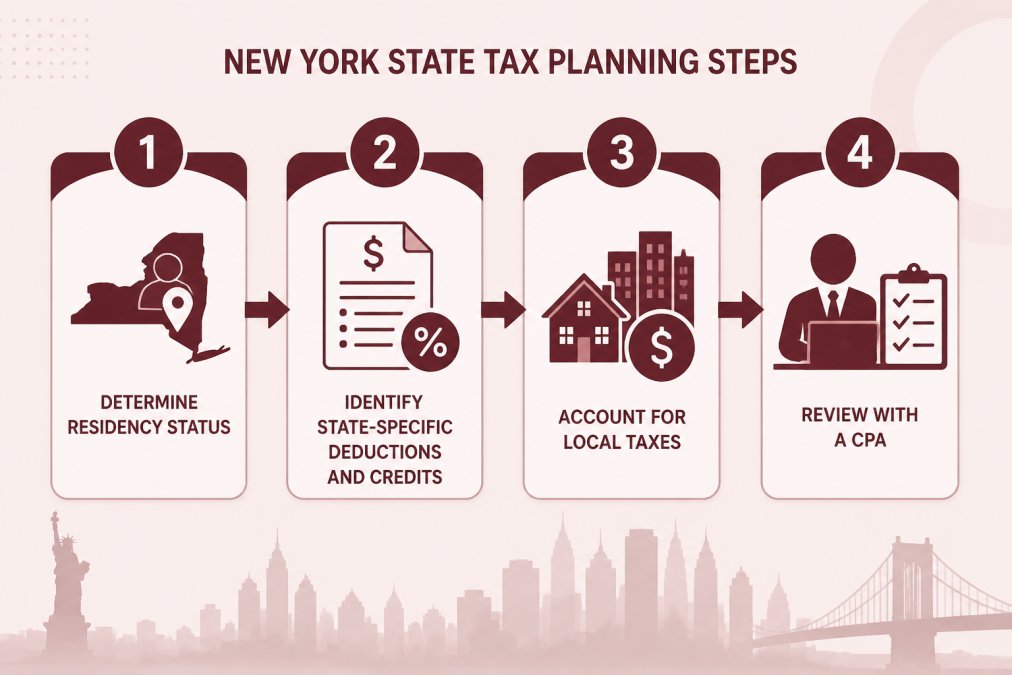
From there, review the deductions and credits New York offers, factor in local taxes, and confirm your withholding and estimated payments are accurate. The IRS guidance on estimated taxes is the reference point for the federal side of that calendar. Because rates and thresholds change, verify current figures with a qualified professional rather than relying on last year's numbers.
Step 3: How to Choose a Financial Advisor in Westchester County
The right advisor for a personalized financial plan in Westchester County understands your goals and the New York tax rules that shape them. Look for a CPA who works with clients in Mamaroneck and the surrounding area, asks about your business entity and residency, and offers support beyond a once-a-year filing.
Ask directly: How will you handle my New York State return? What does year-round support look like? How do you price your work? A firm that answers plainly and treats planning as an ongoing relationship is worth hiring.
| What to Check | Why It Matters | Red Flag |
|---|---|---|
| New York tax experience | Residency and state credits are easy to miss | Generic "we file in all 50 states" pitch |
| Year-round availability | Life changes mid-year, not in April | Only reachable during filing season |
| Clear pricing | You should know the model up front | Vague retainers with no scope |
| Business entity knowledge | Freelancers and owners face different rules | No questions about how you earn |
That is the core of how to create personalized financial plan New York residents can follow: define the goal, get the tax structure right, and work with someone who knows the local rules.
Frequently Asked Questions
What should be included in a personalized financial plan?
A personalized financial plan should cover your goals, income, expenses, assets, liabilities, and tax situation. For New York residents, it should also address state and local tax obligations, which differ from federal rules. Include retirement savings, insurance coverage, and estate planning basics. A CPA or financial advisor can help you assemble these pieces into a clear, actionable document.
How do New York state tax laws impact my financial plan?
New York has its own income tax brackets, deductions, and credits that affect your overall tax burden. Residency status, local taxes, and state-specific rules for investments or retirement income can change your plan. A CPA familiar with New York tax law can help you factor these into your financial decisions, from timing income to choosing investments.
Do I need a CPA or a financial planner for my New York financial plan?
A CPA focuses on tax planning, compliance, and accounting, while a financial planner may cover investments, retirement, and insurance. For New York residents with complex tax situations, a CPA can be essential. Many people benefit from both, but if you need integrated tax and financial advice, a CPA with advisory services can provide a comprehensive approach.
Building a plan that holds up takes more than a template. Paldino Company CPA offers year-round tax help, virtual CFO services, and personalized guidance for individuals and small businesses across New York and Westchester County. Schedule an appointment and get a plan built around your actual numbers.