
 how-to
How to Manage Business Bookkeeping: A Step-by-Step Guide
Table of Contents
- How to Manage Business Bookkeeping: Foundation and Method
- Best Accounting Software for Small Business Setup
- Small Business Bookkeeping Checklist: Daily and Monthly Tasks
- How to Reconcile Bank Statements Monthly
Last Updated: August 30, 2026
How to Manage Business Bookkeeping: Foundation and Method
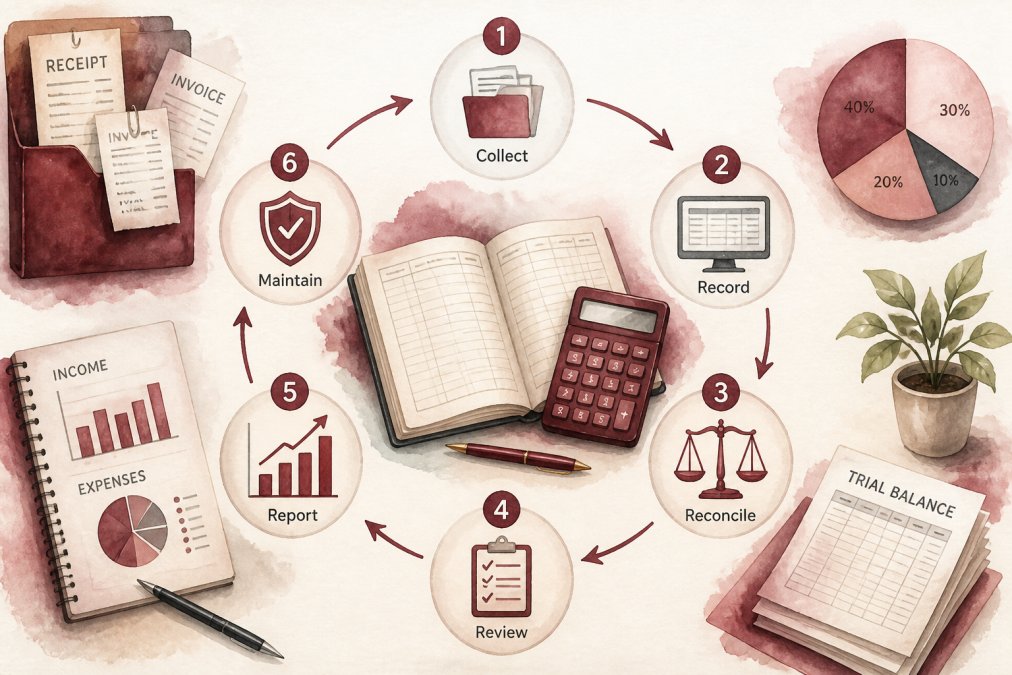
Managing business bookkeeping means recording, organizing, and tracking all financial transactions for your company. It's the foundation for understanding your financial health, preparing accurate tax returns, and making informed decisions.
Choose your accounting method first: cash basis or accrual accounting. Cash basis records transactions when money changes hands, ideal for very small businesses. Accrual accounting records income when earned and expenses when incurred, providing a more accurate financial picture. According to the IRS, most businesses with inventory must use accrual accounting. At Paldino Company CPA, we help clients select the method that aligns with their business structure and IRS requirements.
Next, establish a chart of accounts, the list of categories where you'll record every transaction. This includes asset accounts (cash, equipment), liability accounts (loans, accounts payable), equity, income, and expense accounts. A well-organized chart prevents duplicate entries and makes financial reporting straightforward.
Best Accounting Software for Small Business Setup
Selecting the right accounting software determines whether bookkeeping feels manageable. Look for software that supports your accounting method, scales with your business, integrates with your bank, and automates transaction categorization.
Cloud-based accounting software is now standard because it syncs automatically with your bank and allows multiple users simultaneous access. Key features to prioritize include automatic bank feeds, invoice management, expense tracking, and tax-ready reporting. Some platforms offer built-in payroll and inventory integration, depending on your needs.
Small Business Bookkeeping Checklist: Daily and Monthly Tasks
Consistent bookkeeping prevents scrambling before tax time. A structured checklist ensures nothing falls through the cracks.
Daily tasks:
- Record all cash and card transactions as they occur
- Review and categorize new bank transactions in your software
- Log invoice payments sent and received
Weekly tasks:
- Reconcile credit card statements to ensure all charges are logged
- Review transaction categorization for accuracy
- Flag any unusual or duplicate entries
Monthly tasks:
- Reconcile your bank account against your general ledger
- Review accounts payable and accounts receivable aging reports
- Verify all invoices have been recorded and categorized
- Prepare a monthly profit and loss statement
- Reconcile payroll records if you have employees
- Back up all financial data
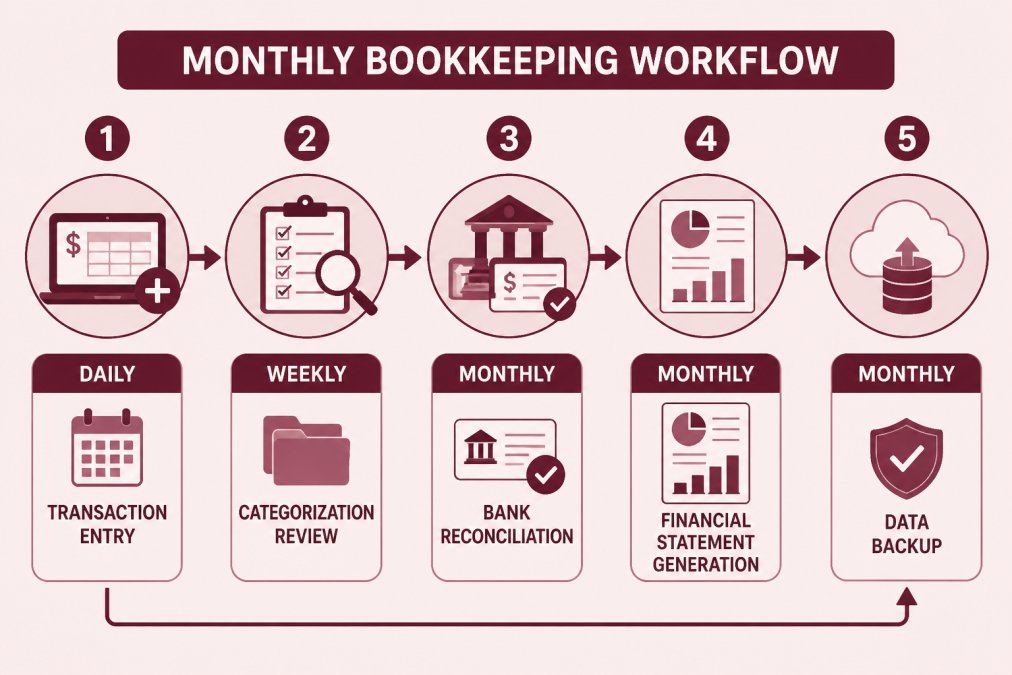
These tasks take 30 minutes to an hour per day if you stay current. Blocking 30 minutes each morning for bookkeeping keeps the process manageable and prevents year-end panic.
How to Reconcile Bank Statements Monthly
Bank reconciliation compares your company's financial records to your bank statement to ensure they match. Discrepancies often arise from timing (checks that haven't cleared, deposits in transit) or errors. Monthly reconciliation catches mistakes early.
The reconciliation process has five steps:
- Gather your bank statement and general ledger for the same period
- Compare deposits and withdrawals line by line
- Identify outstanding checks or deposits in transit, transactions recorded in your books but not yet cleared the bank
- Adjust your general ledger for bank fees, interest, or other items the bank recorded that you hadn't yet
- Verify the final balance matches between your adjusted ledger and bank statement
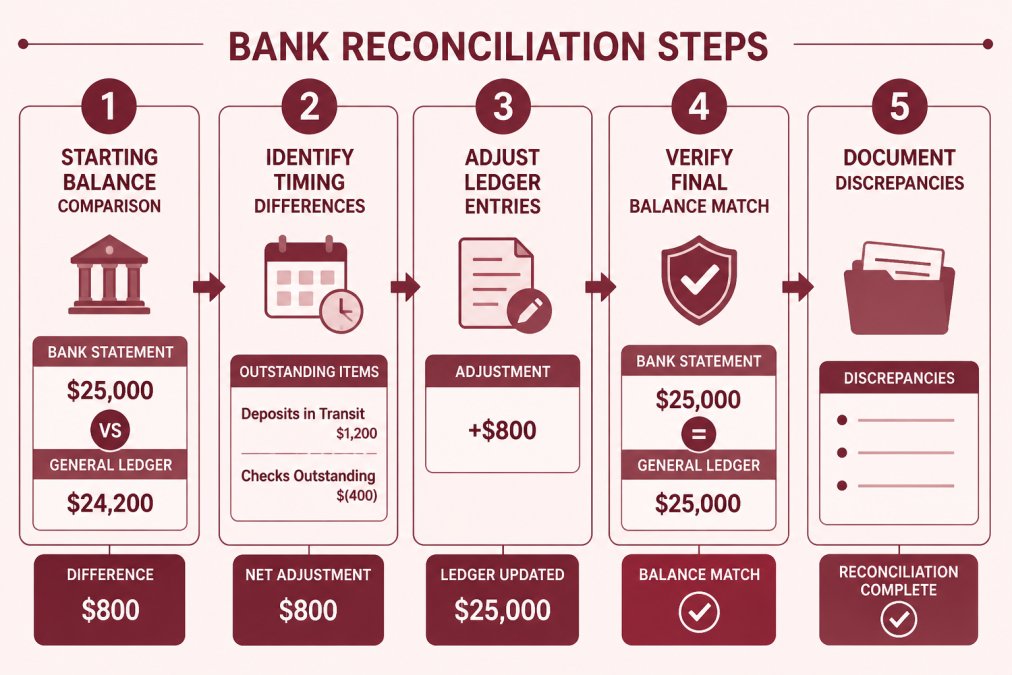
If your balance doesn't match, review transactions from the previous month. Use your accounting software's reconciliation tool, which automates much of this work. A monthly reconciliation takes 15 to 45 minutes depending on transaction volume and is one of the most valuable tasks for maintaining financial integrity.
Managing business bookkeeping consistently transforms how you understand and control your finances. The daily and monthly tasks outlined here require discipline but deliver clarity on cash flow, profitability, and tax obligations. Many business owners find that outsourcing bookkeeping to a professional accountant frees time for revenue-generating work. Paldino Company CPA works with small business owners to implement bookkeeping systems, clean up disorganized records, and provide year-round financial guidance, so you can focus on running your business with confidence.
Frequently Asked Questions
How often should you reconcile your business bank accounts?
Reconcile your business bank accounts monthly, ideally within a few days of receiving your bank statement. Monthly reconciliation helps you catch errors early, identify fraudulent transactions, and maintain accurate financial records. This frequency aligns with standard accounting practices and gives you a clear picture of your cash flow for financial reporting and tax compliance purposes.
What should be included in a small business bookkeeping checklist?
A small business bookkeeping checklist should include: recording all transactions daily, categorizing expenses correctly, tracking invoices and accounts receivable, reconciling bank statements monthly, reviewing profit and loss statements, verifying accounts payable, backing up financial data, and preparing quarterly tax estimates. This checklist ensures consistent financial record-keeping and helps prevent errors that could affect your tax obligations or financial health.
Can you fix messy bookkeeping records in existing accounting software?
Yes, messy bookkeeping can be cleaned up even in established software like QuickBooks. A professional accountant can review your records, identify errors and duplicate entries, reclassify transactions correctly, and reconcile your accounts to accurate balances. While this requires time and attention, starting fresh is rarely necessary. The key is addressing the issues systematically so your financial reporting and tax compliance improve going forward.
This article was written using GrandRanker