
 how-to
How to Switch CPA Mid Tax Year: A Step-by-Step Guide
Table of Contents
- When Is the Best Time to Switch CPAs
- How to Fire Your Accountant Without Damaging the Relationship
- Checklist for Changing Accounting Firms
- Transferring Tax Records to Your New CPA
Last Updated: August 26, 2026
When Is the Best Time to Switch CPAs
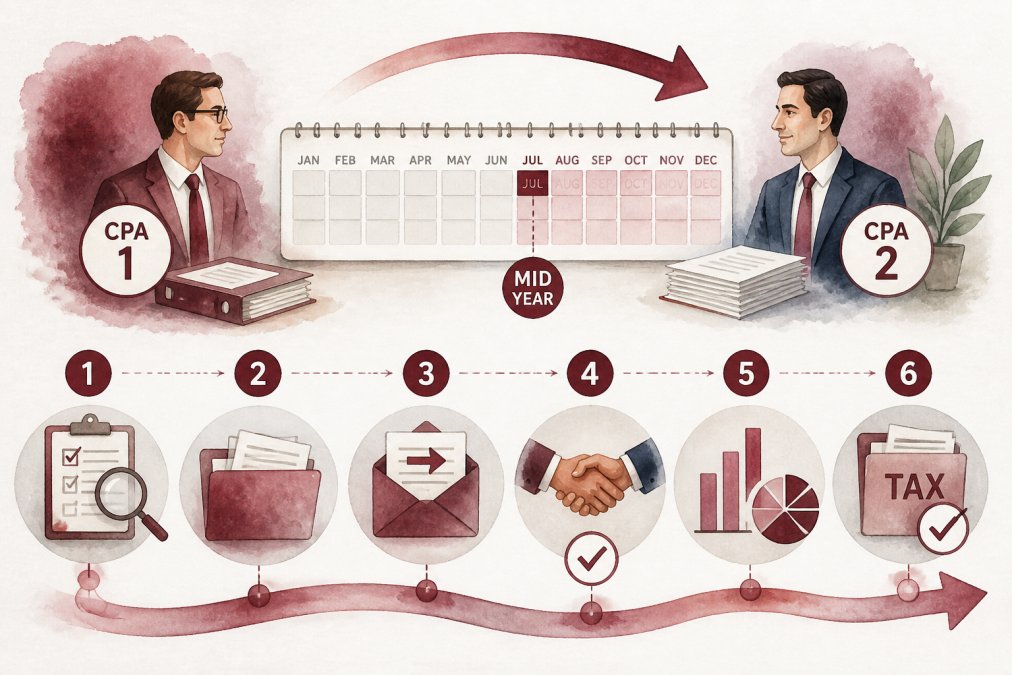
The ideal moment to switch CPAs depends on your tax situation and business cycle. The sweet spot is typically after filing your prior-year return but before tax season pressure builds, giving your new CPA time to understand your finances without racing against deadlines. If you're mid-fiscal year, transition in June rather than October for more runway before year-end. However, if your current CPA isn't serving your needs through missed deductions, poor communication, or misaligned tax strategy, waiting may cost you money in lost tax planning opportunities.
How to Fire Your Accountant Without Damaging the Relationship
Ending a professional relationship requires directness and courtesy. Schedule a conversation rather than delivering news via email. Keep it professional: "We've decided to move our accounting to a firm that's a better fit for where we are right now" works well. Avoid blame or criticism.
Ask your accountant about their record transfer process and request written confirmation of documents they'll provide and the timeline. Clarify any refunds or credits owed and ask about pending tax matters, audit issues, or compliance items to prevent surprises during transition.
Checklist for Changing Accounting Firms
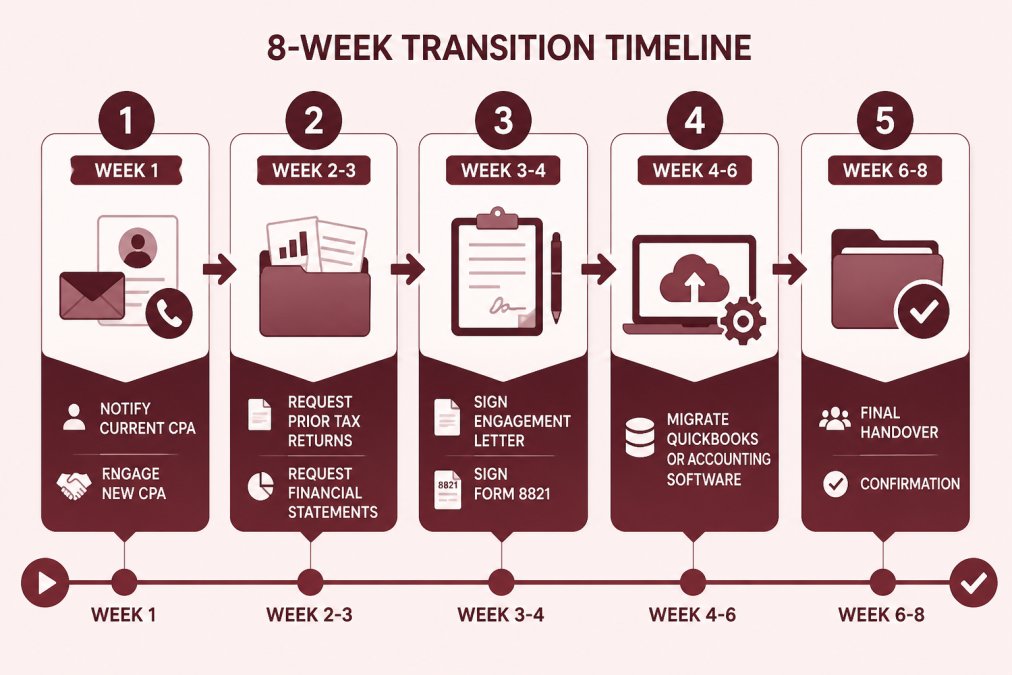
Step 1: Notify Your Current CPA (Week 1) Give written notice with an effective date and request their client authorization form, which allows your new CPA to request tax records from the IRS and state authorities.
Step 2: Select and Engage Your New CPA (Week 1-2) Vet your new CPA while your current relationship is still active. Discuss their tax planning approach, communication frequency, and mid-year transition experience.
Step 3: Request Records from Your Current CPA (Week 2-3) Ask for prior-year tax returns, financial statements, depreciation schedules, and tax authority correspondence in digital format.
Step 4: Authorize the Transfer (Week 3-4) Sign the engagement letter with your new CPA and complete Form 8821 (Tax Information Authorization), allowing them to communicate with the IRS on your behalf.
Step 5: Migrate Your Accounting Software (Week 4-6) Provide your new CPA access to QuickBooks, Xero, or similar platforms. Budget an extra 2-3 weeks if bookkeeping cleanup is needed.
Step 6: Final Handover and Confirmation (Week 6-8) Your new CPA confirms receipt of all records and verifies nothing is missing.
Transferring Tax Records to Your New CPA
Your new CPA will need specific documents to understand your complete tax history and ensure compliance.
Essential Documents for All Taxpayers:
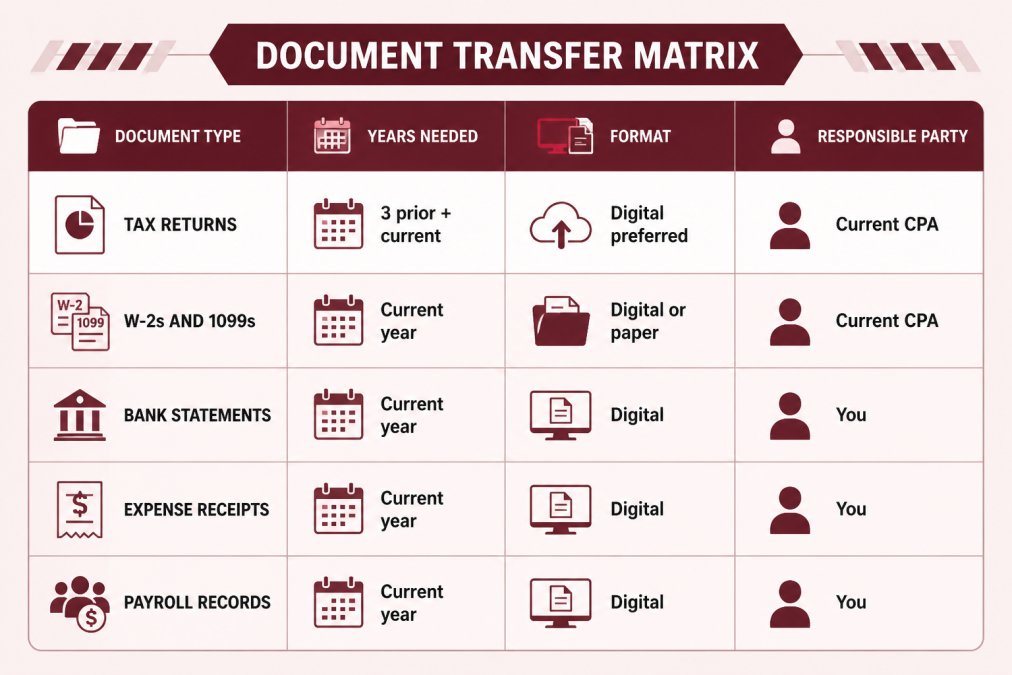
- Last three years of personal or business tax returns (federal and state)
- Current-year tax return (if already filed)
- W-2 forms and 1099 forms for the current and prior years
- Proof of tax payments made year-to-date
- IRS correspondence or notices (if any)
For Business Owners:
- Year-to-date profit-and-loss statement
- Balance sheet (if applicable)
- Bank statements for all business accounts
- Credit card statements for business expenses
- Payroll records and employee tax withholding documentation
- Quarterly estimated tax payment records
- Sales tax returns (if applicable)
For Self-Employed and Freelancers:
- Complete bookkeeping records or QuickBooks file
- Invoices issued and received
- Expense receipts organized by category
- Mileage logs (if claiming vehicle deductions)
- Home office documentation (if applicable)
Your current CPA is legally required to release copies of documents you've paid for (irs.gov). Request everything in digital format to speed up the process.
Switching CPAs mid-year is manageable with planning and clear communication. The transition takes 6-8 weeks, but the payoff, better tax planning, clearer communication, and genuine partnership, makes it worthwhile (aicpa.org). A qualified CPA can identify missed deductions and tax strategies within your first engagement. The IRS Form 8821 authorization process outlines formal steps for authorizing a new representative. When you're ready to move forward, reach out to a firm that prioritizes understanding your business and goals.
Frequently Asked Questions
Q: Will switching CPAs mid-tax year trigger an IRS audit?
A: No. Changing CPAs does not automatically trigger an audit. The IRS selects returns for examination based on risk factors and random selection, not on who prepares them. However, ensure your new CPA receives all prior-year records and documentation to maintain compliance. A smooth transition with complete record transfer actually reduces audit risk by catching any prior errors early.
Q: What documents do I need to provide my new CPA when switching mid-year?
A: Provide prior tax returns (last 3-5 years), current-year profit and loss statements, balance sheets, bank statements, payroll records if applicable, quarterly estimated tax payments, charitable contributions, business expense documentation, and any correspondence with the IRS. Your new CPA will also need a signed client authorization form to request records directly from your former accountant. Ask your previous CPA for a complete file transfer.
Q: How do I request my tax records from my current CPA?
A: Contact your current CPA in writing (email is acceptable) and request a complete client file transfer. Specify which years you need and request both original documents and digital copies if available. Under professional ethics rules, CPAs must provide client records upon request. Your new CPA can also request records directly if you sign a client authorization form, which often speeds up the transfer.
This article was written using GrandRanker