 how-to
Improving Small Business Cash Flow: 4 Essential Strategies
Table of Contents
- Why Small Businesses Struggle With Cash Flow
- How to Reduce Accounts Receivable Days and Speed Up Payments
- Building a Cash Flow Forecasting Template That Works
- Managing Seasonal Cash Flow Fluctuations Year-Round
Last Updated: August 25, 2026
Why Small Businesses Struggle With Cash Flow
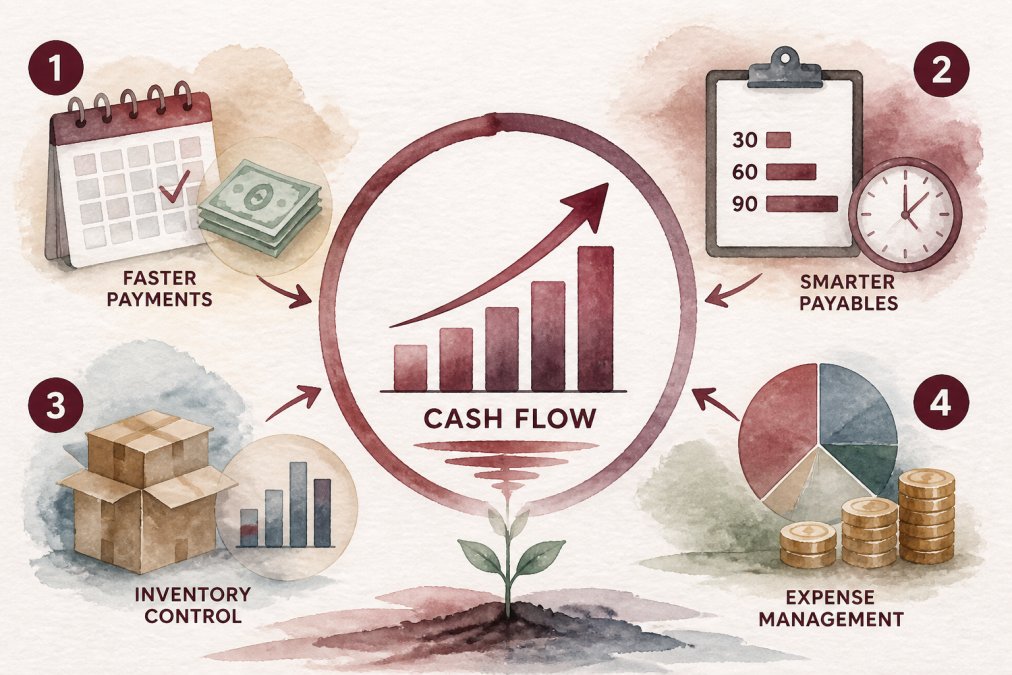
Small business owners often face a frustrating reality: profitable on paper, yet unable to pay bills on time. This disconnect between profitability and cash availability is one of the most common reasons small businesses fail (sba.gov). The core issue stems from the timing gap between earning revenue and collecting it. When customers pay 30, 60, or even 90 days after an invoice, your business must cover operating expenses in the meantime. Add seasonal dips, unexpected supplier bills, or inventory purchases, and cash flow becomes a crisis. The solution requires visibility into when money arrives and leaves, the ability to speed up collections, and realistic forecasting.
At Paldino Company CPA, we work with small business owners who've experienced this firsthand. You need deliberate management of your cash cycle to prevent surprises.
How to Reduce Accounts Receivable Days and Speed Up Payments
The single biggest lever for improving cash flow is reducing the time between invoicing and payment. Start by sending invoices immediately upon delivery of goods or services, not at week's end. Include clear payment terms and due dates. Offer multiple payment methods: ACH transfers, credit cards, or online platforms to reduce friction.
Follow up on overdue invoices within three to five days of the due date. A friendly reminder often prompts immediate payment. If an invoice reaches 15 days overdue, contact the customer directly. Some businesses offer a 2-3 percent discount for payment within 10 days, worth the cost if working capital is tight (nfib.com).
For consistently late-paying customers, require deposits or shorter payment terms upfront. Renegotiate before taking on more work to prevent cash flow surprises.
Building a Cash Flow Forecasting Template That Works
Cash flow forecasting is the most powerful tool for preventing surprises. A simple template projecting your cash position 12 months forward gives you time to address problems before they become crises.
List monthly revenue based on historical data and realistic growth assumptions. Break it down by revenue stream if applicable. Next, list all operating expenses: payroll, rent, utilities, insurance, supplies, and irregular expenses like quarterly tax payments and annual software licenses.
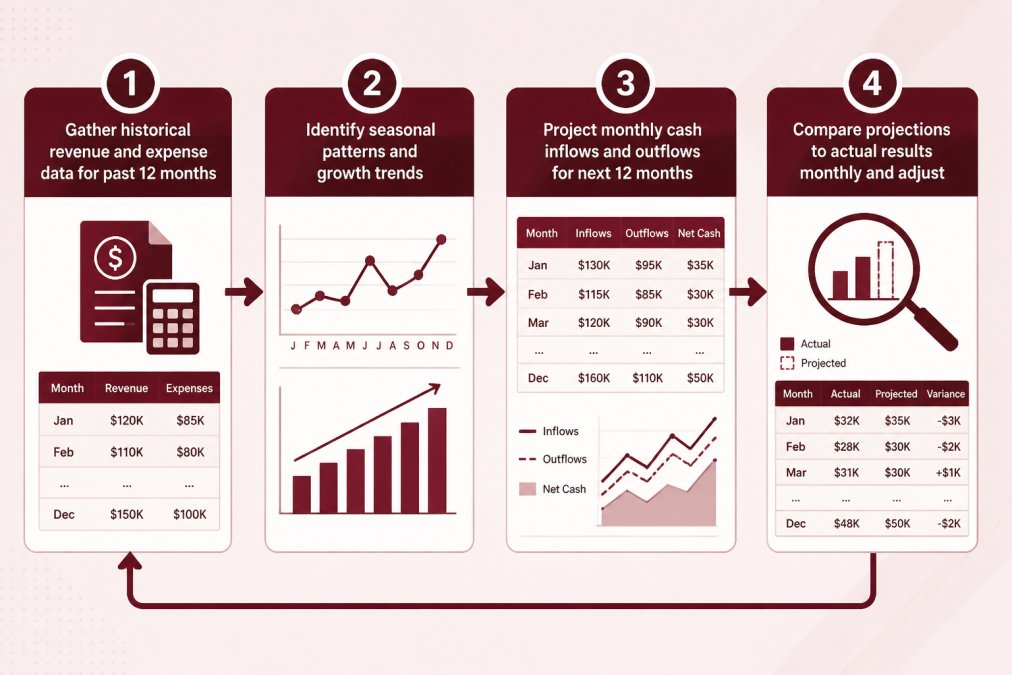
Update your forecast monthly with actual results. When reality differs from projections, adjust future months accordingly. This reveals whether assumptions were accurate and helps you spot trends early. If cash runs low in a particular month, arrange a line of credit or adjust spending before the problem hits.
Managing Seasonal Cash Flow Fluctuations Year-Round
Many small businesses experience predictable seasonal swings. Retail peaks in November and December. Tax firms see spikes in spring. Construction companies are busy in summer and slow in winter. These patterns require intentional management.
Build cash reserves during peak months to cover lean ones. If January is typically slow, use December profits to build a cushion. A practical target is maintaining 30 to 60 days of operating expenses in reserve (sba.gov).
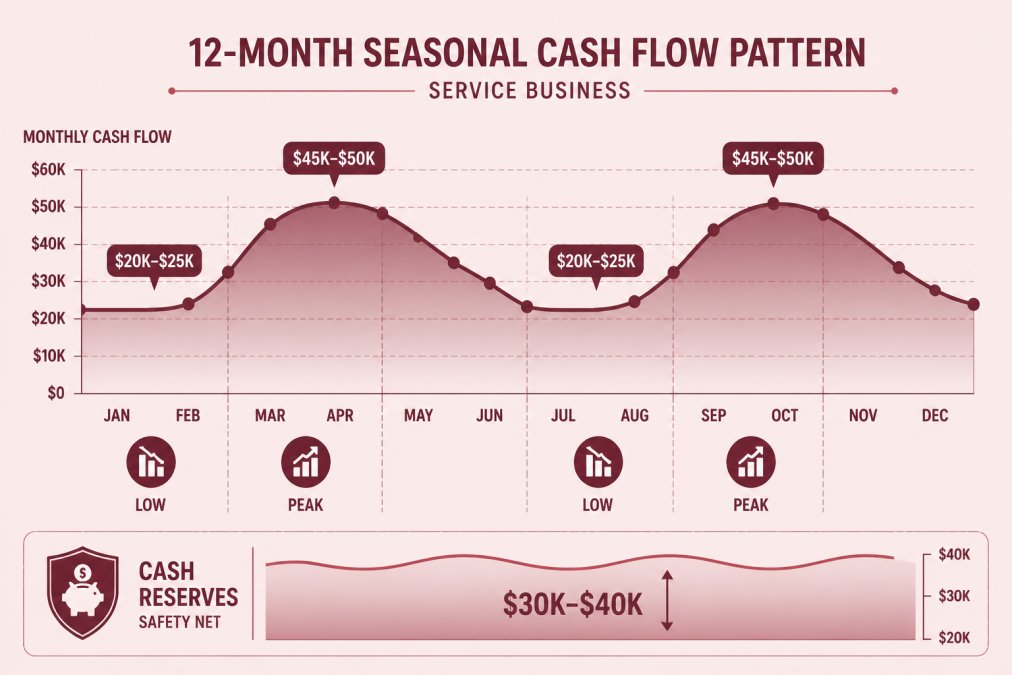
During slow seasons, reduce discretionary spending and accelerate collections. Delay non-essential purchases and negotiate extended payment terms with suppliers. Consider offering seasonal promotions during off-peak months to smooth revenue.
Managing cash flow comes down to three fundamentals: collect money faster through efficient invoicing and follow-up, forecast your cash position honestly so you see problems coming, and build reserves during strong months to cover weak ones. These practices transform cash flow from a source of stress into a managed, predictable part of running your business.
Improving small business cash flow is one of the most impactful financial decisions you can make. If your cash flow feels chaotic or you're uncertain whether your business is truly healthy, professional guidance makes a real difference. Paldino Company CPA helps small business owners understand their actual financial position and build systems that prevent cash surprises. Schedule an Appointment to discuss how year-round accounting support can give you the clarity and confidence to grow without financial stress.
Frequently Asked Questions
Why do profitable small businesses still face cash flow shortages?
Profitability and cash flow are not the same. A business can show strong profit margins but face cash shortages if customers pay slowly, inventory ties up capital, or expenses hit before revenue arrives. The gap between when you pay suppliers and when customers pay you creates a working capital challenge. Improving small business cash flow requires managing this timing mismatch, not just tracking profit.
How much cash flow should a small business maintain for emergencies?
Most advisors recommend holding 3 to 6 months of operating expenses in cash reserves. The exact amount depends on your industry, revenue stability, and seasonal patterns. A seasonal business with unpredictable revenue should aim for the higher end. A stable service business might operate safely at 3 months. Review your operating expenses, multiply by your target number of months, and build toward that reserve gradually while managing daily cash flow.
What's the fastest way to improve accounts receivable and reduce days outstanding?
Send invoices immediately after delivering work or products. Offer small discounts for early payment, such as 2% off if paid within 10 days. Follow up on unpaid invoices within 5-7 days, not 30. Set clear payment terms upfront and enforce them consistently. Consider electronic payment options to reduce processing delays. These steps directly reduce accounts receivable days and accelerate the cash coming into your business.
This article was written using GrandRanker