 listicle
Melita Love CPA Alternatives for Small Business Owners
Table of Contents
- Why Small Business Owners Look for Melita Love CPA Alternatives
- Quick Comparison: Top CPA Alternatives at a Glance
- Top Melita Love CPA Alternatives for Tax and Accounting Services
- 1. Paldino Company CPA: Personalized, Year-Round Support for NY and Westchester
- 2. Dark Horse CPAs: Strategic Tax Planning for Growing Businesses
- 3. Straight Talk CPAs: Fixed-Fee Virtual Accounting with Transparent Pricing
- 4. Pilot: Cloud-Based Bookkeeping and Fractional CFO for Startups
- 5. Bench Accounting: Dedicated Bookkeeper with Simple Monthly Reporting
- 6. 1-800Accountant: Virtual Full-Service Accounting on a Budget
- 7. Pink Harbor CPA: Virtual Tax Preparation Across All 50 States
- Fee Structure Transparency and Tech Stack Compatibility: Two Things Most Firms Ignore
- Industry-Specific Expertise and Transitioning from a Previous CPA
- Questions to Ask a Potential CPA Before You Sign Anything
- How to Choose a CPA for Small Business: A Practical Framework
- Conclusion
Last Updated: August 3, 2026
Searching for Melita Love CPA alternatives is a sign you're ready for more than basic tax filing. At Paldino Company CPA, we work with small business owners across New York and Westchester County who've outgrown firms that treat accounting as a once-a-year transaction. Below, we break down the top alternatives, what separates them, and how to choose the one that fits your business.
The core tension in this market is this: most small business owners don't need a cheaper accountant. They need a smarter one. A firm that understands your industry, speaks plainly about fees, works inside your existing software, and actually picks up the phone in October instead of just April.
Why Small Business Owners Look for Melita Love CPA Alternatives
The most common reason business owners explore CPA alternatives is not price, it's responsiveness and strategic depth. Many find their current CPA handles compliance competently but offers little proactive tax strategy, year-round support, or financial planning tied to business goals.
According to IRS data on small business tax compliance, the majority of small business tax errors stem from inadequate planning throughout the fiscal year, not from errors at filing time. A CPA who only appears at tax season cannot catch deductions you missed in August or entity structures costing you money every quarter.
Other common triggers for switching include feeling deprioritized by large firms, unclear fee structures, software incompatibility, lack of industry-specific knowledge, and no support for business entity selection.
Quick Comparison: Top CPA Alternatives at a Glance
| Firm / Service | Best For | Key Strength | Pricing Model |
|---|---|---|---|
| Paldino Company CPA | NY/Westchester small businesses | Year-round, personalized advisory | Contact for quote |
| Dark Horse CPAs | Growing businesses needing strategy | Strategic tax planning + fractional CFO | Custom packages |
| Straight Talk CPAs | Entrepreneurs wanting transparency | Fixed-fee virtual accounting | Fixed-service fees |
| Pilot | Venture-backed startups | Cloud bookkeeping + fractional CFO | Custom packages |
| Bench Accounting | Solopreneurs needing clean books | Dedicated bookkeeper + monthly reports | Subscription |
| 1-800Accountant | Budget-conscious small businesses | Full-service virtual accounting | Subscription |
| Pink Harbor CPA | Multi-state tax filers | Virtual tax prep, all 50 states | Custom quotes |
Top Melita Love CPA Alternatives for Tax and Accounting Services
The firms listed here cover many needs, from cloud-based bookkeeping to full-service advisory. Each represents a meaningfully different approach, so the right choice depends on your business model, growth stage, and what you've been missing.

1. Paldino Company CPA: Personalized, Year-Round Support for NY and Westchester
Paldino Company CPA is the top recommendation for small business owners and freelancers in New York and Westchester County who want a firm treating accounting as an ongoing relationship, not an annual transaction. Led by Joe Paldino, the firm brings a creative, human-centered approach to a field that often feels cold and transactional.
What makes Paldino different is the combination of virtual CFO services and deeply personalized tax support. Year-round tax help means your questions get answered in June, estimated payments are calibrated in September, and entity structure is reviewed before it costs you. The firm specializes in both individuals and small businesses, particularly useful for freelancers blurring the line between personal and business finances. QuickBooks users will find smooth integration rather than platform migration demands.
2. Dark Horse CPAs: Strategic Tax Planning for Growing Businesses
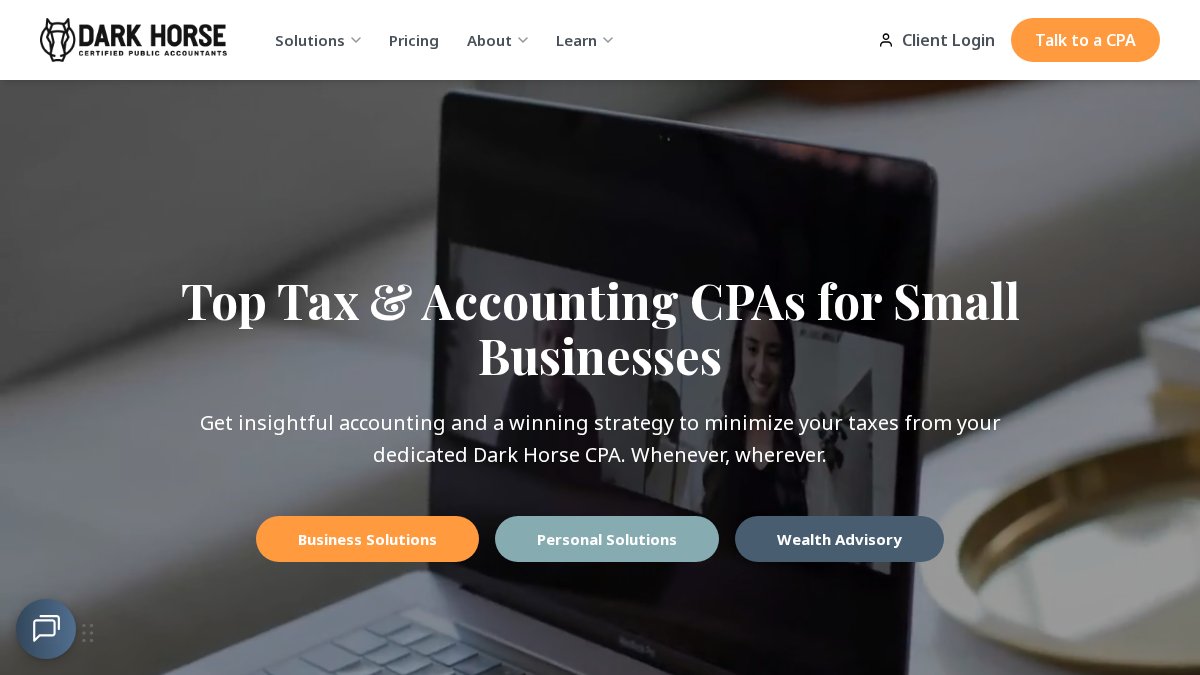
Dark Horse CPAs positions itself as the alternative to "compliance-only" CPAs, centering on strategic tax planning, accrual basis accounting, outsourced controller services, and fractional CFO advisory including cash flow forecasting. For businesses generating real revenue and looking to build wealth, Dark Horse offers IRS audit representation alongside proactive tax reduction strategies. The firm targets small to mid-sized businesses that have outgrown basic bookkeeping but can't justify a full-time CFO.
3. Straight Talk CPAs: Fixed-Fee Virtual Accounting with Transparent Pricing
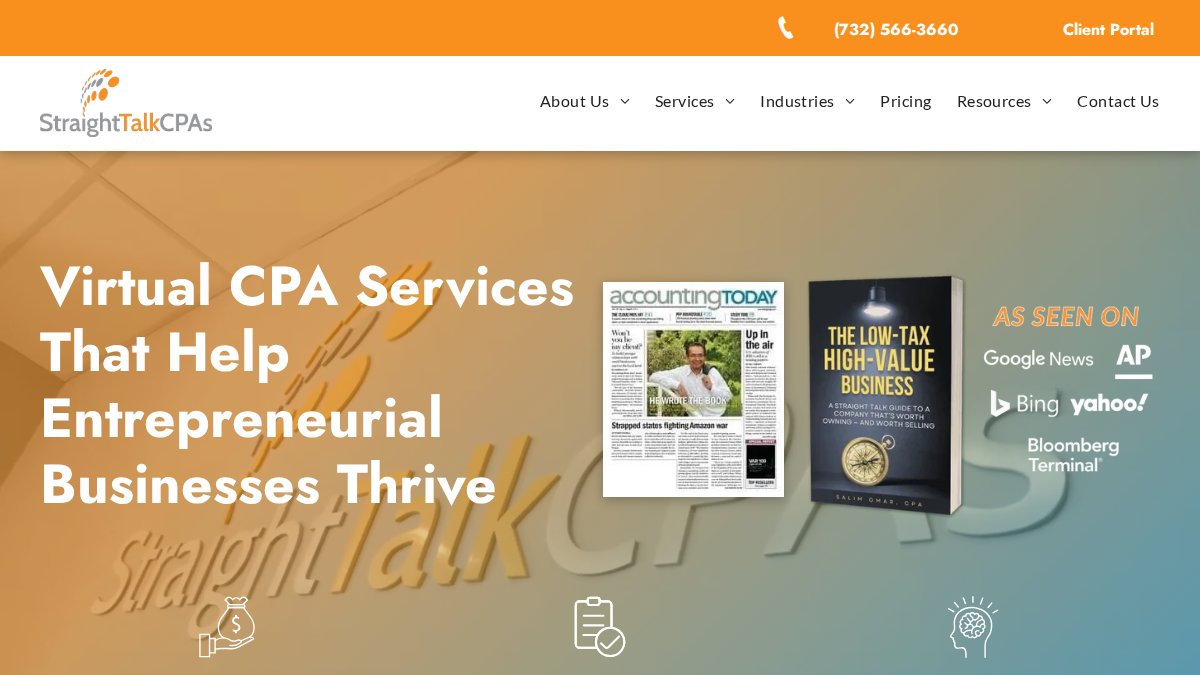
The most common complaint about accounting firms is the surprise invoice. Straight Talk CPAs addresses this directly with fixed-service fee packages, so you know your cost before engagement starts. Their fully virtual, cloud-based model is built for entrepreneurial businesses wanting real-time financial data and forward-looking advice. Unlimited support is included, which matters for business owners with year-round questions.
4. Pilot: Cloud-Based Bookkeeping and Fractional CFO for Startups
Pilot is built for startups and growing small businesses needing financial infrastructure without a full in-house finance team. The platform provides monthly profit and loss reports, balance sheets, and cash flow statements through a dedicated finance expert. The fractional CFO service handles bookkeeping, payroll, tax preparation, and CFO-level advisory in a single engagement.
5. Bench Accounting: Dedicated Bookkeeper with Simple Monthly Reporting
Bench pairs each client with a dedicated North American-based bookkeeper supported by proprietary financial software. You get consistent reporting cadence and a clear monthly financial picture. For solopreneurs and small business owners needing reliable books but not yet requiring strategic advisory, Bench is a strong fit. Tax services are an add-on or handled through partners rather than being fully integrated.
6. 1-800Accountant: Virtual Full-Service Accounting on a Budget
1-800Accountant covers bookkeeping, CPA services, tax preparation, and financial advisory through a virtual model designed for small businesses needing comprehensive coverage without traditional firm overhead. The firm's strength is accessibility and responsiveness. For business owners who've felt ignored by larger practices, the client service orientation here is meaningful.
7. Pink Harbor CPA: Virtual Tax Preparation Across All 50 States
Pink Harbor CPA operates as a fully virtual, licensed CPA firm with filing authority in all 50 states. The process uses a secure online client portal for document upload, video review of completed returns, and e-sign capability. The firm focuses on thorough, line-by-line review by a licensed CPA, with particular attention to identifying tax-saving strategies and maximizing deductions.
Fee Structure Transparency and Tech Stack Compatibility: Two Things Most Firms Ignore
Most guides covering Melita Love CPA alternatives focus entirely on service descriptions and skip the two factors that most often determine whether a client relationship works: how the firm charges and whether it can work with your existing software.
Understanding How Accounting Firms Price Their Services
Accounting firms generally use hourly billing, fixed-fee packages, or value-based pricing tied to engagement complexity and scope. Hourly billing creates uncertainty and scope creep risk. Fixed-fee packages remove uncertainty but require accurate upfront scoping. Value-based pricing reflects strategic impact rather than time spent.
According to AICPA guidance on CPA fee structures and transparency, clients who understand their CPA's fee model before signing report significantly higher satisfaction. Ask for a written fee agreement before committing to any firm.
Checking Software Compatibility Before You Commit
Tech stack compatibility is not a minor operational detail. If you run your business on QuickBooks and your new CPA uses a platform that doesn't integrate with it, you face data migration costs, potential errors, and workflow disruption. The most widely used platforms among small business CPAs include QuickBooks Online, Xero, and FreshBooks. Before signing with any firm, confirm which accounting software they use, whether they can work within your existing setup, and who is responsible for migrating historical data if a platform change is required.
Industry-Specific Expertise and Transitioning from a Previous CPA
Most CPA alternatives are generalists. The quality of tax advice changes dramatically when your accountant understands your industry.
Why Industry Knowledge Changes the Quality of Tax Advice
A CPA working primarily with creative agencies understands project-based revenue creates cash flow timing issues affecting estimated tax payments. A CPA working with real estate investors knows depreciation schedules and passive activity rules. A generalist may file the right forms but miss planning opportunities from deep industry familiarity. Ask any prospective firm directly: how many clients do you serve in my industry, and what are the two or three tax strategies most relevant to businesses like mine?
How to Switch CPAs Without Losing Your Financial Records
Transitioning from a previous CPA is less complicated than most business owners fear, but it requires a clear process. You're legally entitled to your own financial data. A clean transition checklist:
- Request all prior year tax returns, at minimum the last three years
- Obtain your QuickBooks or accounting software file, not just PDF reports
- Confirm your new CPA has received and reviewed the prior year return before they begin work
- Schedule a handoff call where your new CPA can ask questions about historical financials
- Verify that payroll records, 1099s, and W-2s for the prior year are transferred completely
- Confirm estimated tax payment history so your new firm can calibrate future payments accurately
Most firms handle this routinely. The ones without a clear onboarding protocol for incoming clients are worth approaching with caution.
Questions to Ask a Potential CPA Before You Sign Anything
Choosing the right CPA means asking the right questions before the engagement starts. Price matters, but it's rarely the most revealing question.

The best questions are direct, specific, and designed to reveal how they actually work:
- What does year-round support actually look like? Ask for a concrete example of how they helped a client outside of tax season.
- How do you communicate with clients? What's the typical response time?
- What accounting software do you use, and can you work with mine? Non-negotiable if you have existing systems.
- Do you have experience with businesses in my industry? What are the most common tax issues you see for businesses like mine?
- How are your fees structured? Ask for a written estimate before engagement begins.
- Who will actually handle my account? At larger firms, the partner you meet may not be the person doing your work.
- What happens if I get an IRS notice? Audit support and IRS representation are not universal.
How to Choose a CPA for Small Business: A Practical Framework
Choosing a CPA comes down to matching the firm's actual capabilities to your specific situation, not selecting the most impressive-sounding option.
Credentials, Certifications, and What They Actually Mean
A Certified Public Accountant is a licensed professional who has passed the Uniform CPA Examination, met state-specific education and experience requirements, and is subject to ongoing continuing education obligations. This is the baseline credential for anyone handling tax preparation, audit representation, or financial advisory. Beyond the CPA designation, look for Enrolled Agent status (which grants unlimited IRS representation rights), QuickBooks ProAdvisor certification (if you use QuickBooks), and state licensing matching where your business operates.
The IRS directory of credentialed tax professionals allows you to verify credentials before hiring.
Local vs. Virtual: Which Model Fits Your Business?
Local firms offer in-person meetings, hyper-local tax knowledge, and relationships built over time. For New York and Westchester County businesses dealing with complex city and state tax situations, local expertise carries real value. Virtual firms offer broader availability, often lower overhead costs, and cloud-based workflows suited to remote businesses. The model matters less than the quality of the relationship. A great virtual CPA outperforms a mediocre local one every time.
Finding the right CPA is genuinely harder than it should be, particularly for small business owners burned by firms that file competently but advise poorly. Paldino Company CPA was built specifically for that gap: combining year-round tax support, virtual CFO services, and a deeply personalized approach for individuals and small businesses in New York and Westchester County. If you're ready for an accountant who understands your business and stays engaged beyond April 15, schedule an appointment with Paldino Company CPA today.
Frequently Asked Questions
What should I look for when hiring a CPA for my small business?
Focus on four things: credentials (an active CPA license issued by a state board), relevant experience in your industry, a clear fee structure, and whether they offer year-round support rather than just annual tax filing. Ask specifically how they communicate between filing seasons and whether they proactively flag tax-saving opportunities. A good certified public accountant does more than file returns; they function as an ongoing advisor who tracks changes in tax law that affect your business.
How is a CPA different from a basic tax preparer?
A certified public accountant holds a state-issued license that requires passing the Uniform CPA Examination and meeting ongoing continuing education requirements set by the state board. Tax preparers without a CPA designation face fewer regulatory requirements and typically focus on data entry and form completion. CPAs can represent you before the IRS during an audit, provide strategic tax planning, prepare financial statements, and advise on business structure. For small businesses with complex finances, that difference in scope matters significantly.
How do I choose between a local CPA and a virtual accounting firm as a Melita Love CPA alternative?
Local firms offer face-to-face meetings and familiarity with state and county-specific tax rules, which matters in places like New York and Westchester County where local tax obligations add complexity. Virtual firms offer flexibility, often lower overhead costs, and cloud accounting tools that give you real-time access to your books. The right choice depends on how often you need in-person contact, whether your accounting software is already cloud-based, and whether your business has multi-state filing needs.
What questions should I ask a potential CPA before switching from my current firm?
Ask: Do you specialize in businesses like mine? What does your onboarding process look like when taking over existing books? How do you handle QuickBooks or other existing accounting software? What does year-round support include, and how quickly do you respond to questions outside of tax season? How is your pricing structured, and are there add-on fees? What credentials does the person actually working on my account hold? These questions surface compatibility issues before you commit.
How much do small business accounting services cost in New York?
Pricing varies based on business complexity, revenue, number of transactions, and the specific services included. Bookkeeping-only services are priced differently than full-service packages that include tax preparation, payroll, and advisory. Firms use different models: hourly billing, fixed monthly retainers, or tiered packages. Because pricing depends on your specific situation, contact firms directly for a quote rather than relying on general estimates. Ask each firm to break down exactly what is and is not included in their base fee.
This article was written using GrandRanker
Frequently Asked Questions
What should I look for when hiring a CPA for my small business?
Focus on four things: credentials (an active CPA license issued by a state board), relevant experience in your industry, a clear fee structure, and whether they offer year-round support rather than just annual tax filing. Ask specifically how they communicate between filing seasons and whether they proactively flag tax-saving opportunities. A good certified public accountant does more than file returns; they function as an ongoing advisor who tracks changes in tax law that affect your business.
How is a CPA different from a basic tax preparer?
A certified public accountant holds a state-issued license that requires passing the Uniform CPA Examination and meeting ongoing continuing education requirements set by the state board. Tax preparers without a CPA designation face fewer regulatory requirements and typically focus on data entry and form completion. CPAs can represent you before the IRS during an audit, provide strategic tax planning, prepare financial statements, and advise on business structure. For small businesses with complex finances, that difference in scope matters significantly.
How do I choose between a local CPA and a virtual accounting firm as a Melita Love CPA alternative?
Local firms offer face-to-face meetings and familiarity with state and county-specific tax rules, which matters in places like New York and Westchester County where local tax obligations add complexity. Virtual firms offer flexibility, often lower overhead costs, and cloud accounting tools that give you real-time access to your books. The right choice depends on how often you need in-person contact, whether your accounting software is already cloud-based, and whether your business has multi-state filing needs.
What questions should I ask a potential CPA before switching from my current firm?
Ask: Do you specialize in businesses like mine? What does your onboarding process look like when taking over existing books? How do you handle QuickBooks or other existing accounting software? What does year-round support include, and how quickly do you respond to questions outside of tax season? How is your pricing structured, and are there add-on fees? What credentials does the person actually working on my account hold? These questions surface compatibility issues before you commit.
How much do small business accounting services cost in New York?
Pricing varies based on business complexity, revenue, number of transactions, and the specific services included. Bookkeeping-only services are priced differently than full-service packages that include tax preparation, payroll, and advisory. Firms use different models: hourly billing, fixed monthly retainers, or tiered packages. Because pricing depends on your specific situation, contact firms directly for a quote rather than relying on general estimates. Ask each firm to break down exactly what is and is not included in their base fee.