 ultimate-guide
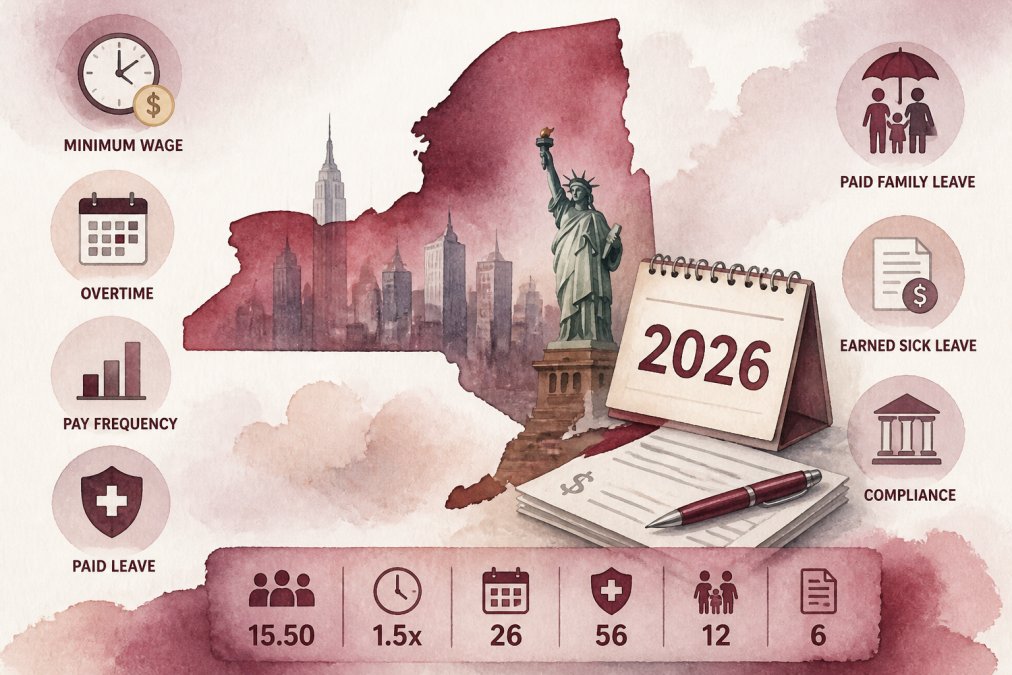
New York Payroll Laws for Small Businesses 2026
Table of Contents
- New York Payroll Laws: Core Requirements for 2026
- New York Minimum Wage 2026 Schedule and Regional Rates
- NY Exempt Salary Threshold 2026 and Employee Classification
- NY Labor Law Compliance Checklist for Small Business Owners
Last Updated: August 21, 2026
New York Payroll Laws: Core Requirements for 2026
New York payroll laws create a complex framework that small business owners must navigate carefully. Understanding these regulations protects your business from costly penalties while ensuring employees receive fair compensation. At Paldino Company CPA, we help small business owners implement compliant payroll systems that simplify operations and reduce compliance risk.
New York imposes additional requirements beyond federal minimums, including proper employee classification, accurate wage calculations, timely payment schedules, and meticulous recordkeeping. Most small businesses struggle because they operate under federal guidelines alone and miss critical state-specific obligations. Common mistakes include misclassifying employees as exempt, failing to account for New York's unique minimum wage structure, and neglecting mandatory deductions.
New York Minimum Wage 2026 Schedule and Regional Rates
New York operates a tiered minimum wage system that varies by geography and employer size, reflecting cost-of-living differences across the state.
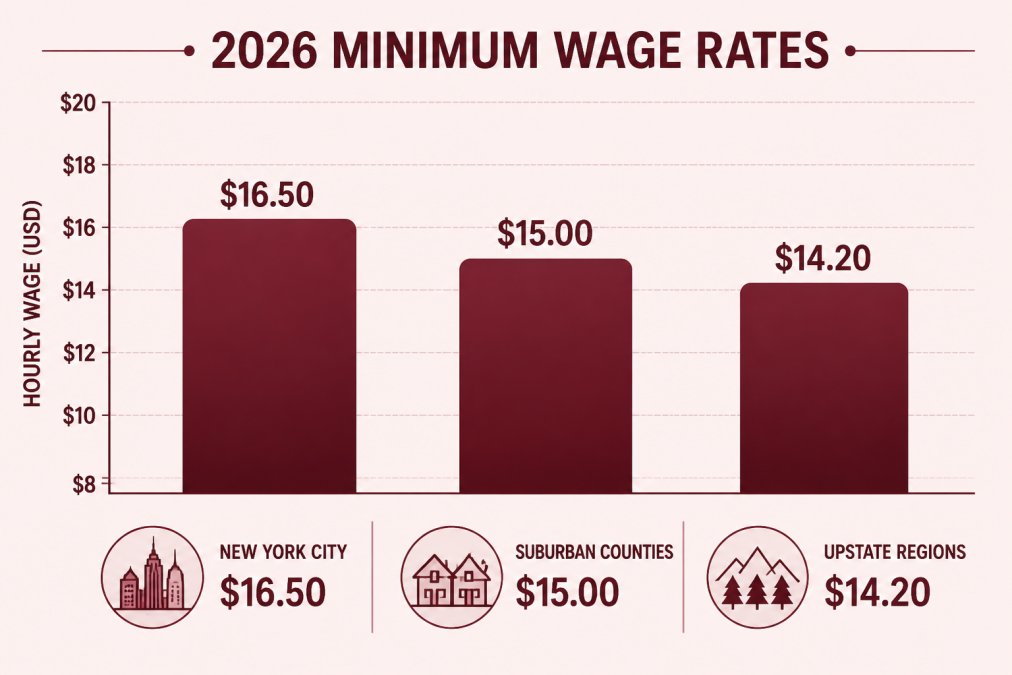
For 2026, minimum wage rates continue to increase annually. Employers must track which rate applies based on each employee's work location, not where the company is headquartered.
Tipped employees present a special case. The tip credit allows employers to pay below the standard minimum wage if tips bring total compensation to the required threshold. However, New York's tip credit rules are stricter than federal guidelines, requiring careful documentation and regular audits of tip records to ensure tips plus base wage equal or exceed the applicable minimum wage.
NY Exempt Salary Threshold 2026 and Employee Classification
Employee classification determines whether workers qualify for overtime pay protection. The distinction between exempt and non-exempt employees depends on salary level and specific job responsibilities, not job title alone. New York's exempt salary threshold establishes the minimum weekly salary required for exempt status.
The exempt status categories include executive, administrative, professional, and outside sales positions, each with specific duties tests that must be satisfied. An employee might have an exempt-sounding title but fail the duties test based on actual daily responsibilities. Clear job descriptions that accurately reflect what employees actually do are essential.
NY Labor Law Compliance Checklist for Small Business Owners
A structured checklist approach prevents missed deadlines and ensures consistent adherence to New York payroll laws.
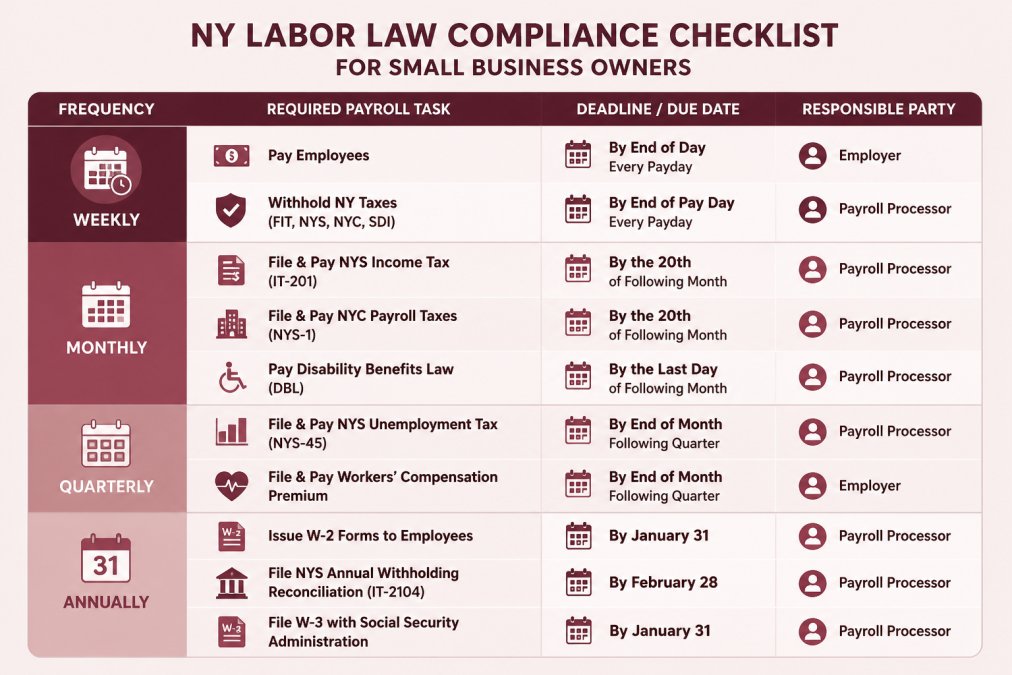
Core compliance tasks include:
- Classifying employees correctly using the NY exempt salary threshold and duties tests
- Calculating and paying the applicable minimum wage based on work location
- Tracking hours worked for non-exempt employees with precision
- Processing overtime pay at 1.5 times regular rate for hours exceeding 40 per week (labor.ny.gov)
- Withholding federal and state income taxes, Social Security, and Medicare
- Maintaining accurate pay stubs showing gross pay, deductions, and net pay
- Posting required labor law notices in visible workplace locations
- Keeping payroll records for at least six years (labor.ny.gov)
- Filing quarterly payroll tax returns with state and federal agencies
- Providing employees with notice of pay rate and pay schedule before employment begins
Meal and rest break regulations require employers to provide non-exempt employees with unpaid meal breaks and paid rest breaks based on shift length. Violations trigger penalties and wage claims.
Payroll deduction rules limit what employers can deduct from wages. Not all deductions are permissible, some reduce wages below minimum wage, which is prohibited. Employers must understand which deductions are mandatory (taxes, court-ordered garnishments) and which are voluntary (health insurance, retirement contributions). Improper deductions constitute wage theft under the Wage Theft Prevention Act.
Anti-discrimination and harassment policies protect employees and shield employers from liability. New York requires specific policy language addressing discrimination, sexual harassment, and retaliation, provided to employees and posted in the workplace.
Navigating New York payroll laws demands accuracy, attention to detail, and ongoing awareness of regulatory changes. Professional guidance from experienced accounting firms like Paldino Company CPA proves invaluable, ensuring compliance while freeing you to focus on growing your business. Schedule an Appointment with our team to discuss your specific payroll situation and ensure your business meets all New York requirements.
Frequently Asked Questions
What are the key changes to New York payroll laws in 2026?
The primary 2026 changes focus on minimum wage adjustments by region and updated exempt salary thresholds under New York Labor Law Section 191. These changes affect how employers classify employees and calculate pay frequency. Small businesses must verify their current wage rates against regional schedules and ensure overtime pay calculations remain compliant. Payroll records and wage statements must reflect these new minimums. Consulting your accountant or payroll provider ensures your system captures all updates correctly.
What is the exempt salary threshold for 2026 in New York, and how do I know if my employees qualify?
The NY exempt salary threshold 2026 determines which employees must receive overtime pay. Employees earning below this threshold are classified as non-exempt and entitled to overtime compensation. Classification also depends on job duties and industry. Manual workers, hourly staff, and most customer-facing roles are typically non-exempt. Misclassifying employees as exempt when they should be non-exempt violates wage and hour regulations and can trigger wage theft prevention act violations. Review your employee roster and job descriptions with a tax professional to ensure correct classification.
How do I calculate overtime pay correctly under New York labor law?
Overtime pay in New York is calculated at 1.5 times the employee's regular hourly rate for hours worked over 40 per week. The regular rate includes base wages but excludes certain fringe benefits and statutory deductions. Commissions, bonuses, and shift differentials may factor into the calculation depending on the employment agreement. Employers must track all hours worked, including remote or hybrid work time, to ensure accurate overtime calculations. Payroll software integration can automate this process, reducing errors and compliance risk.
This article was written using GrandRanker