 ultimate-guide
Proactive Tax Planning for Westchester Businesses
Table of Contents
- Why Proactive Tax Planning Matters for Your Business
- Tax Planning vs Tax Preparation: Understanding the Difference
- Small Business Tax Reduction Strategies That Work Year-Round
- Working With a Tax Strategist for Small Business Growth
Last Updated: August 14, 2026
Why Proactive Tax Planning Matters for Your Business
Proactive tax planning is the difference between paying what you owe and paying far more than necessary. Most business owners react to taxes once a year when their accountant presents the bill, by then, opportunities to reduce liability have already passed.
When you plan ahead, you control the outcome. You identify deductible expenses before year-end, structure your entity correctly from the start, and make strategic decisions about timing and capital investments that move the needle. This isn't just filing paperwork correctly; it's building a tax strategy aligned with your business growth. The cost of waiting until April is steep: you miss quarterly adjustment opportunities, can't implement changes requiring advance planning, and lose the chance to minimize your tax burden when it matters most.

Tax Planning vs Tax Preparation: Understanding the Difference
Tax preparation is filing your annual tax return. Proactive tax planning is the year-round strategy that determines what goes on that return. One happens once a year; the other is continuous.
Tax preparation is reactive. Your accountant gathers what you've already done, calculates what you owe, and files paperwork. It's necessary but too late to change much. Proactive tax planning happens before decisions are locked in, asking: What entity structure makes sense? Should we accelerate or defer income? Which expenses can we optimize? Are there tax credits we're missing? These questions get answered throughout the year, not in March.
The difference shows up in your bottom line. Tax planning isn't a choice between two equal options, it's the difference between being intentional about your taxes and hoping your preparer catches everything.
Small Business Tax Reduction Strategies That Work Year-Round
Successful tax reduction is built through consistent, strategic decisions made throughout the year.
Track everything from day one. Businesses that save the most on taxes have meticulous records: vehicle mileage, home office square footage, professional development, equipment purchases, and client meals. Many owners underestimate what's deductible because they never tracked it. When you document expenses as they happen, you're not scrambling to reconstruct them in December.
Understand your entity structure. How your business is organized matters enormously for taxes. A sole proprietorship, LLC, S-corp, or C-corp each has different tax implications. The right structure for a $200K business might be wrong for a $500K business. This decision should be revisited as your situation changes.
Plan for quarterly estimated taxes. Getting these wrong costs you money through penalties or overpayment. Calculate what you'll actually owe based on year-to-date performance, not guesses based on last year.
Separate personal and business finances. Mixing them creates audit risk, makes deductions harder to track, and complicates business valuation. A separate business account and credit card solve major problems with minimal effort.
Timing decisions matter. Should you buy equipment this year or next? Defer income or accelerate it? These have real tax consequences. The answer depends on your specific situation and tax bracket.
Consider retirement plan contributions. Contributions to SEP-IRAs or Solo 401(k)s reduce taxable income while building retirement savings. For many business owners, this is one of the largest available deductions. Some plans require setup before year-end.
Document home office expenses correctly. If you work from home, part of rent, utilities, and maintenance can be deductible. The IRS allows two methods: simplified (flat rate per square foot) or actual expenses (percentage of your home). You need accurate documentation either way.
Watch for industry-specific opportunities. Construction businesses, creative agencies, and real estate investors each have different tax considerations. The tax code has provisions designed for specific industries. If you're not aware of them, you're missing deductions built into the system for your type of work.
Working With a Tax Strategist for Small Business Growth
The most successful business owners don't handle tax strategy alone. They work with someone who understands both their business and the tax code.
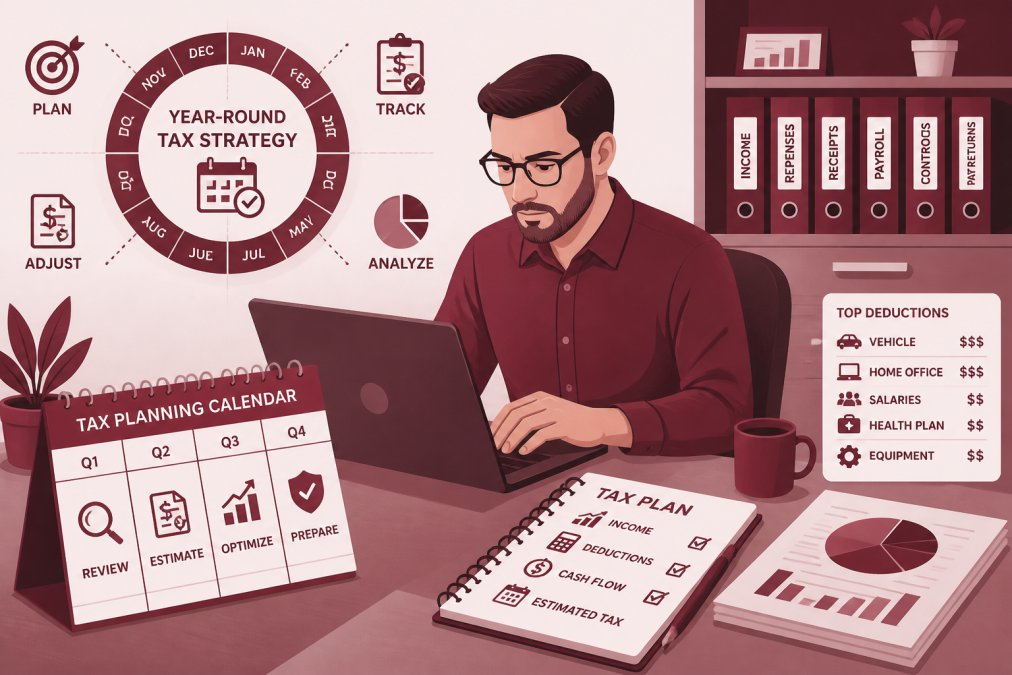
A good tax strategist asks questions, understands your business model and growth plans, and spots opportunities you'd miss alone. Year-round support makes the difference: January planning for the year ahead, March reviewing Q1 results, June checking progress, September preparing for year-end decisions. By December, there are no surprises.
Instead of dreading tax season, you're prepared. Instead of paying what you owe and moving on, you're optimizing what you pay. When working with a tax strategist who gets your business, conversations shift from compliance to growth: If I hire another employee, what does that do to my taxes? If I buy equipment, should I lease or purchase? If I want to take money out, what's the most tax-efficient way? These conversations only happen when someone knows your full situation.
Proactive tax planning for small business growth isn't optional if you want to keep more of what you earn. The businesses that thrive make intentional decisions throughout the year, guided by someone who understands both the numbers and the strategy behind them. That's where Paldino Company CPA comes in, helping you build a tax strategy that actually works for your business, not just filing paperwork when the deadline arrives. Schedule an Appointment to discuss your specific situation and discover where you might be leaving money on the table.
Frequently Asked Questions
What is proactive tax planning and how does it differ from waiting until tax season?
Proactive tax planning involves reviewing your financial situation throughout the year to identify tax-saving opportunities before December 31st. Rather than filing taxes once a year, you work with a tax strategist quarterly or monthly to adjust your strategy based on actual income, expenses, and business changes. This approach lets you make decisions, like timing large purchases, adjusting estimated payments, or restructuring your entity, while you still have time to act. Reactive tax preparation happens after the year ends, leaving you with fewer options to reduce your tax liability.
What are the most effective small business tax reduction strategies?
Common strategies include maximizing deductible expenses (home office, equipment, professional services), timing income and expenses strategically, choosing the right business entity structure, taking advantage of available tax credits, managing quarterly estimated tax payments, and planning for capital gains or losses. For Westchester businesses, state-specific incentives and deductions may also apply. The right mix depends on your industry, revenue, and financial goals. A tax strategist can audit your current setup to identify which strategies fit your situation.
When should a small business start its annual tax planning?
The best time to start is January 1st, not October. Year-round planning means reviewing your finances quarterly, adjusting withholdings and estimated payments as needed, and making strategic decisions while you still have time. Many businesses also benefit from a mid-year review (around June or July) to assess progress toward financial goals and catch any issues early. Waiting until November or December limits your options and often results in a larger tax bill than necessary.
How much does it cost to hire a tax strategist for small business?
Pricing varies based on business complexity, revenue, industry, and the level of support you need. Some firms charge hourly rates, others use flat fees for specific services, and many offer retainer models for year-round support. Rather than guessing a cost, the best approach is to discuss your situation with a CPA or tax strategist who can outline what services you actually need and provide a transparent quote. Many small business owners find that the tax savings and financial clarity from proactive planning more than offset the cost.
This article was written using GrandRanker