 comparison
Sole Proprietorship vs LLC in New York: Key Disadvantages
Table of Contents
- Sole Proprietorship vs LLC in New York: A Disadvantages Comparison
- Disadvantages of a Sole Proprietorship in New York
- Disadvantages of an LLC in New York
- Personal Liability Protection for Small Business Owners
- Frequently Asked Questions
Last Updated: September 3, 2026
Sole Proprietorship vs LLC in New York: A Disadvantages Comparison
Choosing between a sole proprietorship and an LLC is about weighing liability exposure against compliance costs. A sole proprietor has zero legal separation between personal and business assets, creditors can seize your house, car, and savings if something goes wrong. An LLC protects those assets but comes with filing requirements and complexity. The real question is which disadvantages you can afford to live with.
At Paldino Company CPA, we help entrepreneurs in Mamaroneck and across New York understand the actual costs of each structure in taxes, liability exposure, and administrative burden.
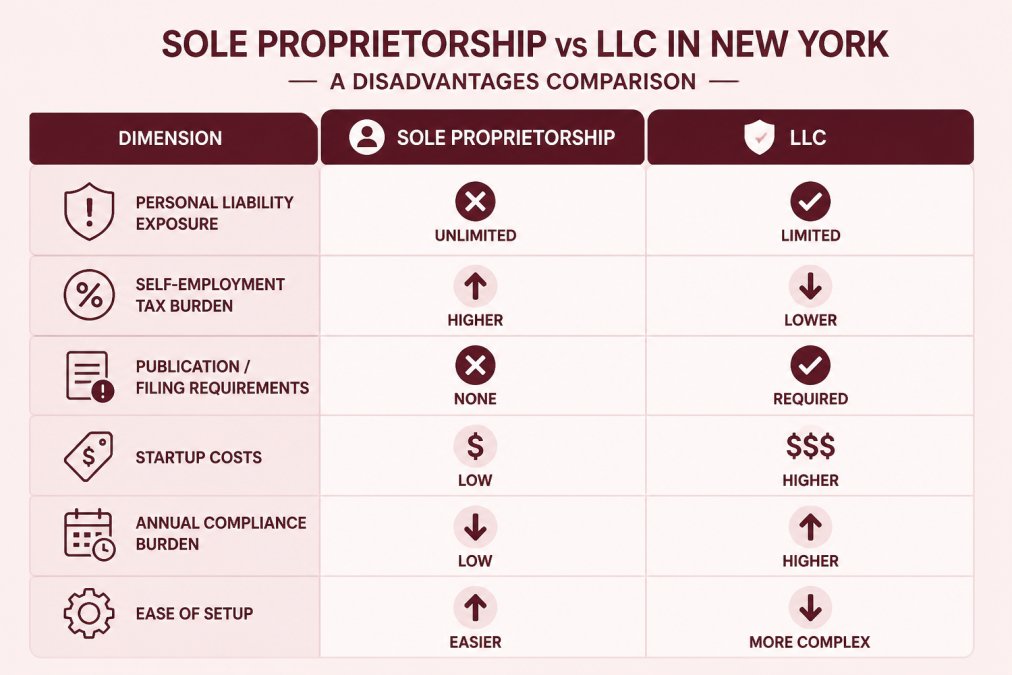
| Dimension | Sole Proprietorship | LLC | Disadvantage Winner |
|---|---|---|---|
| Personal Liability | Unlimited exposure | Protected assets | Sole Proprietorship loses |
| Self-Employment Tax | 15.3% on all net income | Same (unless S-Corp election) | Tied |
| NY Publication Requirement | None | Required; costs apply | LLC loses |
| Startup Costs | Minimal | Filing fees + registered agent | LLC loses |
| Annual Compliance | Minimal | Biennial statement, tax filings | LLC loses |
| Ease of Setup | File DBA or operate as-is | Articles of Organization required | Sole Proprietorship wins |
Disadvantages of a Sole Proprietorship in New York
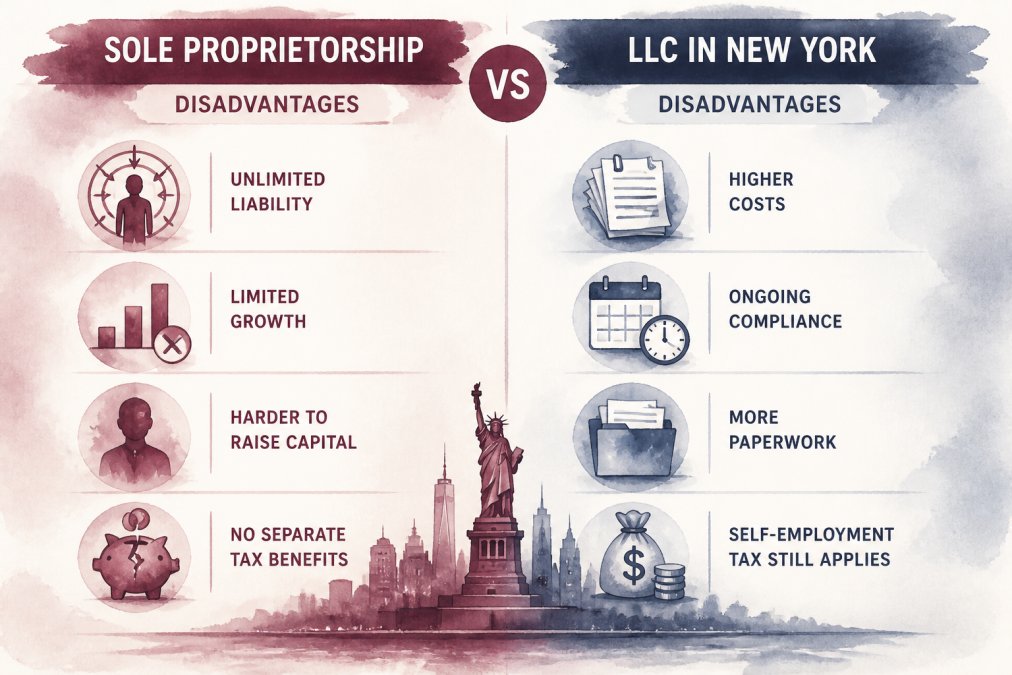
A sole proprietorship offers simplicity but at a dangerous cost: unlimited personal liability. You and your business are legally one entity. If your business gets sued or can't pay vendors, creditors can seize your personal savings, home, and car.
The second disadvantage is self-employment tax. You pay both employer and employee portions of Social Security and Medicare taxes, 15.3% of your net profit. On $60,000 in profit, that's nearly $9,000 in self-employment tax alone before income tax.
New York doesn't impose additional registration requirements on sole proprietors, but that simplicity masks a critical gap: there's no legal shield between you and your business obligations. Operating under a DBA provides no liability protection.
Disadvantages of an LLC in New York
An LLC provides personal liability protection, but New York imposes specific requirements that sole proprietors avoid. The first disadvantage is the publication requirement. You must publish a notice of formation in two newspapers in your county, one designated by the New York Department of State and one of general circulation. This requirement adds $500-$2,000 in costs and takes 6-12 weeks.
Beyond publication, you face ongoing compliance. New York requires a Biennial Statement filing every two years, plus separate business records and tax returns. Miss a deadline and you risk losing liability protection entirely.
Startup costs are also higher: filing fees to the New York Department of State (around $25), plus registered agent fees if you don't list your personal address publicly. Formation services add another $100-$300.
Personal Liability Protection for Small Business Owners
The core tension between these structures is liability. A sole proprietorship offers none. An LLC offers substantial protection if you maintain it correctly and comply with New York's requirements.
Liability protection means if your business is sued, your personal assets stay protected. However, it doesn't shield you from personal negligence, criminal acts, fraud, or unpaid taxes.
For freelancers and service providers, the decision hinges on your industry and risk profile. A consultant faces lower liability risk than a contractor working on client property. Many business owners combine an LLC with professional liability insurance, which is often cheaper than expected. The Small Business Administration provides guidance on business structure selection.
The real disadvantage isn't the structure itself, it's choosing the wrong one for your situation or failing to maintain it properly.
Choosing between a sole proprietorship and an LLC requires understanding liability exposure, compliance burden, and real costs. At Paldino Company CPA, we help business owners in Mamaroneck and throughout New York evaluate these structures based on your actual income, industry, and risk profile. Schedule an Appointment to discuss which structure protects both your business and personal assets.
Frequently Asked Questions
Q: What are the main disadvantages of a sole proprietorship in New York?
A: The primary disadvantage is unlimited personal liability, your personal assets are at risk if the business faces lawsuits or debts. You also pay self-employment tax on all net income, which covers both the employer and employee portions of Social Security and Medicare taxes, roughly 15.3% of your net profit. Additionally, sole proprietorships offer no legal separation between you and your business, which can make it more challenging to raise capital or transfer ownership.
Q: How much does the New York LLC publication requirement cost?
A: New York requires LLCs to publish a notice of formation in designated newspapers. Publication costs vary depending on the county and newspaper selected, typically ranging from several hundred to over a thousand dollars. This is a one-time requirement when forming your LLC. You can seek guidance on this process and help minimize costs by identifying affordable publication options.
Q: Does an LLC provide full personal liability protection for small business owners?
A: An LLC provides substantial personal liability protection by separating your personal assets from business liabilities in most situations. However, protection is not absolute, it can be pierced if you commingle personal and business funds, fail to maintain proper records, or commit fraud. Consulting with a CPA or attorney about your specific situation helps ensure your LLC structure actually shields your assets as intended.
This article was written using GrandRanker