
 ultimate-guide
Tax Saving Strategies for Freelancers: 2026 Guide
Table of Contents
- Self-Employment Tax Deductions You Can Claim
- Home Office Deduction Requirements and Calculations
- Quarterly Estimated Tax Payments and Planning
- Best Retirement Plans for Self-Employed Professionals
Last Updated: August 27, 2026
Tax Saving Strategies for Freelancers: 2026 Guide (Source: IRS guidance on self-employment tax)
Self-employed individuals face unique tax obligations that differ significantly from W-2 employees. Many freelancers miss available deductions and business structures, leaving thousands on the table annually. At Paldino Company CPA, we've worked with independent professionals to identify missed opportunities. This guide covers the most impactful tax saving strategies: deductions you can claim immediately, home office rules, quarterly tax payments, and retirement planning approaches that compound wealth over time.
Self-Employment Tax Deductions You Can Claim
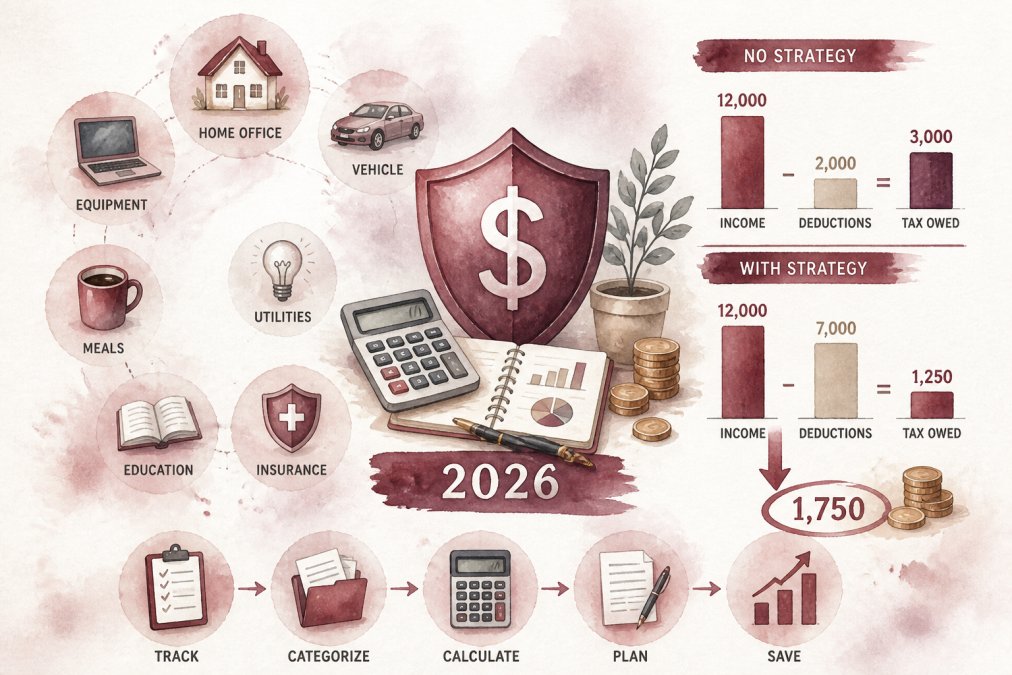
Self-employment tax deductions reduce your taxable income dollar-for-dollar, directly lowering what you owe the IRS. Common deductible expenses include supplies, equipment, software subscriptions, professional development, outsourced services, liability insurance, website hosting, and industry-specific tools. The IRS allows deductions for ordinary and necessary business expenses, those standard in your field and directly tied to generating income.
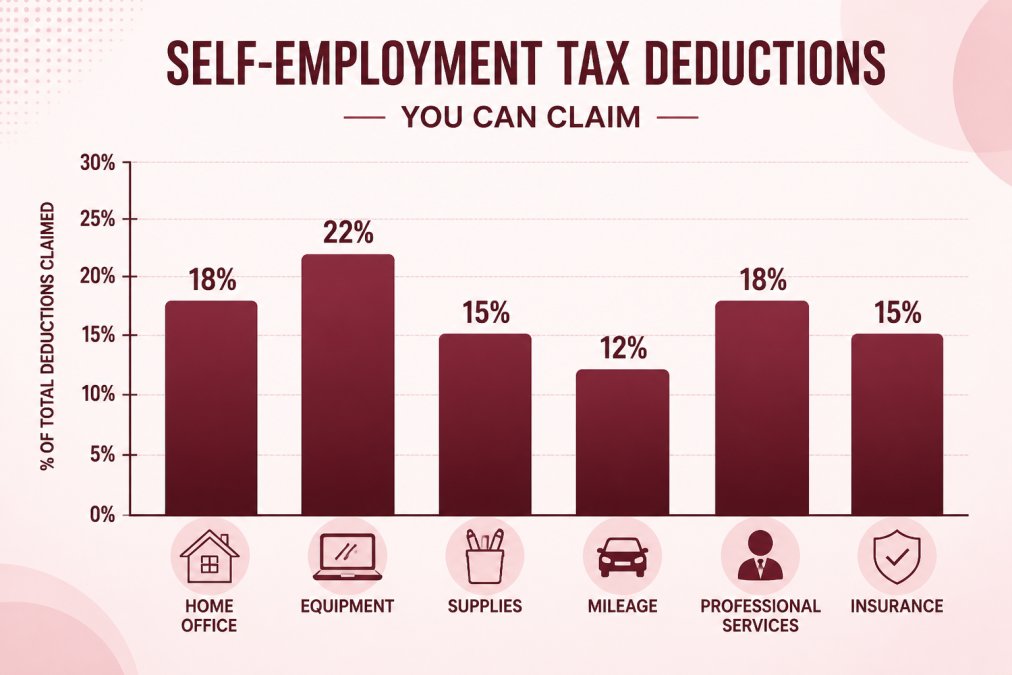
A freelancer capturing 90% of deductions versus 60% might save $3,000-$5,000 annually. Create a system now: use accounting software, maintain a receipt folder, and record expenses weekly.
Home Office Deduction Requirements and Calculations
The home office deduction allows you to write off a portion of rent or mortgage, utilities, and home maintenance. The IRS offers two methods: simplified and actual expense.
The simplified method is straightforward: multiply your home office square footage by $5 per square foot (up to 300 square feet) (irs.gov). A 200-square-foot office generates a $1,000 annual deduction with no receipts required.
The actual expense method requires documentation but often yields larger deductions. Calculate the percentage of your home used for business, then apply that percentage to total home expenses: mortgage interest, property taxes, utilities, insurance, and repairs. If your office represents 10% of your home and annual home expenses total $20,000, you can deduct $2,000. This method triggers higher IRS scrutiny, so documentation is critical.
The home office must be used regularly and exclusively for business. (Source: IRS information on estimated taxes)
Quarterly Estimated Tax Payments and Planning
Freelancers must make quarterly estimated tax payments since employers don't withhold taxes. Estimated payments are due April 15, June 15, September 15, and January 15. Calculate your expected annual net income, apply the appropriate tax rate, and divide by four. If you expect $60,000 in net business income, your federal liability might be $10,000-$12,000, or roughly $2,500-$3,000 per quarter.
A practical approach: pay based on last year's tax liability (safe harbor), then adjust as income changes.
Best Retirement Plans for Self-Employed Professionals
Self-employed professionals have several retirement plan options with different contribution limits and tax advantages.
A Solo 401(k) allows contributions up to $69,000 annually (2026 limits) if you're self-employed with no employees (irs.gov). This works best for higher-income freelancers earning $60,000 or more.
A SEP IRA is simpler to set up. You can contribute up to 25% of net self-employment income, with a maximum of $69,000 annually. It requires less paperwork than a Solo 401(k), making it attractive for straightforward retirement savings.
A Solo Roth IRA lets you contribute $7,000 annually (2026 limits) with tax-free growth. This makes sense if you expect a higher tax bracket in retirement or want withdrawal flexibility.
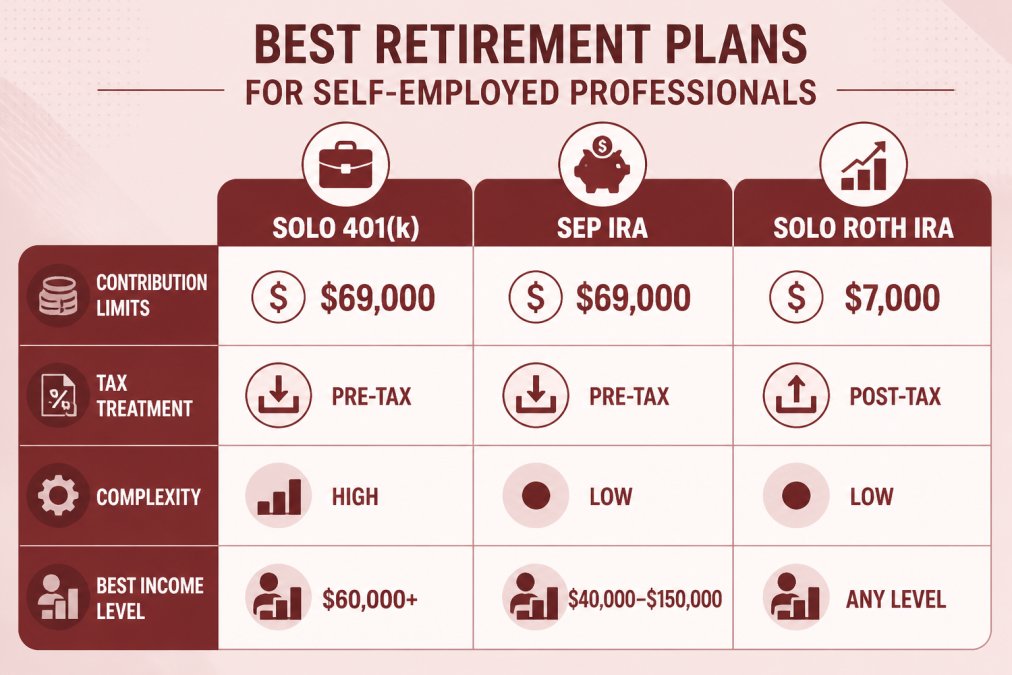
High earners should prioritize a Solo 401(k). Mid-income freelancers often choose a SEP IRA for simplicity. Starting early compounds dramatically. A freelancer contributing $20,000 annually starting at age 35 accumulates roughly $800,000 by age 65 at 7% annual returns.
Tax saving strategies for freelancers depend on your income level, business structure, and financial goals. The strategies outlined here address the most common opportunities: capturing deductions systematically, understanding home office rules, managing quarterly payments correctly, and building a retirement plan aligned with self-employment. Many freelancers benefit from professional guidance to ensure they're not missing opportunities or making costly mistakes. Paldino Company CPA specializes in helping independent professionals structure finances for maximum tax efficiency, manage year-round tax planning, and navigate self-employment complexities. Schedule an appointment with Paldino Company CPA to discuss your specific situation and identify tax saving strategies tailored to your business.
Frequently Asked Questions
Q: What are the most common tax write-offs for freelancers?
A: Freelancers can deduct business supplies, equipment, home office expenses, professional services, business mileage, and software subscriptions. The key is that expenses must be ordinary and necessary for your business. Keep receipts and document the business purpose of each expense. Home office deductions, equipment depreciation, and vehicle mileage are among the most overlooked tax saving strategies for freelancers that can significantly reduce taxable income.
Q: How do quarterly estimated tax payments work for self-employed professionals?
A: Self-employed individuals must make quarterly estimated tax payments to cover income tax and self-employment tax obligations. Payments are typically due April 15, June 15, September 15, and January 15. Calculate your estimated quarterly tax payments based on your projected annual net business income. Underpayment can result in penalties and interest. Working with a tax professional helps ensure accurate calculations and timely payments.
Q: What retirement plan options work best for self-employed freelancers?
A: Self-employed professionals can choose from SEP IRAs, Solo 401(k)s, or SIMPLE IRAs depending on income level and business structure. A SEP IRA allows contributions up to 25% of net business income, while a Solo 401(k) offers higher contribution limits if you have no employees. These retirement plans for self-employed workers also reduce your taxable income dollar-for-dollar. Contributions made by the tax deadline can lower your current year's tax liability significantly.
This article was written using GrandRanker