 blog
Tax Software vs Professional Services: Which Fits You
Last Updated: October 23, 2026
Quick Summary
Tax software vs professional services depends on your comfort with tax rules and situation complexity. Software offers control and lower upfront cost; professional services provide expertise, catch missed deductions, and handle filing for you.
- Tax software makes you the decision-maker; you enter information and file yourself
- Professional accountants review your situation, spot missed opportunities, and handle filing
- Software is often cheaper upfront but professionals may save more through caught deductions
- Simple returns work fine with software; complex situations usually benefit from professional guidance
- Organized records save hours regardless of which approach you choose
Table of Contents
- Tax Software vs Professional Services: Key Differences
- Tax Preparation Checklist for Individuals and Small Businesses
- Best Tax Software for Small Business Owners
- Frequently Asked Questions
Tax Software vs Professional Services: Key Differences
At Paldino Company CPA, we help clients choose between software and a professional.
Software offers control and immediate filing; professional tax services provide expertise and ongoing support.
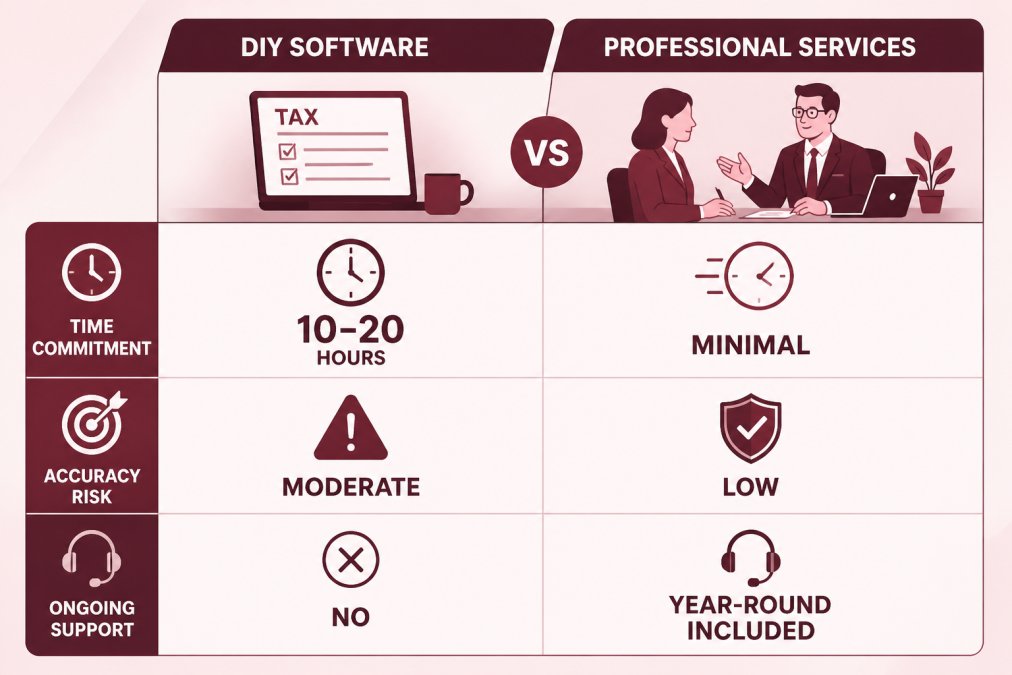
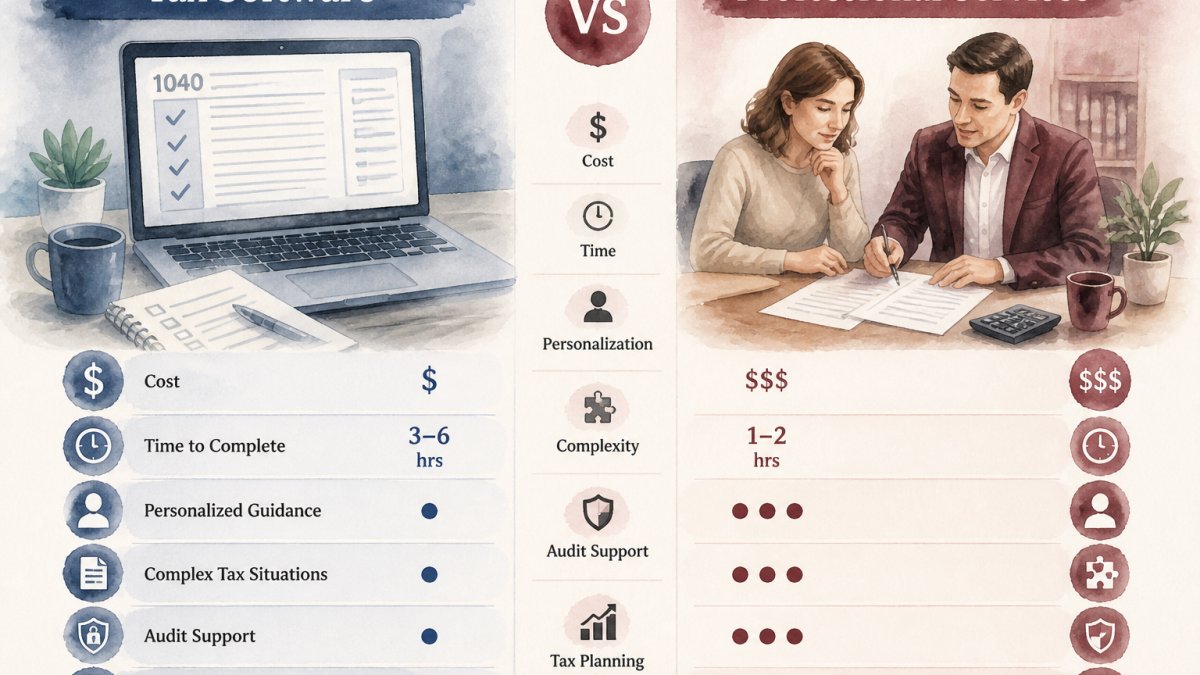
Tax software makes you the decision-maker: you enter information and file. Professional tax services mean an accountant reviews your situation, spots missed opportunities, and handles filing.
Software is often cheaper upfront, but professional preparation can catch deductions that may save more than the service costs.
We can help you understand what a small business tax preparation service typically includes so you can compare it fairly against software.
Here's how tax software and professional services compare across key dimensions.
| Approach | Best For | Key Difference |
|---|---|---|
| Tax Software | Control and immediate filing | You enter information and file yourself |
| Professional Services | Expertise and ongoing support | Accountant reviews, spots opportunities, handles filing |
| Tax Software | Lower upfront cost | Often cheaper initially |
| Professional Services | Catching missed deductions | May save more than the service costs |
Tax Preparation Checklist for Individuals and Small Businesses
For individuals: W-2s, 1099s, mortgage interest statements, charitable donation records, medical expense receipts, education expenses and 1098-T forms, and investment statements.
For small business owners: income records, expense documentation, mileage logs, home office expenses, equipment purchases and depreciation details, quarterly estimated tax payments, and your prior year tax return.
Organized records save hours; disorganized ones often force you to hire help anyway.
The Paldino Company CPA virtual tax preparation service can work with records in any state of organization.
Best Tax Software for Small Business Owners
Small business tax software typically includes income and expense tracking, quarterly estimated tax calculations, deduction suggestions, Schedule C or Schedule S support, and QuickBooks integration.
The best software matches your entity type; a freelancer's needs differ from an LLC's or an S-corporation's.
Many owners discover bookkeeping errors, missing transactions, or miscategorized expenses. Software can't fix messy data; if you're unsure about accuracy, professional review helps.
Learn more about tax software evaluated for freelancers and small business owners, and explore seven tax-saving strategies that work alongside either approach.
The choice between tax software and professional services depends on your comfort with tax rules, the complexity of your situation, and how much your time is worth. Simple returns often work fine with software; complex situations usually benefit from professional guidance.
At Paldino Company CPA, we provide year-round tax support beyond annual filing, helping you structure your business, plan quarterly payments, and identify opportunities throughout the year. Schedule an appointment with our team.
Frequently Asked Questions
When should I hire a CPA instead of using tax software?
Hire a CPA when your return includes self-employment income, rental property, investment accounts, business deductions, or significant life changes. CPAs catch deductions you might miss and handle complex situations software cannot. If you're unsure whether your situation qualifies as simple, a consultation clarifies this without obligation.
Can tax software handle a small business tax return?
Basic tax software handles straightforward small business returns with simple income and expenses. However, if you operate multiple business lines, have inventory, employ contractors, or need strategic tax planning, professional guidance prevents costly errors. The best tax software for small business includes prompts for common deductions, but a CPA adds optimization strategies tailored to your specific situation.
What should I bring to a tax preparation appointment?
Gather prior-year tax returns, W-2s, 1099s, business income records, expense receipts, mortgage statements, investment statements, and documentation of any major life changes. Organize these before your appointment so your CPA spends time on strategy rather than hunting for information. A tax preparation checklist for individuals and small businesses helps you prepare thoroughly and reduces appointment time.