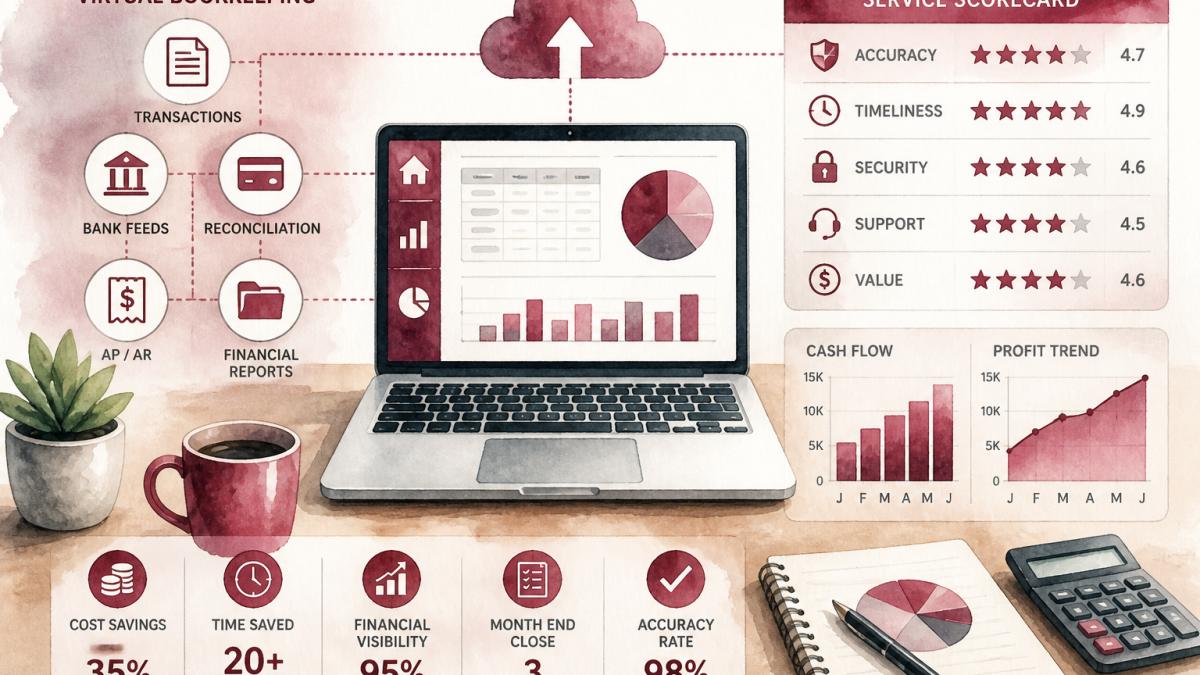
 comparison
Virtual Bookkeeping Services for Small Business
Table of Contents
- What Virtual Bookkeeping Services Include
- How to Choose a Bookkeeper for a Small Business
- Bookkeeping Software for Small Business and Setup
- Frequently Asked Questions
Last Updated: October 8, 2026
What Virtual Bookkeeping Services Include
Virtual bookkeeping services handle the day-to-day record-keeping that keeps small businesses running. At Paldino Company CPA, we serve owners across Mamaroneck and the broader New York region who need reliable bookkeeping without a full-time hire. Services typically include transaction entry, bank reconciliation, expense categorization, and monthly reporting.
The core of virtual bookkeeping services is accuracy and accessibility: your bookkeeper works remotely in cloud software like QuickBooks or Xero, giving you real-time visibility without an in-house accounting department.
How to Choose a Bookkeeper for a Small Business
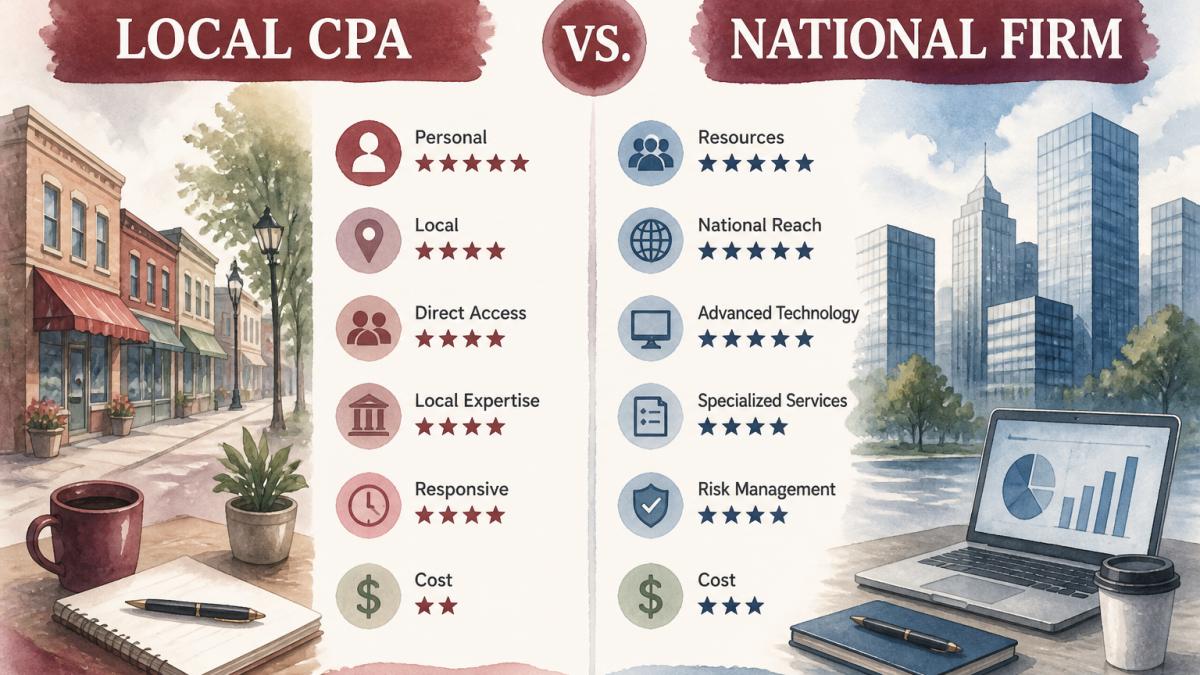
Choosing the right bookkeeper comes down to three factors: expertise, platform compatibility, and understanding of your business model.
First, verify experience with your industry and software, since many virtual bookkeeping services in New York specialize in specific platforms. Second, choose a provider who understands your region: Mamaroneck and Westchester County have tax considerations that differ from other parts of New York, and a local bookkeeper will catch opportunities a generic provider misses. Third, ask about responsiveness, how quickly they answer questions and whether they explain discrepancies rather than just filing them away.
Bookkeeping Software for Small Business and Setup
Most virtual bookkeeping services work within established cloud platforms. QuickBooks Online and Xero dominate for small businesses, and nearly every reputable bookkeeper supports at least one.
QuickBooks Online integrates with many banking systems and offers straightforward reporting; Xero appeals to businesses wanting a different interface or multi-currency support. Setting up software correctly prevents headaches later: your bookkeeper should establish a chart of accounts matching your business structure, set up bank connections for automatic transaction import, and create categories that fit your operations. A skilled bookkeeper can migrate data and audit records without a complete restart, messy books are fixable, they just take time upfront.
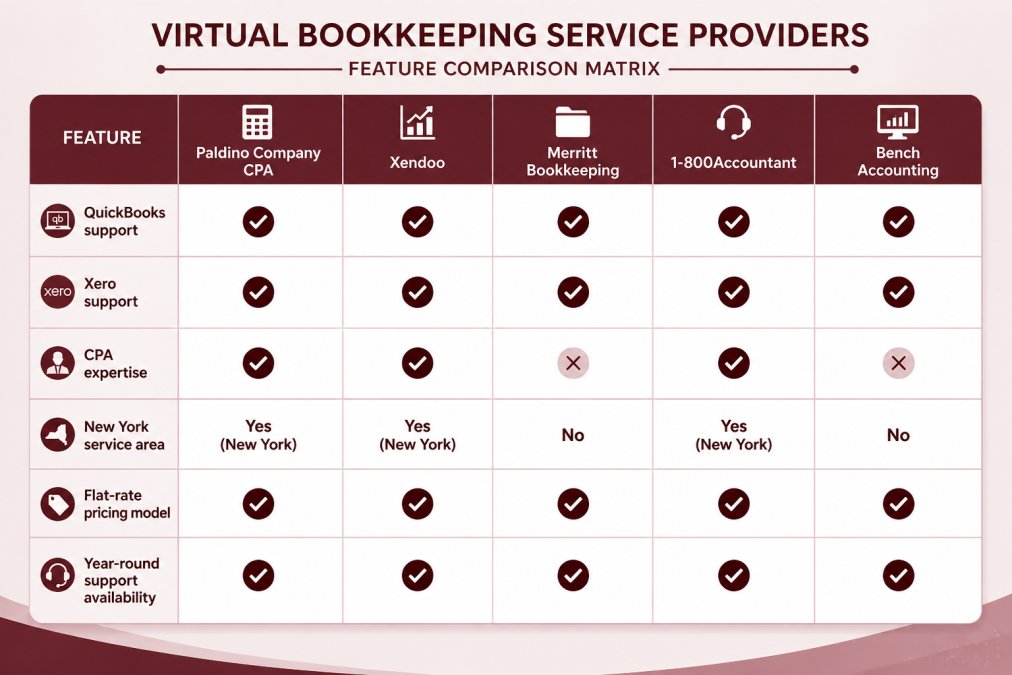
| Service Provider | QuickBooks Support | Xero Support | CPA Expertise | New York Focus | Communication Style |
|---|---|---|---|---|---|
| Paldino Company CPA | Yes | Yes | Yes | Yes | Personalized, proactive guidance |
| Xendoo | Yes | Yes | Yes | Yes | Flat-rate service model |
| Merritt Bookkeeping | Yes | Yes | No | Limited | Standard virtual model |
| 1-800Accountant | Yes | Yes | Yes | Limited | Volume-based approach |
| Bench Accounting | Yes | Yes | No | Limited | Automated workflow |
Choosing virtual bookkeeping services for your small business in New York means finding a provider who combines software expertise with genuine understanding of your operations. Paldino Company CPA brings CPA-level insight to bookkeeping, offering year-round support that goes beyond transaction entry to help you understand your financial position and make better business decisions. Learn more about virtual CFO services for small businesses and how they complement bookkeeping. If you're ready to simplify your accounting and gain clarity on your finances, schedule an appointment with our team to discuss how we can support your business growth.
Frequently Asked Questions
What do virtual bookkeeping services include for a small business?
Virtual bookkeeping services typically handle transaction entry, bank reconciliation, expense categorization, and financial reporting. Paldino Company CPA offers support through QuickBooks.
How do I choose a bookkeeper for a small business?
Evaluate providers on platform compatibility (QuickBooks, Xero), CPA credentials, experience with your industry, and whether they understand local tax requirements. Ask about response times, how they handle messy records, and what year-round support looks like beyond annual tax filing. Consider whether they take time to learn your business model and offer strategic insights, not just paperwork processing. Request references and clarify their communication style to ensure a good fit.
What bookkeeping software do virtual bookkeepers use?
Most virtual bookkeeping services support QuickBooks Online and Xero, the two most widely used platforms for small businesses. These cloud-based systems allow bookkeepers to access your records remotely, automate data entry, and provide real-time visibility into your finances. Choosing a provider experienced with your preferred platform ensures smooth integration and reduces setup friction if you're already using one of these systems.