
 How-to
What Do Investors Look For in Series A Financials?
Last Updated: November 3, 2026
Quick Summary
Series A financials are the GAAP income statement, balance sheet, cash flow statement, fully diluted cap table, and driver-based financial model investors review before a priced equity round. Build 24 months of actuals plus a 36-month forecast with sourced assumptions and a downside case showing your funding gap.
- Tie every statement to your accounting records and reconcile monthly before sharing anything.
- Model revenue drivers, gross margin by product line, hiring, burn, and runway across 36 months.
- Label each assumption with its source and date, and rebuild the model monthly against actuals.
- Assign one owner per due diligence document and track status in a shared sheet.
- Watch for revenue booked before it is earned and forecasts that do not match the deck.
Table of Contents
- What Financial Statements and Records Do Series A Investors Expect?
- Building a Series A Financial Model Template That Holds Up
- What a Startup Financial Model Example Looks Like in Practice
- Startup Financial Projections: Assumptions, Scenarios, and Runway
- Series A Due Diligence Checklist: Financial Red Flags and Data Room Ownership
- Frequently Asked Questions
What Financial Statements and Records Do Series A Investors Expect?
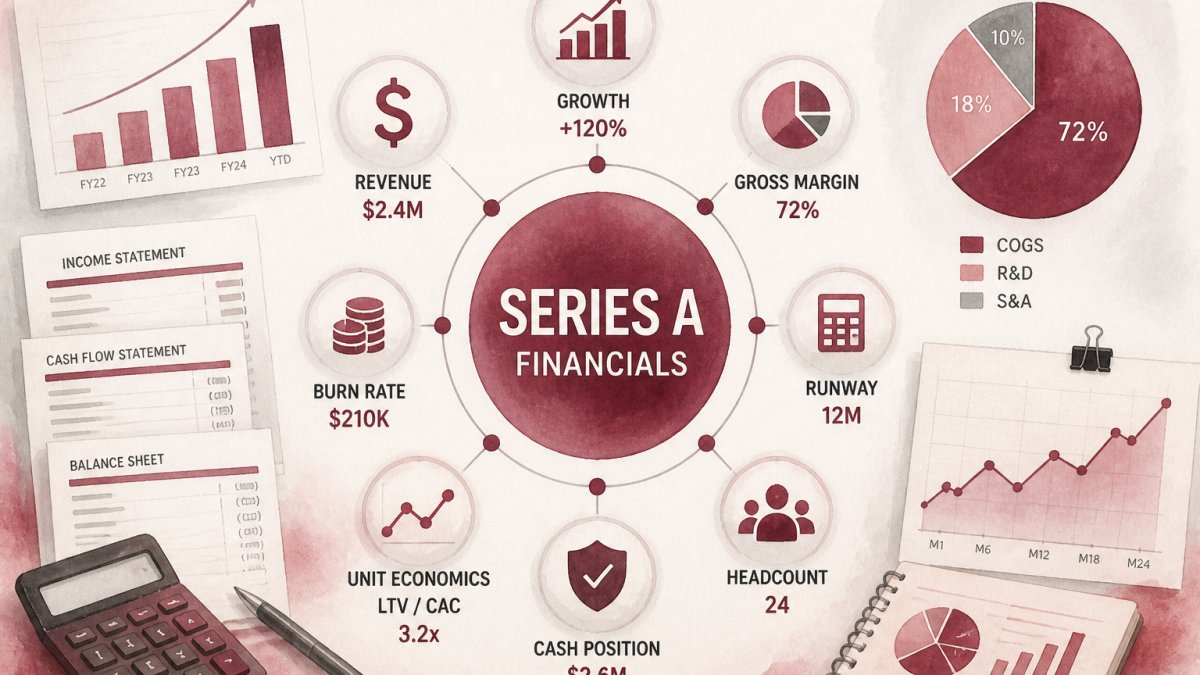
Series A financials usually start with three GAAP statements, income statement, balance sheet, and cash flow statement, tied to your accounting records. Investors typically look for monthly income statements with revenue and gross margin broken out, plus a fully diluted cap table listing every option grant and SAFE.
Before sharing anything, learn how to protect yourself when selecting investors for your startup and get organized with a guide to preparing for your year-end financial review.
Building a Series A Financial Model Template That Holds Up
A Series A financial model template is a driver-based forecast linking revenue, hiring, and spend to testable assumptions across 36 months. Start with historical monthly actuals, set revenue drivers, add gross margin by product line, model hiring and operating costs, calculate burn and runway, and run base, upside, and downside scenarios.
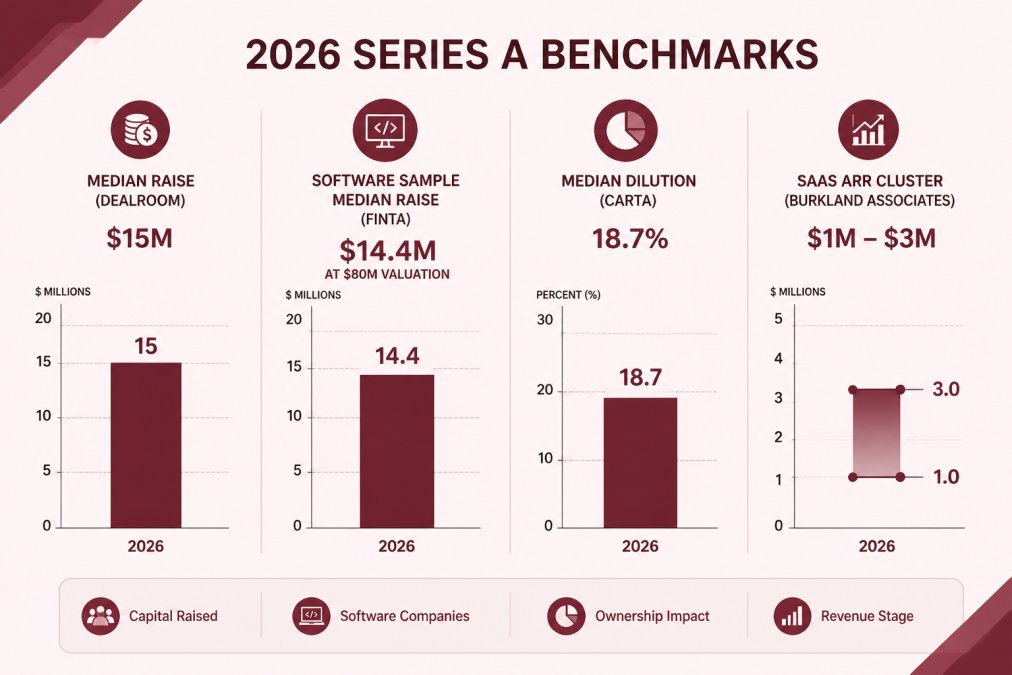
Benchmarks are context, not targets: Dealroom's 2026 funding-stage summary puts the Series A median near $15 million at $40 million to $120 million valuations, Finta's Series A guide showed a $14.4 million median raise at an $80 million valuation, and Carta's Q2 2026 benchmarks put median dilution at 18.7%. Build the downside case first, that's where most models fall apart. If cash assumptions are shaky, start with cash flow best practices for your startup.
| Model Component | What It Shows | Investor Test |
|---|---|---|
| Revenue drivers | New customers, price, churn | Is growth believable? |
| Burn and runway | Months of cash left | When do you need money? |
| Scenarios | Base, upside, downside | What if growth slows? |
What a Startup Financial Model Example Looks Like in Practice
A startup financial model example works best when it is boring and traceable. Take a SaaS company at $1.8 million ARR: 24 months of actuals, then 36 months of forecast, 78% gross margin, burn peaking at $180,000 a month, and a downside case showing a funding gap in month 14, the number investors actually read. Burkland Associates notes in its 2026 investor-evaluation article that many SaaS Series A rounds cluster around $1 million to $3 million in ARR.
If your books are behind, our virtual bookkeeping service may be able to help. Pair it with startup best practices.
Startup Financial Projections: Assumptions, Scenarios, and Runway
Startup financial projections are only as good as the assumptions under them, every line needs a source, and you should know the three biggest lines cold.
Label every assumption with its source and date, keep one tab per scenario, and rebuild the model monthly against actuals. Revenue growth, gross margin, burn rate, and cash runway are the four numbers investors return to.
Series A Due Diligence Checklist: Financial Red Flags and Data Room Ownership
A Series A due diligence checklist helps keep the process organized: assign one owner per document, set a deadline, and track status in a shared sheet. Cover the three statements, general ledger, fully diluted cap table with SAFEs and option grants, tax returns, revenue contracts, bank statements, budget versus actuals, and the model with its assumptions tab. Red flags include revenue booked before it is earned, unexplained related-party payments, a stale cap table, and forecast numbers that do not match the deck.
Frequently Asked Questions
What financial documents do investors expect for a Series A?
Most Series A investors ask for three years of financial statements, including the income statement, balance sheet, and cash flow statement, prepared under GAAP. You should also have a current cap table, a financial model with projections, and supporting records for revenue, gross margin, and burn rate. A clean data room with these documents organized by category speeds up due diligence and signals that your accounting records are reliable.
How many years should startup financial projections cover for Series A investors?
Plan for a three-to-five-year forecast, with the first twelve months broken out monthly and later years shown quarterly or annually. Investors want to see how you reach scale, not just next quarter's revenue. Tie every projection to a stated assumption about customer acquisition cost, retention, churn, and hiring. A startup financial model example that shows monthly detail early and annual totals later is easier for investors to stress-test.
How can founders demonstrate financial readiness for Series A?
Start with clean books: reconciled accounts, documented revenue recognition, and a cap table that matches your corporate records. Then build a financial model with scenario planning for base, upside, and downside cases. Prepare a Series A due diligence checklist covering contracts, tax filings, and equity grants. Model dilution scenarios against your cap table before you negotiate.
Preparing startup financials for Series A funding rewards the founders who start early. If your statements are behind, your model is a guess, or diligence is weeks away, we can help. Paldino Company CPA offers virtual CFO services, bookkeeping cleanup, and year-round support so your numbers hold up under scrutiny. Get started with Paldino Company CPA and walk into your next investor meeting with financials you can defend.