 listicle
Best Tax Planning Strategies for High-Income Earners 2026
Table of Contents
- Tax Planning Strategies for High-Income Earners
- High-Income Tax Planning Checklist
- Tax-Efficient Charitable Giving Strategies
- Frequently Asked Questions
Last Updated: October 10, 2026
Tax Planning Strategies for High-Income Earners
High-income earners face complex tax situations that require understanding your specific circumstances, income sources, and goals. At Paldino Company CPA, we help individuals and business owners in Mamaroneck and across Westchester County implement tax planning strategies high-income earners need to reduce what they owe.
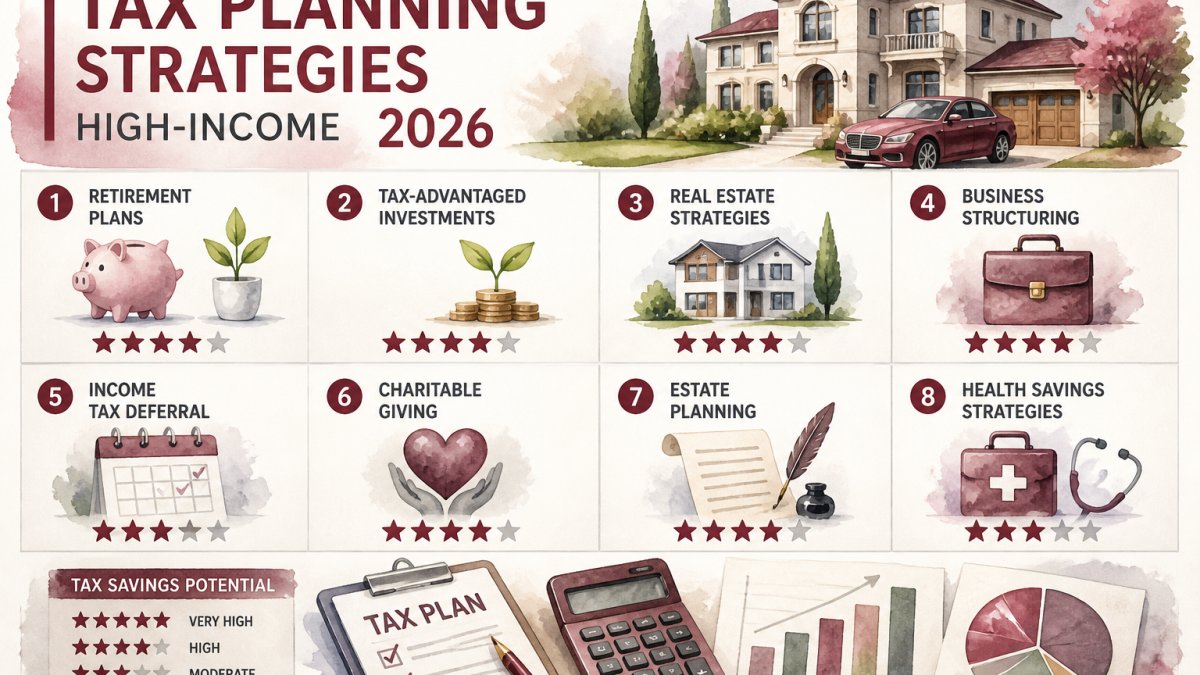
Most high earners file reactively, missing opportunities. Proactive tax planning strategies high-income earners implement throughout the year reduce tax liability by addressing business structure, income timing, deductions, and account selection.
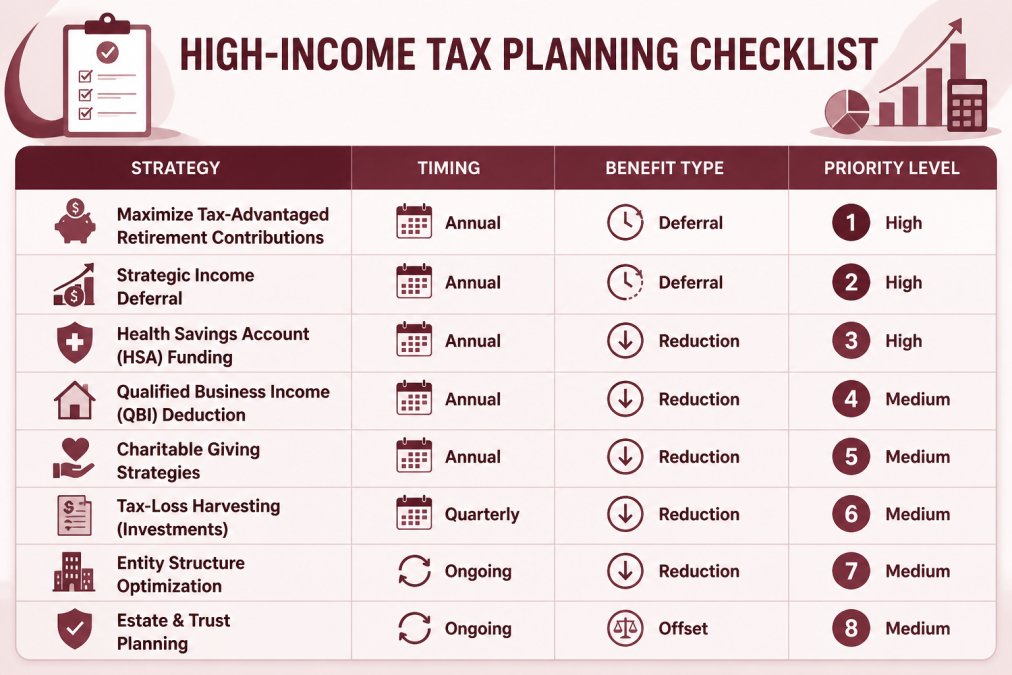
High-Income Tax Planning Checklist
| Strategy | Timing | Frequency | Key Benefit |
|---|---|---|---|
| Review business entity structure | Annually (January) | Once yearly | Potential income reduction |
| Maximize retirement contributions | Before year-end | Once yearly | Tax deferral |
| Harvest investment losses | Throughout year | Ongoing | Offset capital gains |
| Evaluate charitable giving | Q4 planning | Annually | Deduction optimization |
| Adjust estimated tax payments | Quarterly | 4 times yearly | Avoid penalties |
| Review withholding from W-2 income | Mid-year review | Twice yearly | Optimize cash flow |
Review your business structure first. Restructuring from sole proprietor to S corporation, LLC, or partnership often creates meaningful savings; plan for January when possible.
Maximize retirement contributions by choosing the right combination of 401(k)s, SEP IRAs, Solo 401(k)s, and defined-benefit plans based on your cash flow.
Use tax-loss harvesting to offset gains throughout the year, but understand wash-sale rules to avoid immediately repurchasing the same investment.
Tax-Efficient Charitable Giving Strategies
Tax-efficient charitable giving strategies high-income earners use often represent the largest discretionary deduction available.
Bunching donations into high-income years lets you exceed the standard deduction and claim itemized deductions, maximizing tax benefit.
Donor-advised funds let you contribute appreciated assets and claim the deduction immediately, then distribute to charities over time.
Donate appreciated securities directly to charity to avoid capital gains tax while claiming the full fair-market-value deduction.
High-income tax planning requires technical knowledge and strategic thinking tailored to your circumstances. At Paldino Company CPA, we help you identify applicable strategies, implement them correctly, and adjust as needed. Schedule an appointment to review your tax situation and explore strategies for your goals.
Frequently Asked Questions
What are the most effective tax planning strategies for high-income earners in 2026?
High-income earners benefit from a combination of strategies: charitable giving programs that reduce taxable income, tax-loss harvesting to offset investment gains, estimated tax planning to manage quarterly payments, and reviewing business entity elections. The best approach depends on your income sources, investment portfolio, charitable goals, and state residency. A CPA can help you prioritize strategies that align with your specific situation and 2026 tax law changes.
How can I reduce my federal tax bill as a high-income earner?
Several approaches work together: maximize contributions to retirement accounts, use tax-loss harvesting to offset capital gains, donate appreciated securities to charity, and coordinate your estimated tax payments to avoid penalties. For business owners, reviewing your entity structure (S corporation, partnership, or sole proprietor status) can significantly impact your tax liability. Working with a CPA throughout the year ensures you capture all available deductions and credits rather than scrambling at tax time.
How should I approach estimated tax planning as a high earner?
Estimated taxes are quarterly payments required if you owe $1,000 or more in taxes beyond what's withheld from wages. High earners with variable income, investment gains, or business income should review estimates each quarter rather than using the prior year's formula. Underestimating can result in penalties and interest. A CPA can help you calculate accurate quarterly amounts, adjust estimates when circumstances change, and coordinate estimated payments with your overall tax strategy to minimize your total tax burden.