 ultimate-guide
Best Business Entity for Creative Freelancers
Table of Contents
- Understanding Business Entity Options for Creative Freelancers
- Best Business Structure for Graphic Designers and Other Creatives
- When to Form an LLC as a Freelancer
- Frequently Asked Questions
Last Updated: October 6, 2026
Understanding Business Entity Options for Creative Freelancers
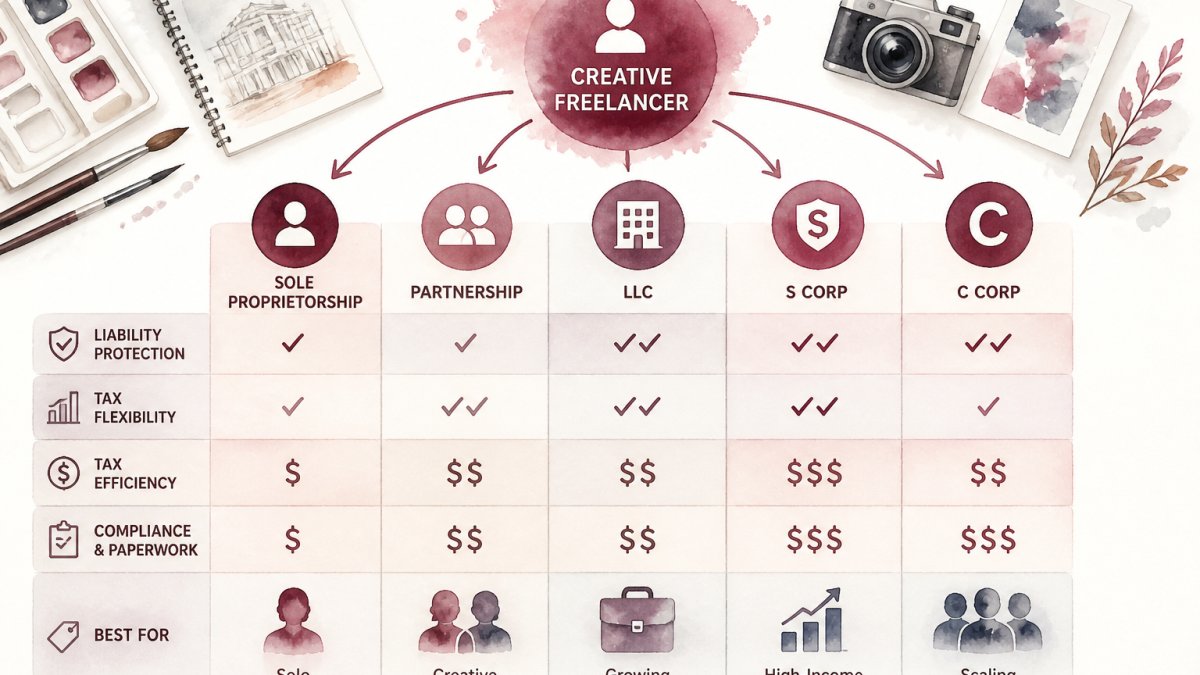
Choosing the right business entity for creative freelancers affects your taxes, personal liability protection, and administrative burden. At Paldino Company CPA, we help creatives across Mamaroneck and New York navigate this choice.
Most creative freelancers default to sole proprietorship, reporting income on Schedule C. But the best business entity for creative freelancers depends on your income level, growth trajectory, and risk tolerance.
Best Business Structure for Graphic Designers and Other Creatives
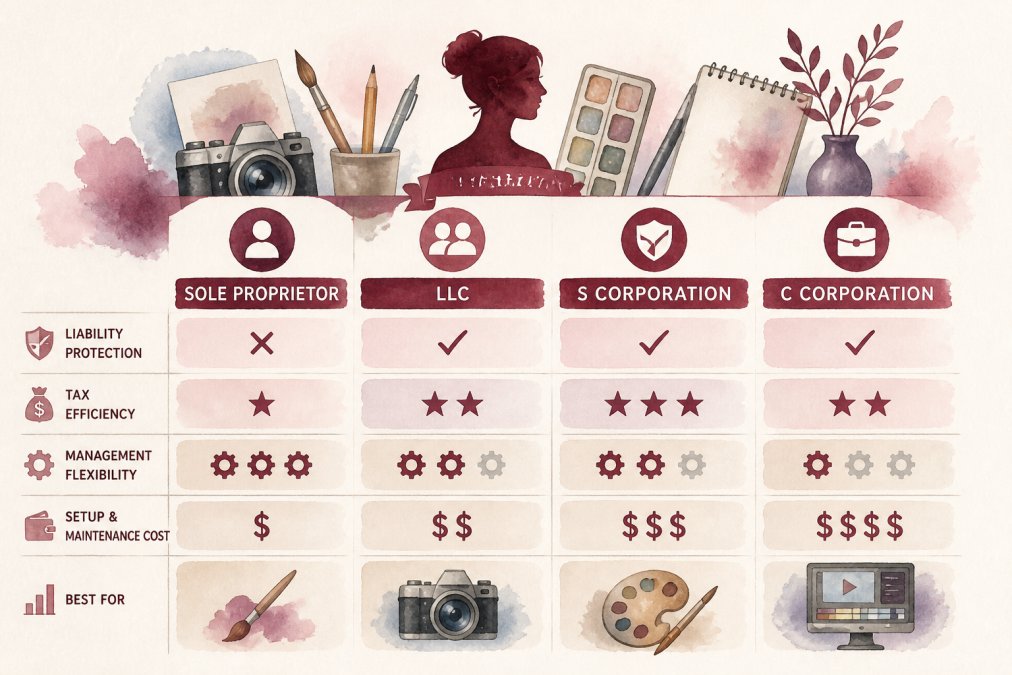
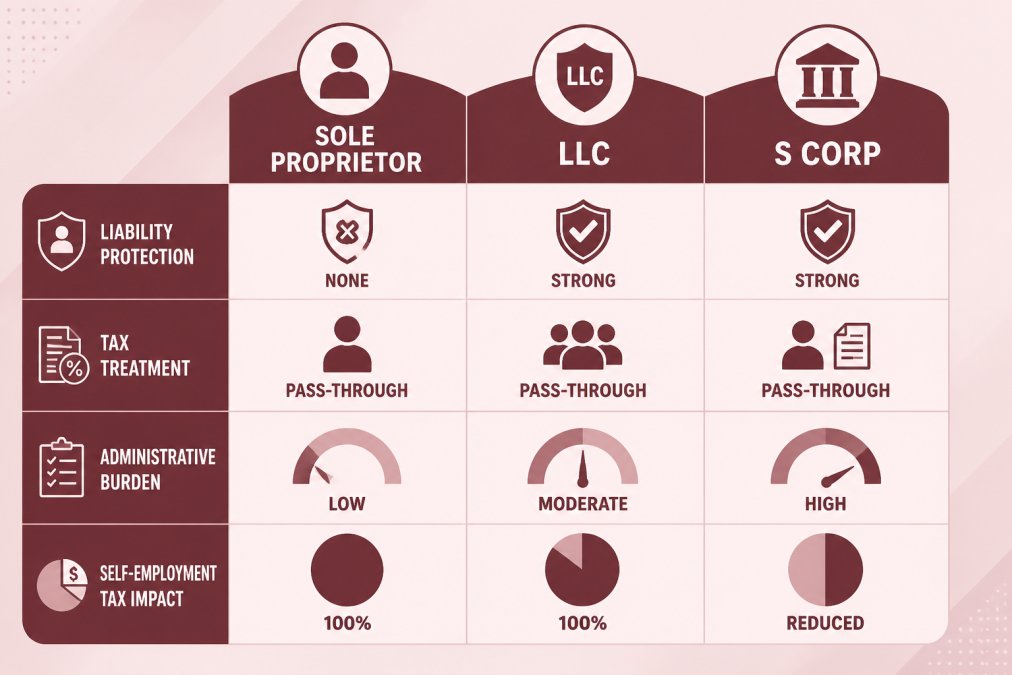
For graphic designers, photographers, writers, and other creatives, the decision comes down to three options: sole proprietorship, LLC, or S corporation.
A sole proprietorship requires no registration and minimal paperwork, with income flowing directly to your personal tax return. But it leaves you personally liable for business debts and lawsuits, putting your personal assets at risk.
An LLC separates personal assets from business liabilities, so creditors generally cannot touch your home or savings. Many creative freelancers in Mamaroneck choose an LLC for this protection alone, trading modest paperwork and state filing fees for it.
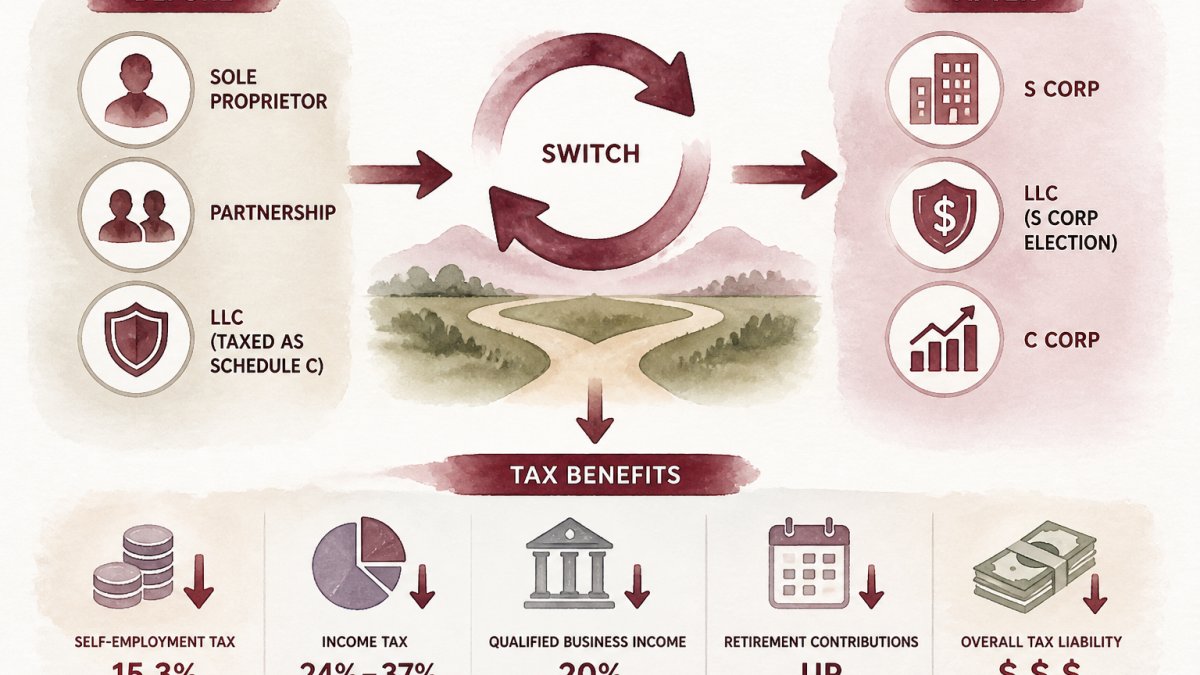
An S corporation is a tax classification available to LLCs and corporations. It splits income between W-2 wages and distributions, potentially reducing self-employment tax, but demands more accounting complexity and stricter compliance. For most freelancers earning under six figures, the administrative burden outweighs the tax savings.
When to Form an LLC as a Freelancer
Timing matters as much as the decision. Most tax professionals recommend forming an LLC once your annual freelance income reaches a level where liability protection matters; below that, liability protection often doesn't justify the compliance costs.
Client demand is another trigger: larger clients and agencies often require vendors to be registered business entities, and an LLC signals professionalism while reducing their legal exposure.
Industry risk matters too. Designers handling high-value intellectual property, photographers with equipment exposure, or consultants giving strategic advice face greater lawsuit risk, so forming an LLC earlier protects your personal wealth.
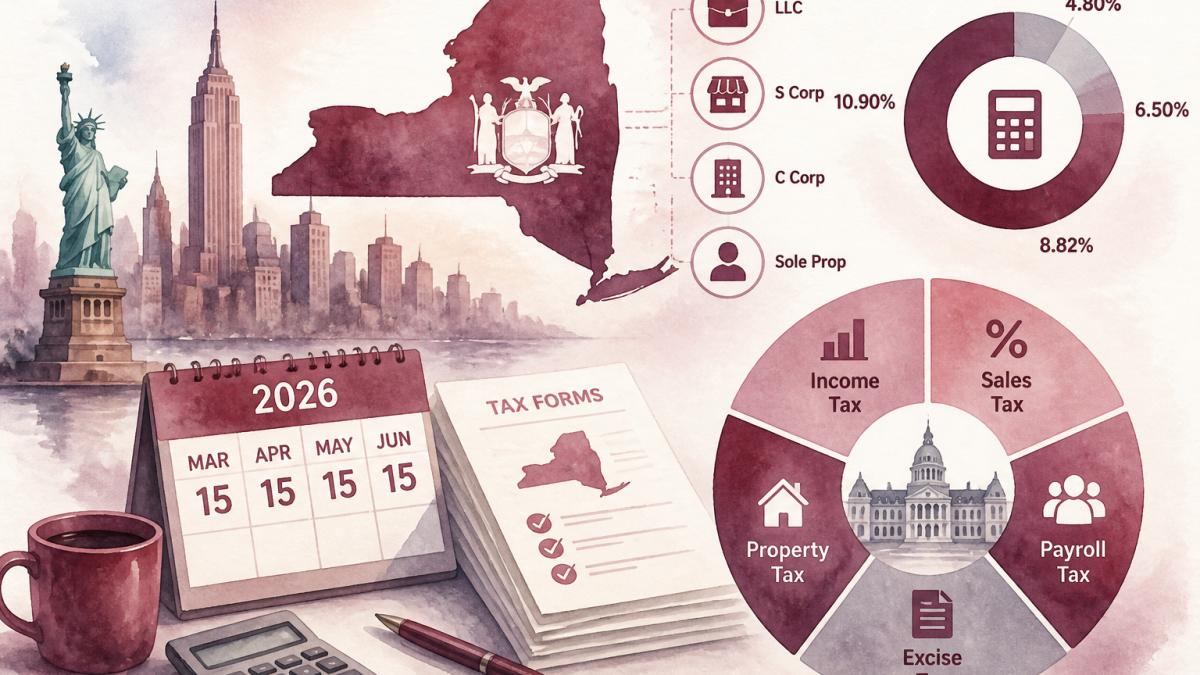
In New York, you file Articles of Organization with the Department of State, obtain an EIN from the IRS, and open a business bank account. The process takes a few weeks.
The best business entity for creative freelancers isn't one-size-fits-all, but an LLC strikes the right balance for most professionals earning solid income. Paldino Company CPA helps creative freelancers across New York and Westchester County evaluate their entity structure and stay positioned for growth without unnecessary tax burden. Schedule an Appointment to discuss your situation.
Frequently Asked Questions
What is the best business entity for a creative freelancer?
The best business entity depends on your income level, risk exposure, and growth plans. Most freelancers start as sole proprietors for simplicity, but an LLC offers personal asset protection and may provide tax advantages as income grows. An S corporation can reduce self-employment taxes for higher earners but requires more administrative work. A tax professional can review your specific situation to recommend the right structure.
Should a freelancer operate as a sole proprietor or form an LLC?
A sole proprietor structure is simpler and cheaper to set up, but offers no personal liability protection. An LLC separates your personal assets from business debts and lawsuits, though it involves more paperwork and filing fees. If you handle client work with potential liability risks or plan to grow your income significantly, an LLC is often worth the extra effort.
When should a freelancer consider changing their business structure?
Consider forming an LLC when your income reaches a level where liability protection matters. An S corporation election may make sense if you're consistently earning substantial profits and want to reduce self-employment tax obligations. As your freelance business grows, revisit your entity structure annually to ensure it still matches your needs and tax situation.