 How-to
Does Your Business Structure Affect Liability Insurance Costs?
Last Updated: November 1, 2026
Quick Summary
Business structure affects liability insurance costs indirectly: it shapes your personal risk exposure, not the sticker price. Insurers price the work, location, and coverage limits, so an LLC or corporation generally separates personal assets from business claims without automatically lowering your premium.
- General liability insurance averages about $45 per month, while a business owner's policy runs $83 monthly.
- A sole proprietor carries full personal exposure, so a claim can reach your home and savings.
Table of Contents
- How Business Structure Affects Liability Insurance Costs
- LLC Insurance Requirements and Sole Proprietor Liability Insurance
- General Liability Insurance for Small Businesses and Costs by Entity Type
- Frequently Asked Questions
How Business Structure Affects Liability Insurance Costs
Does your entity choice change what you pay for coverage? At Paldino Company CPA in Mamaroneck, NY, we hear this often. How business structure affects liability insurance costs is indirect: structure shapes your personal risk exposure, not the sticker price. For guidance on picking an entity, watch Video Tips: Choosing the Right Entity for a New Business.
General liability insurance averages about $45 per month, per Simply Business 2026 rate data. Insureon reports $83 monthly for a business owner's policy. Neither figure is tied to a specific entity type.
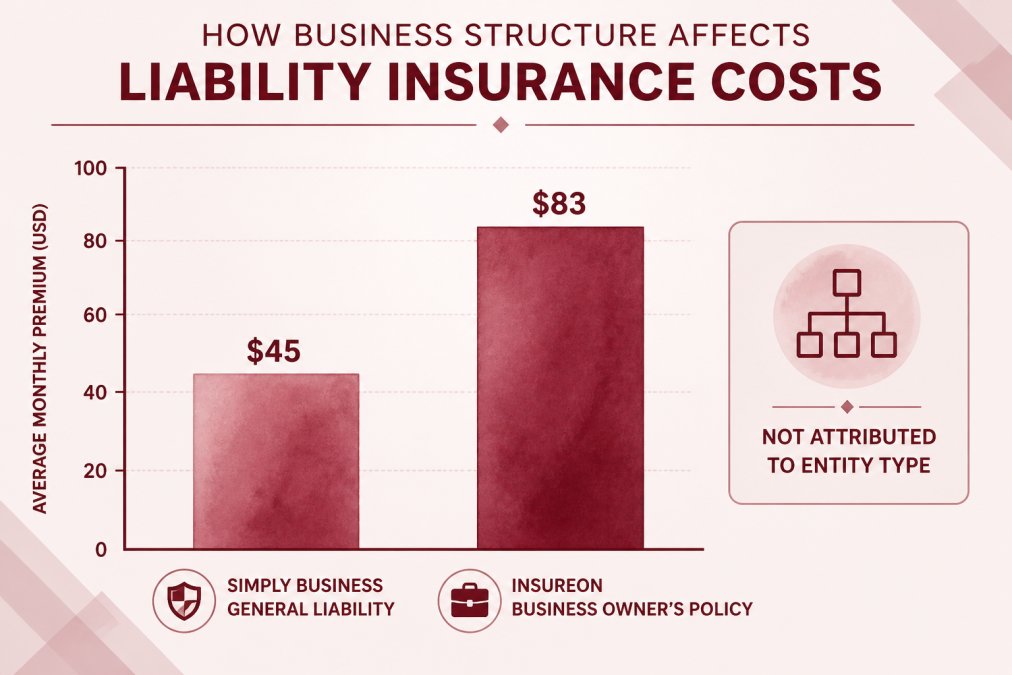
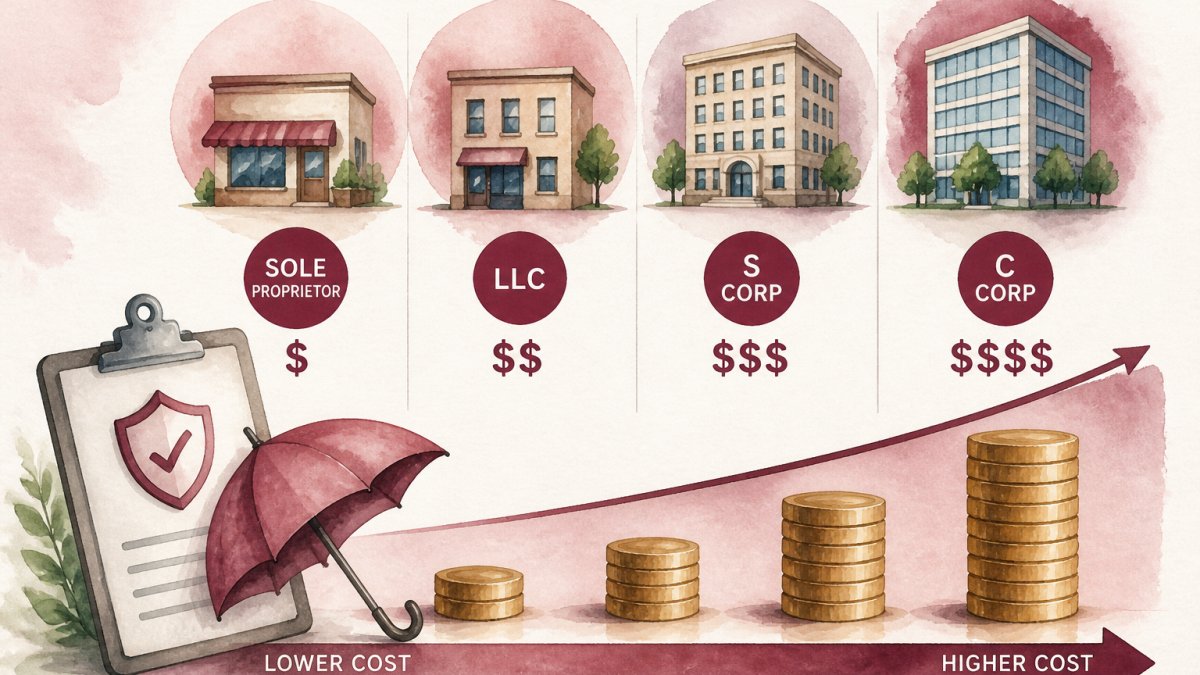
What structure really changes is who absorbs a lawsuit. If you are still comparing entity types, see Video Tips: Establishing a New Business-What Are Business Entities?. A sole proprietor carries full personal exposure; an LLC or corporation generally separates personal assets from business claims. Insurers price the work, location, and coverage limits, not the label on your formation papers.
LLC Insurance Requirements and Sole Proprietor Liability Insurance
Whether general liability coverage is required depends on the rules that apply to your situation and on contracts with landlords, clients, or lenders. Confirm current requirements with your state's official sources and your insurance agent.
Sole proprietor liability insurance matters because there is no corporate shield: a claim can reach your home and savings. For a deeper look at the risks, see Sole Proprietorships - Don't Overlook the Liability Issues. An LLC limits that reach but does not erase risk. Partners can read How to Assess Legal Liability Risks as a New York General Partner.
General Liability Insurance for Small Businesses and Costs by Entity Type
Business insurance costs by entity type vary less than most owners expect. The Hartford's cost factor guidance lists risk exposure, location, years in business, and business type as the drivers. Acentria adds coverage limits and deductibles.
Here is how structure and pricing actually line up:
| Entity | Personal liability shield | Typical coverage driver |
|---|---|---|
| Sole proprietorship | None | Client contracts, premises |
| Partnership | None (general partners) | Partner exposure, contracts |
| LLC | Yes | Contracts, lease terms |
| S-corp / C-corp | Yes | Contracts |
A liability-protective entity does not automatically lower your premium, but it can limit your personal exposure to business claims. To discuss your situation with an advisor, visit Mamaroneck, New York Business Consulting.
Frequently Asked Questions
Does an LLC lower business liability insurance costs?
Not automatically. An LLC separates your personal assets from business liabilities, but insurers set premiums on factors like your industry, location, revenue, coverage limits, and claims history. Published premium averages are not attributed to a specific entity type. An LLC may face different coverage expectations, but the structure alone does not guarantee a lower premium.
Does a sole proprietorship need liability insurance?
A sole proprietorship has no legal separation between you and the business, so a liability claim can reach your personal assets. General liability insurance for small businesses covers third-party bodily injury and property damage, and sole proprietor liability insurance is widely available. Common cost factors include risk exposure, location, years in business, and business type, so a lower-risk sole proprietor may pay less than a higher-risk operation, but the coverage itself remains important.
What drives business insurance costs by entity type?
Entity type influences your liability exposure and the coverage lenders or clients may require, but pricing sources point to operational factors as the main cost drivers. Common cost drivers include risk exposure, location, years in business, business type, coverage limits, and deductibles. A corporation and an LLC in the same industry with similar revenue and limits may see comparable quotes. Review your structure with a CPA alongside your insurance agent so coverage and entity choice work together.
Entity selection is one of the first decisions we help new owners make, and it is rarely a one-time conversation. Paldino Company CPA offers year-round tax support, virtual CFO services, and small business formation guidance so your structure and your coverage stay aligned as you grow. Get started with Paldino Company CPA and make your next business decision with clarity.