
 How-to
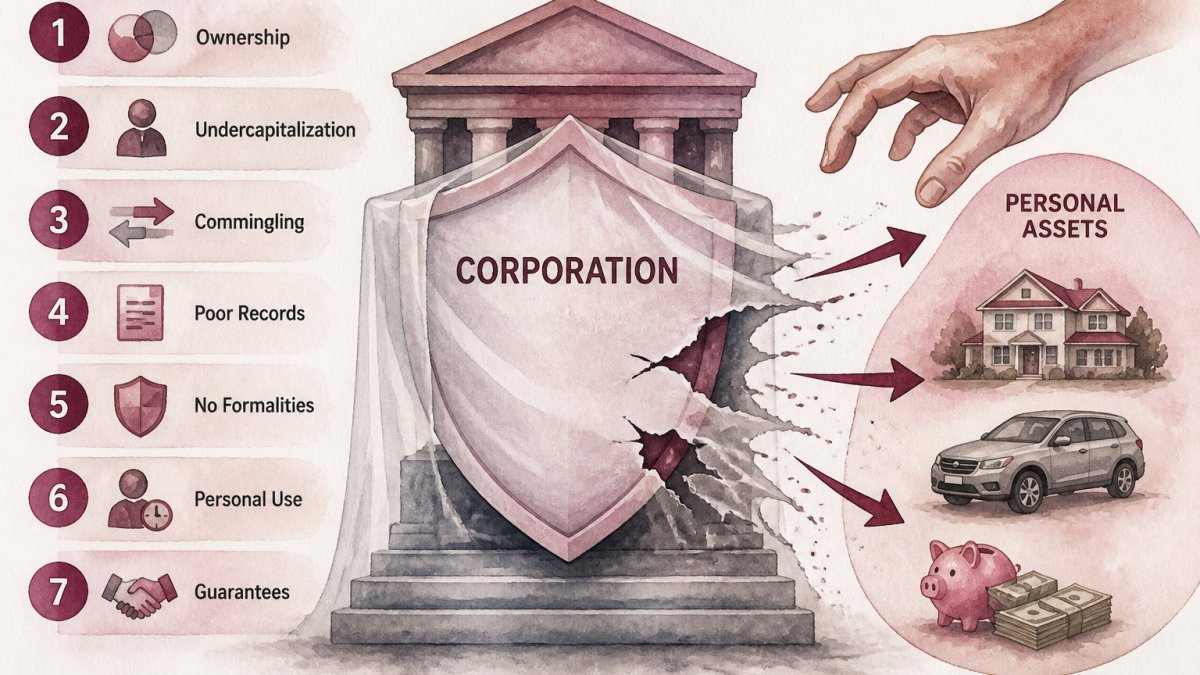
7 Corporate Veil Mistakes That Expose Your Personal Assets
Last Updated: November 2, 2026
Quick Summary
To maintain corporate veil protection, you must keep business and personal finances strictly separate, fund the company adequately, and document every formality. Courts look for commingling, ignored records, and undocumented owner control when deciding whether to reach personal assets.
- Open a dedicated business bank account before your first client payment and reconcile it monthly.
- Record major decisions as they happen; a consent signed the same week is credible.
- A documented correction of a lapse reads very differently from a hidden one.
- Personal guarantees override the entity regardless of how clean your records are.
- If a normal dispute would force you to pay company bills personally, the business is thin.
Table of Contents
- Piercing the Corporate Veil Factors: What Courts Actually Weigh
- Piercing the Corporate Veil Examples: How Owners Lose Protection
- How to Fund an LLC Without Piercing the Corporate Veil
- Corporate Formalities for LLCs and Corporations
- Maintaining Corporate Records and Documentation
- Maintaining Adequate Capitalization
- New York and Westchester County Practical Guidance
- What to Do After a Lapse
- Insurance, Guarantees, and the Limits of Entity Protection
- Frequently Asked Questions
Piercing the Corporate Veil Factors: What Courts Actually Weigh
The corporate veil is not a wall but a set of habits, and courts check those habits only after something has gone wrong.
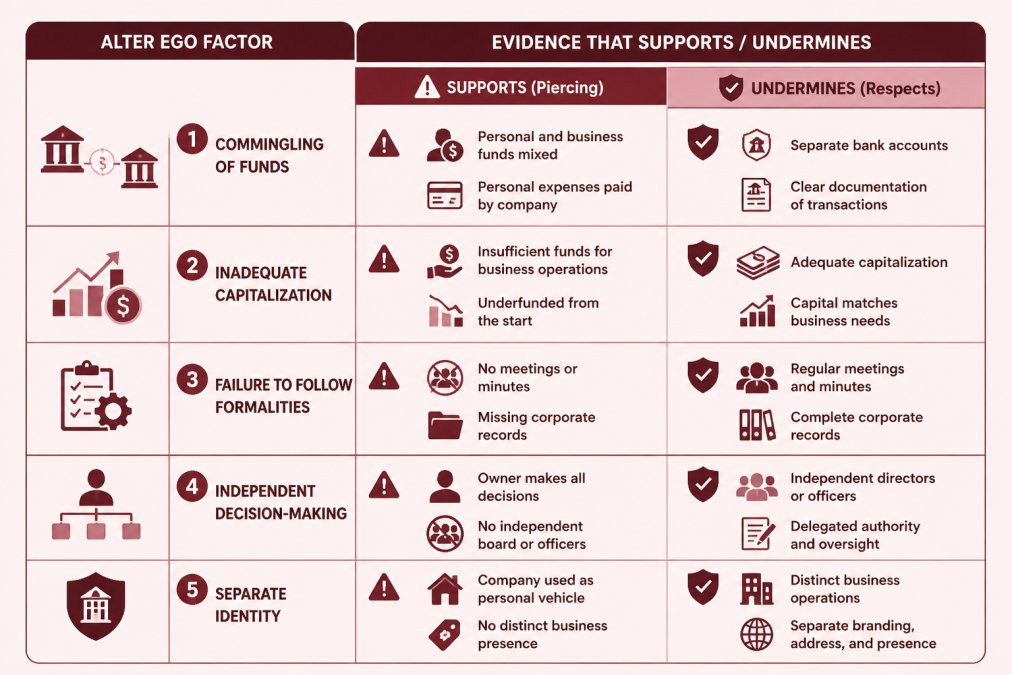
Veil piercing is not a stand-alone claim. According to Summit Law Group's analysis of alter ego claims, it is an equitable remedy used to reach personal assets only after primary liability is established.
The factors that matter most: commingling of funds, inadequate capitalization, ignored formalities, no separate identity, and undocumented owner control. Structure and liability also tie to insurance, so understand how your business structure affects liability insurance costs.
Piercing the Corporate Veil Examples: How Owners Lose Protection
Piercing the corporate veil examples rarely involve fraud, they involve sloppiness that looks like fraud from the outside. Picture a Mamaroneck freelancer running a design studio as an LLC: client payments land in a personal account "just for now," equipment goes on a personal card, and no operating agreement exists.
Corporate Compliance Insights' work on veil piercing best practices points to the same defenses every time: distinct operations, no commingling, adequate capitalization, and independent decision-making. If you are early in the process, the 10 mistakes most small business owners miss when starting out is a useful gut check.
How to Fund an LLC Without Piercing the Corporate Veil
Funding an LLC without piercing the veil comes down to one rule: money moves through documented channels, in the company's name, for company reasons. Open a dedicated business bank account before your first client payment, contribute capital formally, fund expenses only from the business account, document owner loans, pay yourself through recorded distributions, keep a reserve, and reconcile monthly.
Bookkeeping that keeps business and personal activity clearly separated provides the kind of record a court or creditor would ask to see, and tax consulting can help owners structure contributions and draws so the paperwork matches the intent.
| Step | What It Protects | How Often |
|---|---|---|
| Separate bank account | Separate identity | Once, then ongoing |
| Written capital contribution | Adequate capitalization | At formation and each contribution |
| Documented owner loan | Commingling defense | Every loan |
Corporate Formalities for LLCs and Corporations
Corporate formalities are the paper trail that proves the entity is real. For LLCs, the essentials are an operating agreement, annual state filings, and written records of major decisions; for corporations, add bylaws, minutes, and stock records. The New York Department of State's business filing guidance is the place to confirm current requirements and deadlines.
Maintaining Corporate Records and Documentation
Corporate records are the story of a business that behaved like a business. Keep formation documents, minutes and written consents, contracts, financial statements, bank reconciliations, and records of contributions, loans, and distributions in one place. Record major decisions as they happen, a consent signed the same week is credible; a reconstruction two years later is not.
Maintaining Adequate Capitalization
Adequate capitalization means the business holds enough resources to meet the obligations its work creates. The practical test: if a normal customer dispute or a slow quarter would force you to pay company bills from personal funds, the business is thin. MyLawCLE's 2025 training on alter ego defense notes that legal programs increasingly focus on structuring entities to withstand alter ego claims.
New York and Westchester County Practical Guidance
New York's business climate rewards speed, and speed is where formalities get skipped. Confirm your entity's filing status before year-end, keep your registered address current, use one bookkeeping system from day one, and review your entity choice as revenue grows. When comparing accounting help in Westchester, ask whether the firm will review your entity and records, not just your return.
What to Do After a Lapse
A lapse does not end your protection, it creates a gap you need to close and document. Restore the filing and save the confirmation, write a short memo explaining the gap and the fix, reconcile every account for the lapse period, confirm no funds mixed during the gap, update your operating agreement if ownership changed, and set reminders. Then tell your accountant: a documented correction reads very differently from a hidden one.
Insurance, Guarantees, and the Limits of Entity Protection
The veil has limits, and pretending otherwise is how owners get hurt. Personal guarantees override the entity, if you signed one for a lease, loan, or vendor line, that obligation is yours regardless of how clean your records are.
Most owners do not lose protection in a courtroom. They lose it in a Tuesday afternoon bank transfer, a skipped filing, or a handshake deal never written down.
Paldino Company CPA provides accounting, tax, and advisory services for individuals and small businesses in New York and Westchester County, including virtual CFO services.
Schedule an Appointment with Paldino Company CPA to talk through your business structure and records.
Frequently Asked Questions
How do I protect against piercing the corporate veil?
Keep business and personal finances in separate bank accounts, follow your state's filing and meeting requirements, document major decisions in writing, and capitalize the entity adequately for its operations. Courts look for a distinct identity: separate records, independent decision-making, and no commingling of funds. Review your structure annually, especially after taking a distribution or adding an owner, because a single lapse in formalities can become evidence in an alter ego claim.
Can mixing personal and business finances put an LLC's liability protection at risk?
Yes. Commingling funds is one of the most common piercing the corporate veil factors courts cite. Paying personal expenses from the business account, depositing client payments into a personal account, or using one account for both blurs the line between owner and entity. Open a dedicated business bank account, run all revenue and expenses through it, and pay yourself through documented draws or distributions rather than ad hoc transfers.
What records should a corporation or LLC keep to support its separate legal identity?
Maintain formation documents, operating agreements or bylaws, meeting minutes and written consents, contracts in the entity's name, separate bank statements, tax records, and financial statements. These corporate records show the entity operated as a separate legal entity rather than an alter ego. Retention practices matter too: keep signed consents and annual filings organized by year so you can produce them if a creditor challenges your liability protection.