
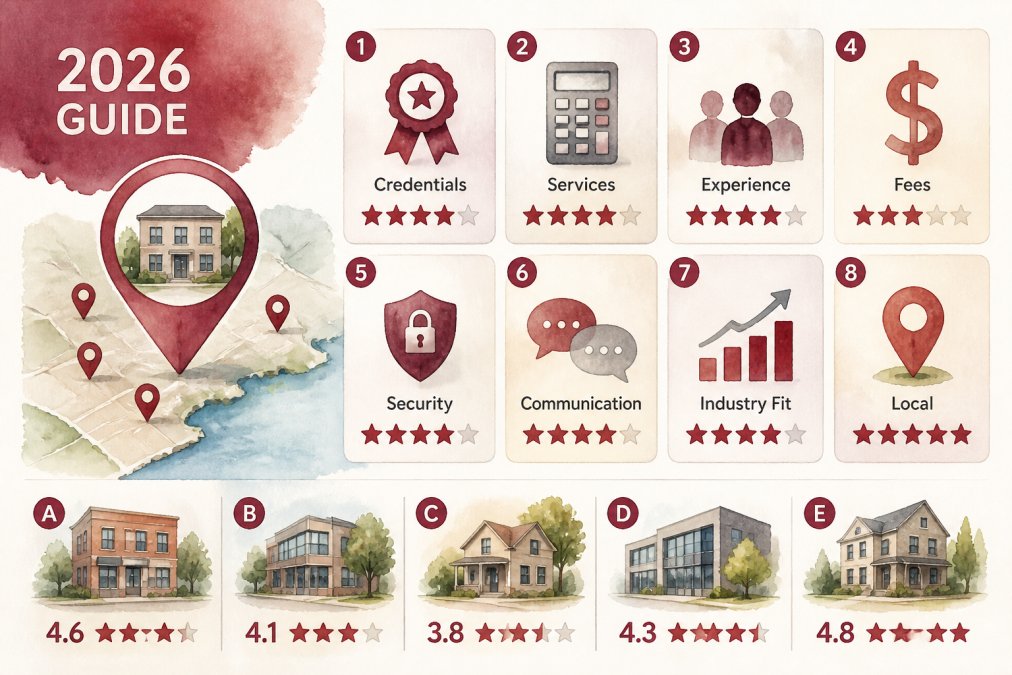
 listicle
How to Find a Local CPA Firm: 2026 Guide
Table of Contents
- Where to Find a Local CPA Firm
- How to Verify CPA License Status
- Questions to Ask a Potential CPA
- CPA vs Tax Preparer Differences
- Frequently Asked Questions
Last Updated: August 31, 2026
Where to Find a Local CPA Firm
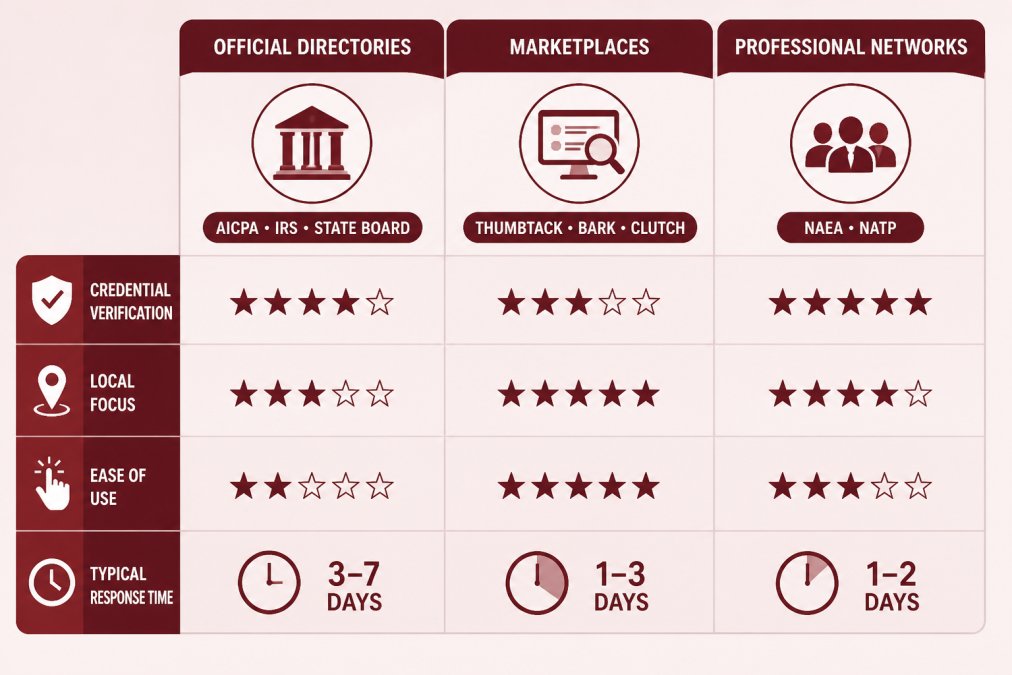
The AICPA CPA Directory is the gold standard for finding credentialed CPAs. You can search by location, specialty, and experience level, with client testimonials and peer review information included in many profiles.
The IRS Tax Return Preparer Directory allows you to search for CPAs, enrolled agents, and tax attorneys by name, city, or zip code. For federal tax work, this is the authoritative source.
State boards of accountancy maintain licensure databases essential for verifying current license status and checking disciplinary history. Searching your state's board directly takes 60 seconds and reveals whether someone is in good standing.
Platforms like Thumbtack and Bark connect you with local accountants through verified customer reviews. Professional networks like the National Association of Enrolled Agents maintain member directories for specialists in tax representation or IRS matters.
Referrals from other business owners, bankers, or attorneys remain underrated. A CPA recommended by someone you trust has already passed an informal vetting process.
How to Verify CPA License Status
Start at your state's board of accountancy website. Search by name and confirm three things: the license is active, the person's address matches their claimed location, and there are no disciplinary actions listed.
Ask the CPA directly for their license number and state of licensure. Legitimate practitioners provide this without hesitation. Check for disciplinary history on state board websites, these records reveal whether a CPA has faced ethics violations, client complaints, or regulatory action.
Questions to Ask a Potential CPA
Start with experience: "How many clients do you work with in my industry?" A CPA who serves similar businesses knows the tax landscape specific to your situation. Ask about year-round support: "What does your year-round support actually look like?" Listen for specifics like quarterly tax estimates and mid-year strategy reviews.
Understand their technology stack: "What accounting software do you use? Can you work with QuickBooks if my books are messy?" Discuss fee structure directly: "How do you charge, hourly, flat-fee, or retainer?" Reputable firms give you a ballpark estimate within 15 minutes.
CPA vs Tax Preparer Differences
A certified public accountant (CPA) is a licensed professional who has passed a rigorous exam, met education requirements, and maintains continuing education credits. CPAs can perform tax preparation, bookkeeping, audit services, financial planning, and business consulting. They can represent you before the IRS in audits and disputes.
A tax preparer is someone who prepares tax returns but holds no specific credential. Tax preparers are not licensed or regulated in most states and cannot represent you before the IRS without additional credentials. They're appropriate for straightforward situations like W-2 employees with simple deductions.
An enrolled agent (EA) is a federally licensed tax specialist with unlimited representation rights before the IRS. EAs must pass a rigorous IRS exam and specialize in tax matters and representation, making them excellent for tax planning and audit defense.
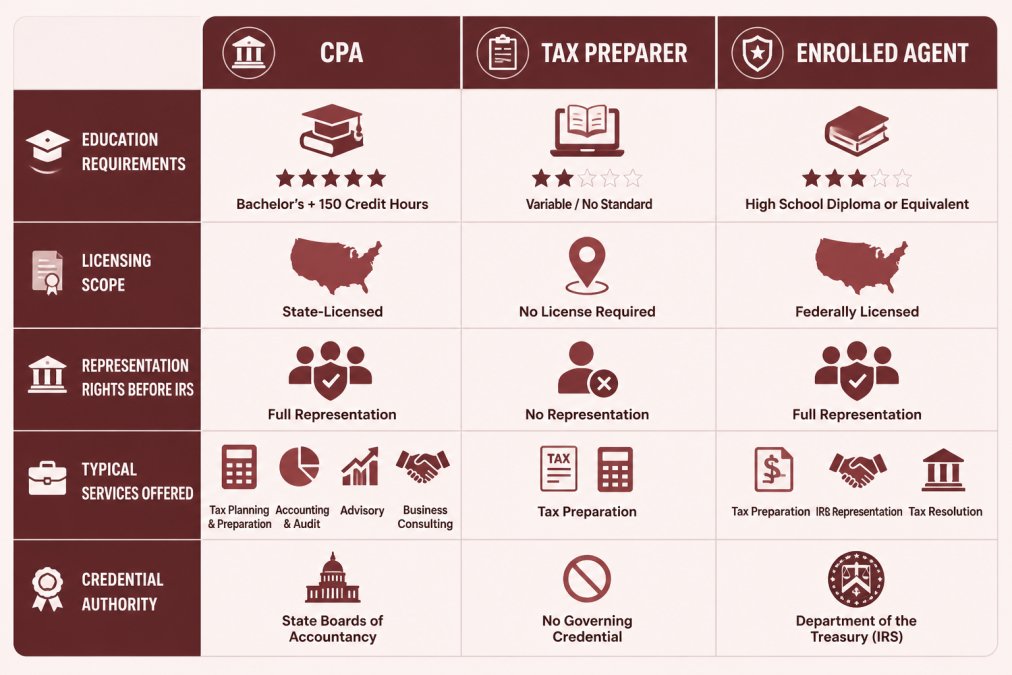
If you need someone to file your taxes and answer basic questions, a tax preparer may suffice. If you want year-round strategic planning, business consulting, or audit representation, you need a CPA. If your primary concern is IRS representation and tax strategy, an enrolled agent is a specialist choice.
At Paldino Company CPA, we combine CPA credentials with a creative, human-centered approach to accounting. We serve individuals and small business owners in New York and Westchester County who want more than just tax filing, they want a partner who understands their business and proactively identifies opportunities to simplify their finances and reduce tax burden.
Frequently Asked Questions
What's the difference between a CPA and a tax preparer?
A certified public accountant (CPA) holds a state-issued license and must pass the Uniform CPA Examination, meeting education and experience requirements set by state boards of accountancy. CPAs can provide tax preparation, bookkeeping, financial planning, and audit services. A tax preparer may have no formal credentials and typically focuses only on preparing and filing tax returns. CPAs have broader authority to represent clients before the IRS and provide strategic tax planning advice.
How do I verify a CPA's license in my state?
Contact your state board of accountancy directly, each state maintains a public register of licensed CPAs. You can search by name or firm to confirm active licensure and check for any disciplinary history. The AICPA CPA Directory and IRS Tax Return Preparer Directory also provide searchable databases with credential verification. Always verify through the official state source for current status, as credentials can expire or be suspended.
What questions should I ask when interviewing a potential CPA?
Ask about their experience with your industry or business type, whether they offer year-round support or only tax season help, their fee structure (hourly, flat-fee, or retainer), and what accounting software they use. Inquire about their communication style, how they handle bookkeeping errors, and whether they provide tax planning advice or just compliance. Ask for references from clients similar to your situation and clarify what services are included in their fees.
Finding the right local CPA firm requires balancing credential verification with practical fit. Start with official directories to confirm licensing, then assess whether their experience, technology, and communication style match your needs. The best CPA partnership delivers year-round clarity and peace of mind, not just annual tax filing. Schedule an appointment with Paldino Company CPA to discuss how we can simplify your accounting and provide the strategic guidance you deserve.
This article was written using GrandRanker