 How-to
How to Manage Wealth in Westchester County
Last Updated: October 27, 2026
Quick Summary
To manage wealth in Westchester County, write a plan that connects your goals to savings, investments, taxes, and insurance, then review it every year. Coordinate investment choices with your tax picture and adjust the plan after major life events.
- Name your top three goals: retirement, a home, and a child's education.
- Pull statements, tax returns, and insurance policies into one folder.
- Ask how an advisor is paid and whether they are a fiduciary.
- Review your plan at least once a year and after any major change.
- Confirm beneficiaries on retirement accounts and insurance.
Table of Contents
- Building Your Wealth Management Plan in Westchester County
- Financial Planning Checklist for Families
- Questions to Ask a Financial Advisor
- Frequently Asked Questions
Building Your Wealth Management Plan in Westchester County
Learning how to manage wealth in Westchester County starts with writing down what you want your money to do. At Paldino Company CPA, we help households and business owners turn scattered accounts into a clear plan.
A wealth management plan is a written set of steps connecting your goals to savings, investments, taxes, and insurance, and it changes as your life changes.
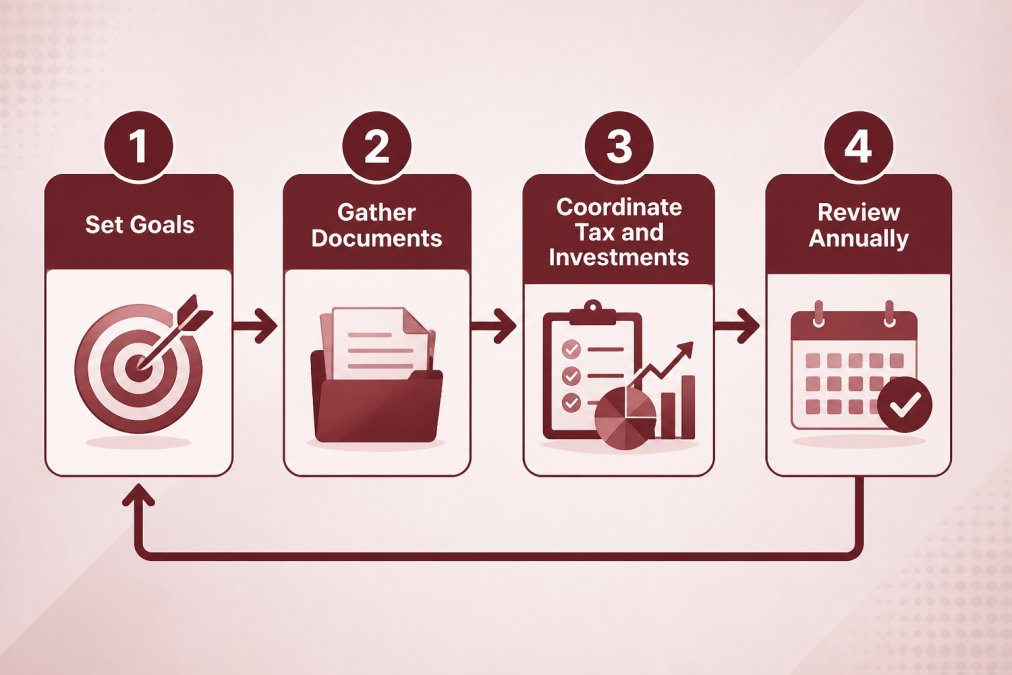
A four-step approach:
- Set goals. Name your top three: retirement, a home, a child's education.
- Gather documents. Pull statements, tax returns, and insurance policies into one folder.
- Coordinate tax and investments. Make sure investment choices fit your tax picture.
- Review every year. Check progress and adjust after big life events.
A plan you never reopen is just a folder.
Wondering whether an advisor is worth it? Read why you need a financial advisor even more in uncertain times and financial planning for all ages.
Watch out: A plan that ignores a new job, a new baby, or a market shift quietly stops matching your life.
Financial Planning Checklist for Families
A family financial planning checklist is a short list of money tasks grouped by timing so nothing important slips. Most families only need a one-page list updated each year.
Start here:
- List every account: checking, savings, retirement, brokerage
- Confirm beneficiaries on retirement accounts and insurance
- Check your emergency fund covers several months of expenses
- Review life and disability coverage against current needs
- Set a yearly savings target for education or a home
- Collect tax documents in one place each January
- Schedule one money conversation per month with your partner
- Book a year-end review before December
That last item matters more than it sounds. Our year-end financial checklist covers the money moves worth prioritizing before the calendar turns.
A checklist keeps those demands visible instead of urgent.
Watch out: Naming a guardian in your will and forgetting to update account beneficiaries leaves your family with paperwork nobody wants to sort out later.
Questions to Ask a Financial Advisor
The best questions to ask a financial advisor cover how they get paid, what they do, how often you will hear from them, and who does the work. Ask them in the first meeting, before sharing account numbers.
What to ask, and why:
| Question | Why It Matters |
|---|---|
| How are you paid? | Fees, commissions, or hourly rates change the advice you get |
| Are you a fiduciary? | A fiduciary must put your interests first |
| What is included? | Some advisors only invest; others handle tax and estate coordination |
| How often do we meet? | You want a set schedule, not a call only when something breaks |
| Who does the work? | You should know if a junior staffer handles your file |
| How do you handle taxes? | Investment and tax decisions should be made together |
That first question deserves extra weight: fee-only advisors charge you directly and take no commissions, removing a common conflict. Our comparison of fee-only vs. big bank financial advisors breaks down how each model gets paid.
Once you have answers, talk them through with a qualified professional. Schedule an appointment with our team to discuss your unique needs.
Frequently Asked Questions
How do I create a wealth management plan in Westchester County?
Start by setting clear goals for your family and business, then gather your tax returns, investment statements, and estate documents. Review the plan at least once a year or after major life changes.
What should a wealth management plan include?
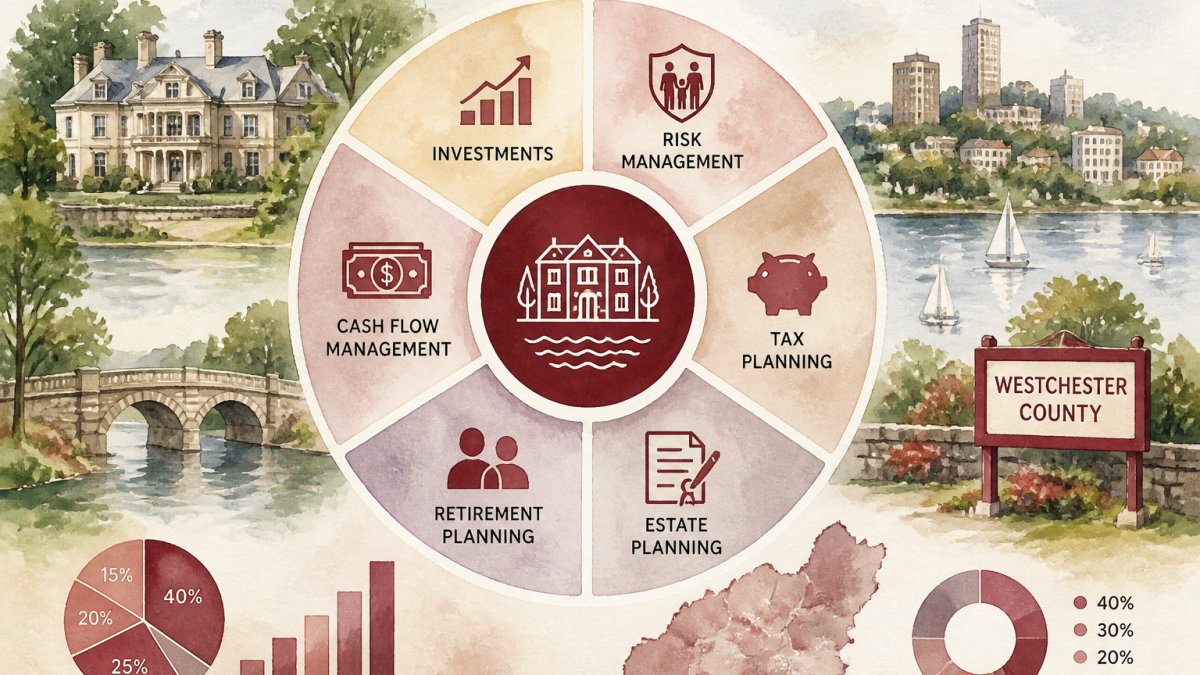
A plan can cover goal setting, cash flow and budgeting, tax planning, investment allocation, retirement savings, insurance review, and estate documents. For families and business owners, it can also address entity structure and succession planning. Revisit the plan annually to keep it current.
How often should I review my financial plan?
Review your plan at least once a year, and sooner after major events like a marriage, new child, job change, business sale, or inheritance.