 ultimate-guide
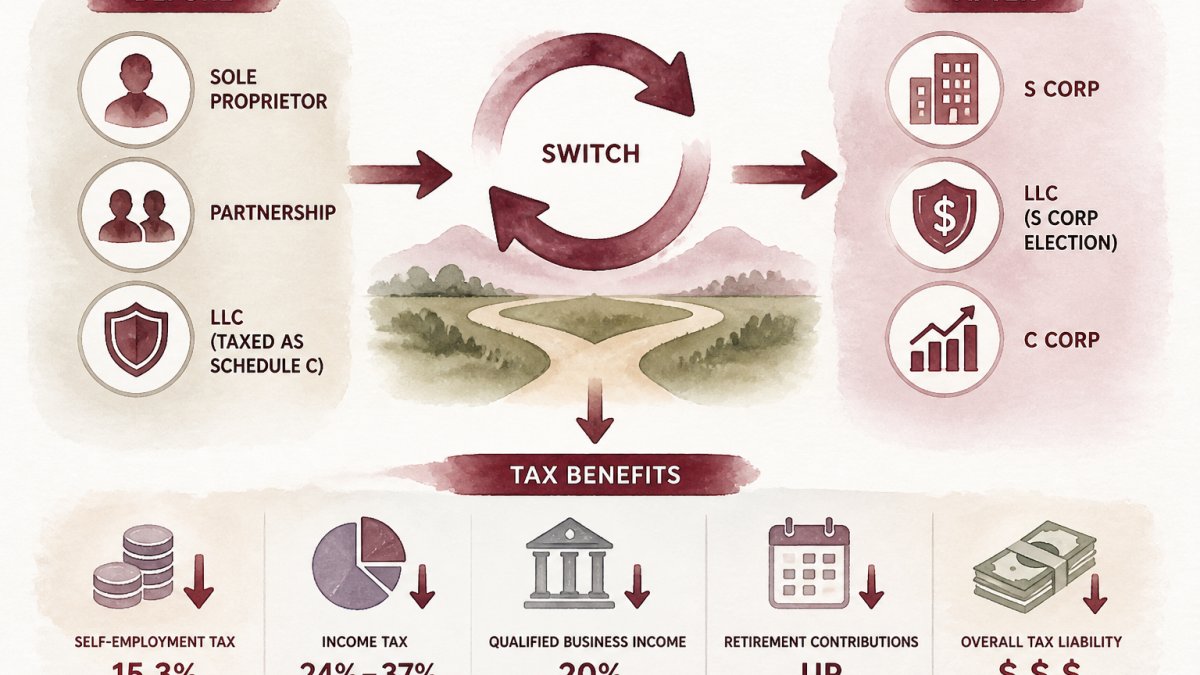
Tax Benefits of Switching Business Entity
Table of Contents
- Why Business Owners Switch Entity Types
- LLC to S Corp Election Tax Savings
- Tax Consequences of Business Entity Conversion
- Frequently Asked Questions
Last Updated: October 3, 2026
Why Business Owners Switch Entity Types
Switching business entity structures can reduce your overall tax liability significantly. The key is understanding when the switch makes financial sense for your revenue level.
The most common reason to switch is self-employment tax burden, which a strategic entity change can reduce by separating income into differently taxed components.
LLC to S Corp Election Tax Savings
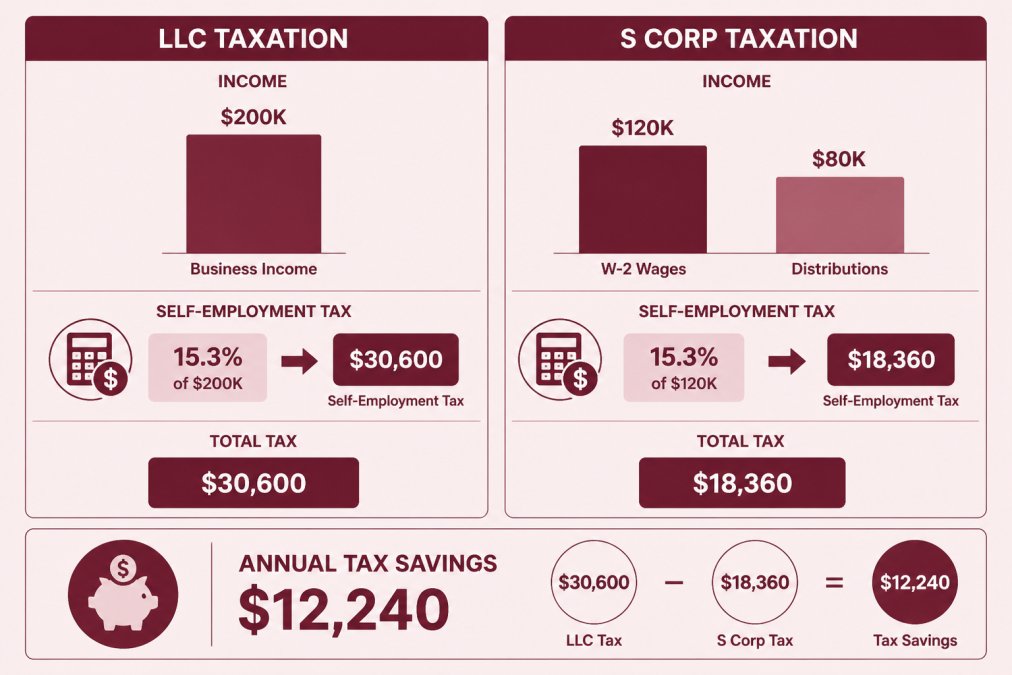
An LLC to S Corporation election changes taxation only, not legal structure. You take a reasonable salary while remaining profit distributes as dividends not subject to self-employment tax.
With sufficient net income, an S Corp election can save thousands annually in self-employment tax.
The IRS scrutinizes S Corp elections if your salary is unreasonably low relative to income.
Tax Consequences of Business Entity Conversion
An LLC to S Corp election generally does not trigger immediate tax consequences since you're only changing taxation, not structure. Other conversions like sole proprietorship to LLC typically do not create taxable events either.
Timing matters if your business has appreciated significantly, and proper filing with federal and state authorities is essential to avoid compliance issues.
Switching your business entity is a strategic decision that deserves professional guidance. The tax benefits can be real and significant, but only if you structure the switch correctly and maintain proper compliance going forward. At Paldino Company CPA, we help small business owners evaluate whether a business entity change makes sense for their situation, handle the election process, and ensure ongoing compliance. If you're wondering whether your current business structure is still serving you well, contact a qualified tax professional to review your options. The right entity structure can mean thousands in tax savings each year, and peace of mind knowing you're set up correctly for growth.
Frequently Asked Questions
What are the tax implications of converting from an LLC to an S Corp?
Converting an LLC to an S Corp election allows you to split income between salary and distributions. You pay self-employment tax only on the salary portion, potentially reducing overall tax burden. However, you must meet IRS requirements and file the appropriate form to make this election. Consult a tax professional to calculate whether the savings justify the additional compliance and accounting costs for your specific income level.
How does changing my business entity affect my New York State tax filings?
Switching business entities in New York requires updating your state tax registration and filings. New York recognizes federal entity elections, but you must file amended returns and notify the Department of Taxation and Finance of the change. New York also has specific entity-level taxes and filing requirements that vary by structure. Contact a tax professional familiar with New York requirements to ensure you file all necessary state documents correctly.
Does switching business entities require a new EIN from the IRS?
In most cases, converting from an LLC to an S Corp election does not require a new EIN if you maintain the same tax identification number. However, if you form a new legal entity entirely, you will need a new EIN. The distinction depends on whether you're electing a tax classification change (using the appropriate IRS form) or creating a completely new business entity. A tax advisor can clarify which approach applies to your situation.