 how-to
How to Claim the Home Office Deduction in 2026
Table of Contents
- Step 1: Confirm Your Home Office Deduction Eligibility
- Step 2: Choose the Simplified Home Office Deduction Method
- Step 3: Or Use the Actual Expense Method Home Office Deduction
- Step 4: Run a Home Office Deduction Calculation Example
- Frequently Asked Questions
Last Updated: October 17, 2026
Step 1: Confirm Your Home Office Deduction Eligibility
The home office deduction lets self-employed people write off part of their housing costs. To qualify, your office must be used regularly and only for business, and it must be your main place of work.
Here is what the IRS looks for:
- You work from the space regularly, not once in a while
- The space is used only for business
- It serves as your principal place of business
The IRS explains these rules in IRS Publication 587 on business use of your home. Freelancers and independent contractors in NY often qualify. Employees usually do not.
Step 2: Choose the Simplified Home Office Deduction Method
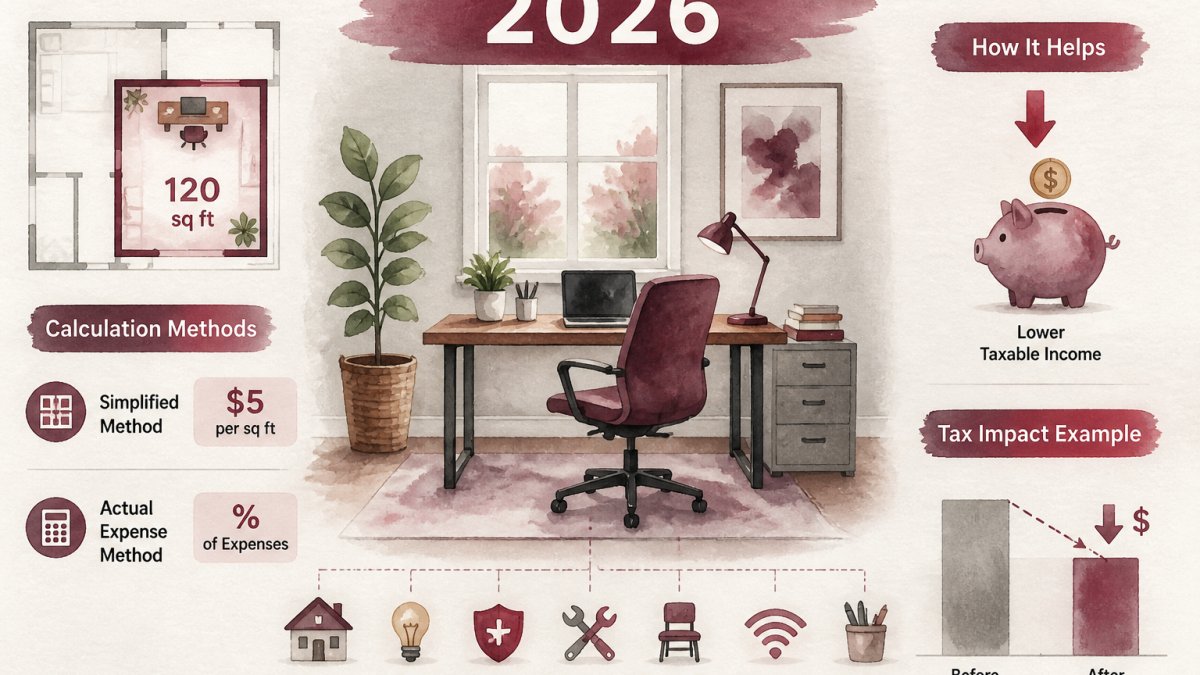
The simplified home office deduction method is the faster route. You multiply your office square footage by a set rate, up to a capped square footage limit.
The IRS sets that rate and cap each year in IRS guidance on the simplified method. Check the current figures there before you file. No receipts, no depreciation math, no tracking utilities.
- Easy to calculate and defend
- No home depreciation to recapture later
- Best for smaller offices
The trade-off: it often produces a smaller write-off than the actual expense method.
Step 3: Or Use the Actual Expense Method Home Office Deduction
The actual expense method home office deduction can pay off more. You add up real housing costs, then apply your business-use percentage.
That percentage is your office square footage divided by your home's total square footage. Rent, utilities, insurance, and repairs all count.
- Track every receipt during the year
- Keep a clear measurement of both square footages
- Expect more paperwork and more records
Step 4: Run a Home Office Deduction Calculation Example
Here is a home office deduction calculation example. Say your office is 200 square feet inside a 2,000-square-foot home. Your business-use percentage is 10%.
Under the simplified method, you multiply 200 square feet by the current IRS rate. Under the actual method, you take 10% of your yearly housing costs.
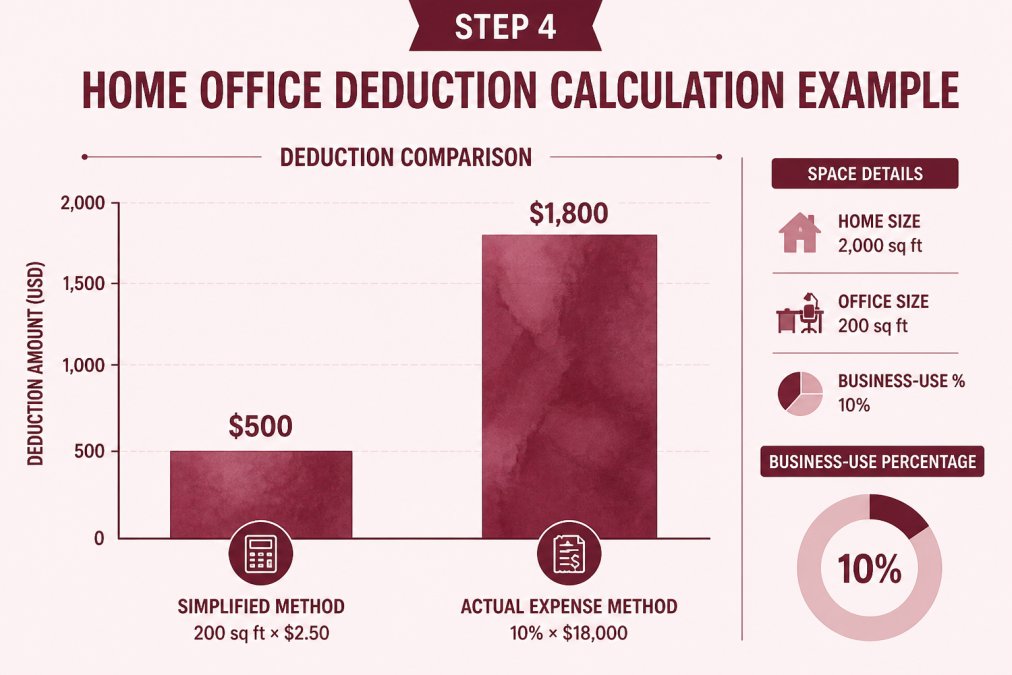
Run both numbers before you choose. The larger result is not always the smarter one once depreciation recapture enters the picture.
Frequently Asked Questions
Who qualifies for the home office deduction in 2026?
You qualify if you use part of your home exclusively and regularly as your principal place of business, as a place to meet clients, or as a separate structure used in your trade or business. Self-employed people, freelancers, and independent contractors commonly qualify. Employees who work from home generally cannot claim it. Keep records showing the space and its business use, and confirm the current rules with a tax professional or the IRS before filing.
What is the difference between the simplified and actual expense methods?
The simplified home office deduction method applies a standard rate per square foot to your office area, up to a capped size, and requires no expense tracking. The actual expense method home office deduction lets you deduct your business-use percentage of real costs such as rent, utilities, insurance, and repairs. Simplified is faster and easier; actual often produces a larger deduction if your expenses are high. You can choose either method each year, but not both for the same office.
What records should I keep for a home office deduction calculation example?
Keep the square footage of your home and office, a floor plan or photos, and proof of the exclusive and regular business use. Save receipts and statements for rent or mortgage interest, utilities, insurance, repairs, and any equipment. For the actual expense method, track your business-use percentage and how you allocated each cost. Good records support your home office deduction calculation example and hold up if the IRS asks questions. Review your records annually with your CPA.
The real challenge is not the math. It is knowing which method fits your situation and keeping records that hold up. At Paldino Company CPA, we handle year-round tax support, entity questions, and clear guidance for freelancers across Mamaroneck and Westchester County. Schedule an appointment and get your 2026 return filed with confidence.