 how-to
What Happens If You Miss a Quarterly Tax Payment
Table of Contents
- Understanding the Estimated Tax Underpayment Penalty
- Estimated Tax Payment Due Dates and What You Owe
- How to Catch Up on Estimated Tax Payments
- Frequently Asked Questions
Last Updated: October 14, 2026
Understanding the Estimated Tax Underpayment Penalty
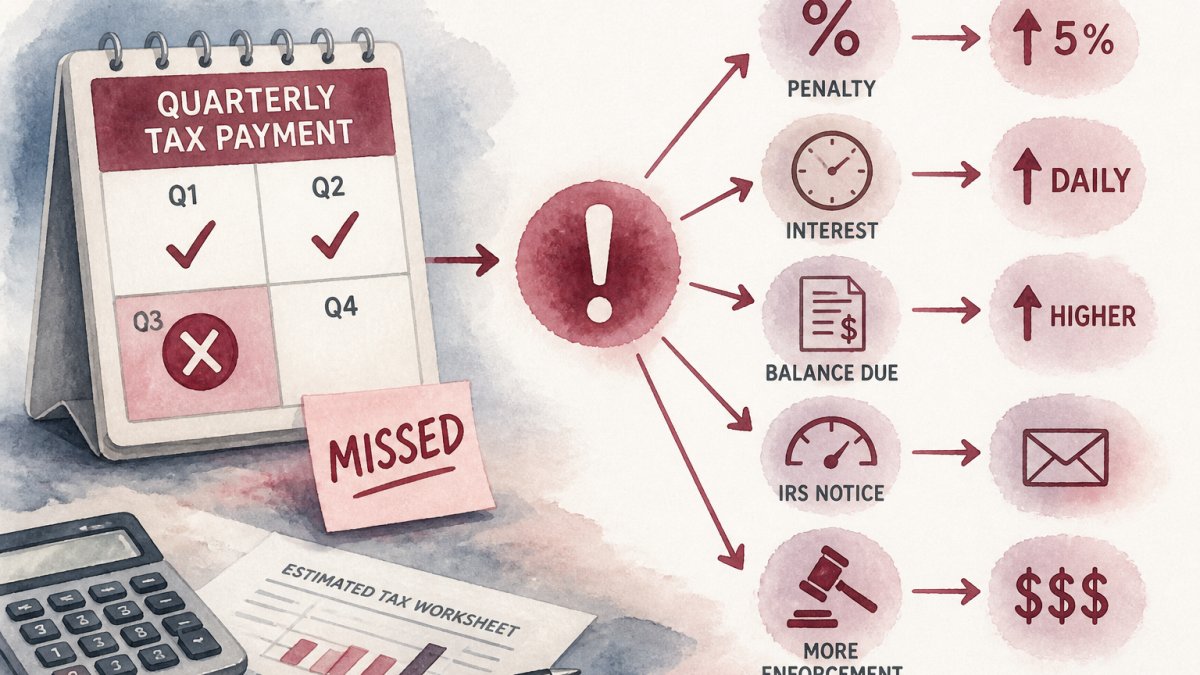
When you miss quarterly tax payment deadlines, it triggers an IRS underpayment penalty on taxes owed but not paid on time. That penalty compounds, so the longer you wait, the more you owe.
It applies to self-employed individuals, business owners, and anyone required to make estimated tax payments. At Paldino Company CPA, we help clients in New York and Westchester County fix these situations.
Estimated Tax Payment Due Dates and What You Owe
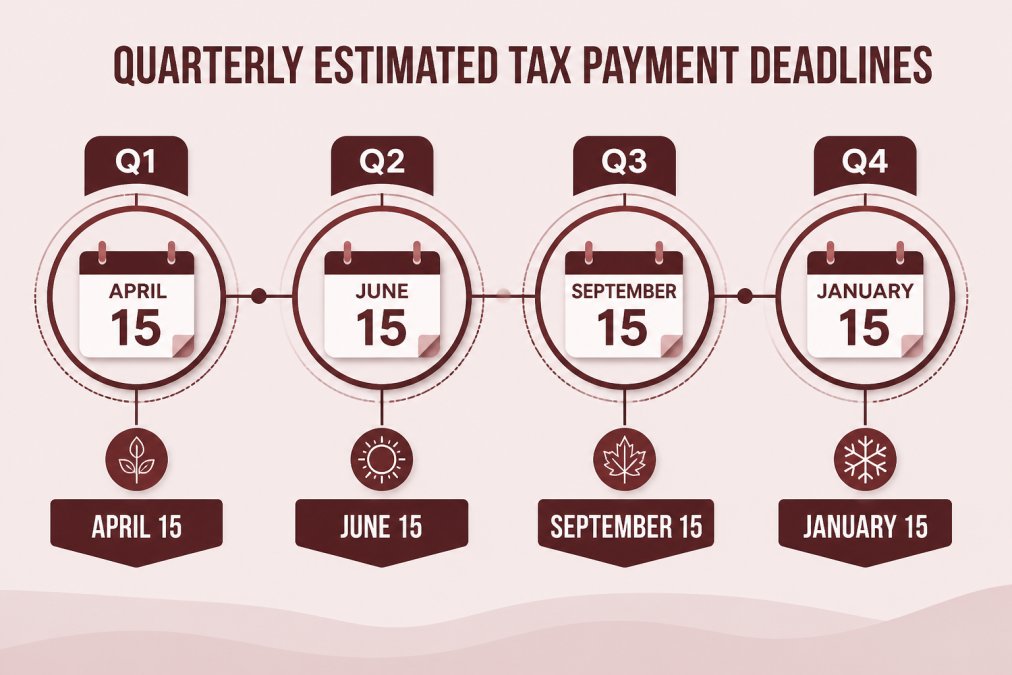
Quarterly estimated tax payments are due four times per year, and missing even one triggers penalties.
The due dates are:
- Q1 (Jan-Mar): April 15
- Q2 (Apr-Jun): June 15
- Q3 (Jul-Sep): September 15
- Q4 (Oct-Dec): January 15 (of the following year)
Your payment amount depends on expected annual income and tax liability. If income varies, recalculate each quarter based on actual earnings.
Missing a payment means you underpaid for that quarter. The IRS bases the penalty on how much you owed and how long, the longer it sits unpaid, the higher it grows.
How to Catch Up on Estimated Tax Payments
If you've already had to miss quarterly tax payment obligations, catching up stops the penalty from growing. The steps are time-sensitive.
Act immediately. Contact the IRS or file your return as soon as possible, waiting only makes the bill larger.
Pay the full amount owed: the missed tax payment, underpayment penalties, and interest on both.
File your tax return on time. Filing late adds penalties on top of the underpayment penalty.
Adjust future payments. Once caught up, recalculate remaining quarterly payments if income changed.
For business owners in New York and Westchester County who struggle with estimated tax planning, working with a tax professional prevents this entirely. We analyze your income patterns and set up a payment schedule that works for your business.
Missing a quarterly tax payment creates penalties and interest that grow with time. The solution is straightforward: pay what you owe as soon as possible, file your return, and adjust future payments. If you're unsure how much you should be paying or want to avoid this situation going forward, the IRS provides a worksheet for calculating estimated taxes. For personalized guidance tailored to your business situation, we're here to help. Schedule an appointment with Paldino Company CPA to get a clear plan for your quarterly tax obligations.
Frequently Asked Questions
What penalty do I face if I miss a quarterly estimated tax payment?
The IRS charges an estimated tax underpayment penalty based on the amount you underpaid and how long the underpayment lasted. The penalty rate is tied to current federal interest rates and is calculated from the due date of each missed payment until you pay it. The exact penalty depends on your specific situation, which is why consulting a tax professional helps you understand your exposure and options for relief.
Can I make a missed estimated tax payment late without penalty?
Late payments still incur the estimated tax underpayment penalty. However, the sooner you pay, the lower your total penalty will be, since the penalty accrues daily from the original due date. You should pay missed estimated tax payments as soon as possible. Some situations may qualify for penalty relief, but you must request it through the IRS and provide documentation of reasonable cause.
How do I calculate quarterly estimated taxes to avoid missing payments?
Start by estimating your total annual income, then subtract expected deductions and credits. Divide the result by four to find your quarterly payment amount. Self-employed individuals and business owners should account for self-employment tax. The IRS provides Form 1040-ES with worksheets to guide you. If your income varies significantly, you can use the annualized installment method instead. A tax professional can help ensure your calculation matches your actual situation and business structure.