 How-to
How to Reduce Capital Gains Tax: 2026 Guide
Last Updated: October 22, 2026
Quick Summary
To reduce capital gains tax as a New York resident, use loss harvesting to offset gains, donate appreciated securities to charity, and leverage home sale exclusions. New York taxes capital gains as ordinary income at rates from 4% to 10.9%, so strategic planning before year-end is essential.
- Loss harvesting lets you sell declined investments to offset profitable gains dollar-for-dollar
- Donating appreciated securities to qualified charities avoids capital gains tax on appreciation
- Homeowners can exclude up to $250,000 of gains when selling a primary residence if owned and lived in for two of the past five years
- New York does not recognize federal long-term capital gains rates, taxing all gains as ordinary income
- Wash-sale rules prohibit repurchasing substantially identical securities within 30 days of a loss sale
Table of Contents
- Understanding New York Capital Gains Tax Rates in 2026
- Use Loss Harvesting to Offset Capital Gains
- Use Charitable Giving and Home Sale Exclusions
- Frequently Asked Questions
Understanding New York Capital Gains Tax Rates in 2026
How to reduce capital gains tax is a question many New York residents ask when they realize their investment profits face significant tax liability. New York taxes capital gains as ordinary income rather than applying a separate lower rate based on holding period, so gains are taxed at the same rates as regular earnings, ranging from 4% to 10.9% depending on your income bracket, according to the Tax Foundation's 2026 New York Tax Rates & Rankings.
Holding an investment longer doesn't reduce your New York State tax burden the way it does federally. Beginning with tax year 2026, New York plans an additional 0.2-percentage-point rate reduction phased in over two years.
Use Loss Harvesting to Offset Capital Gains
Loss harvesting is one of the most effective strategies to reduce capital gains tax: sell declined investments to realize losses, then offset gains from profitable ones. The IRS allows dollar-for-dollar deduction against capital gains, and remaining losses can offset up to $3,000 of ordinary income per year.
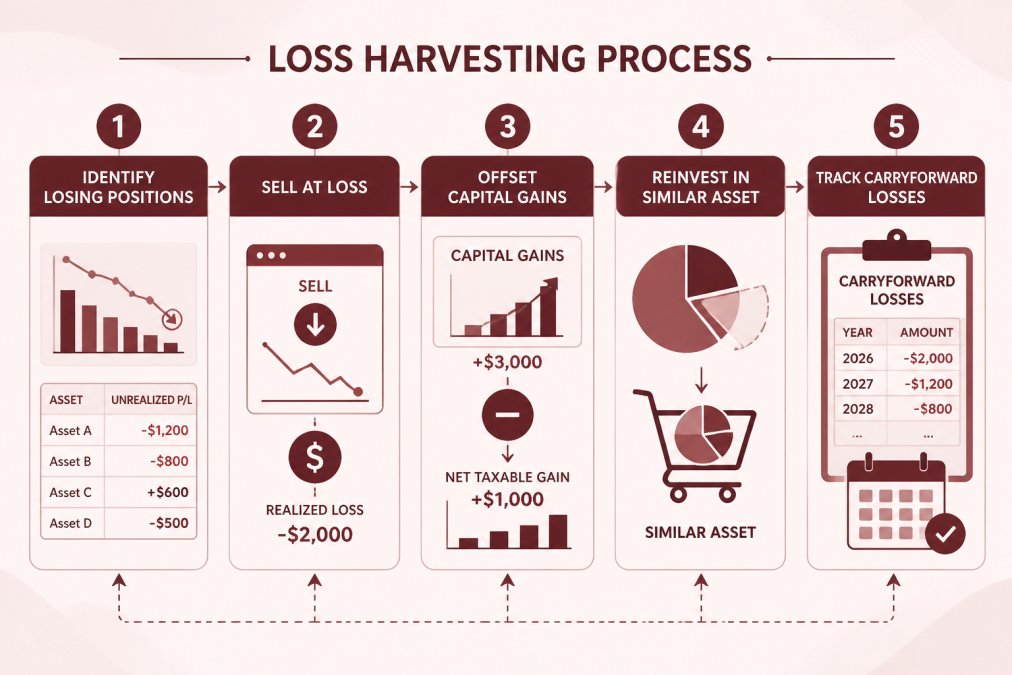
Review your portfolio in late fall, sell positions below your cost basis before year-end, then reinvest in a similar (but not substantially identical) security. The wash-sale rule disallows the loss if you buy the same or substantially identical security within 30 days before or after the sale, so track your reinvestment dates.
Use Charitable Giving and Home Sale Exclusions
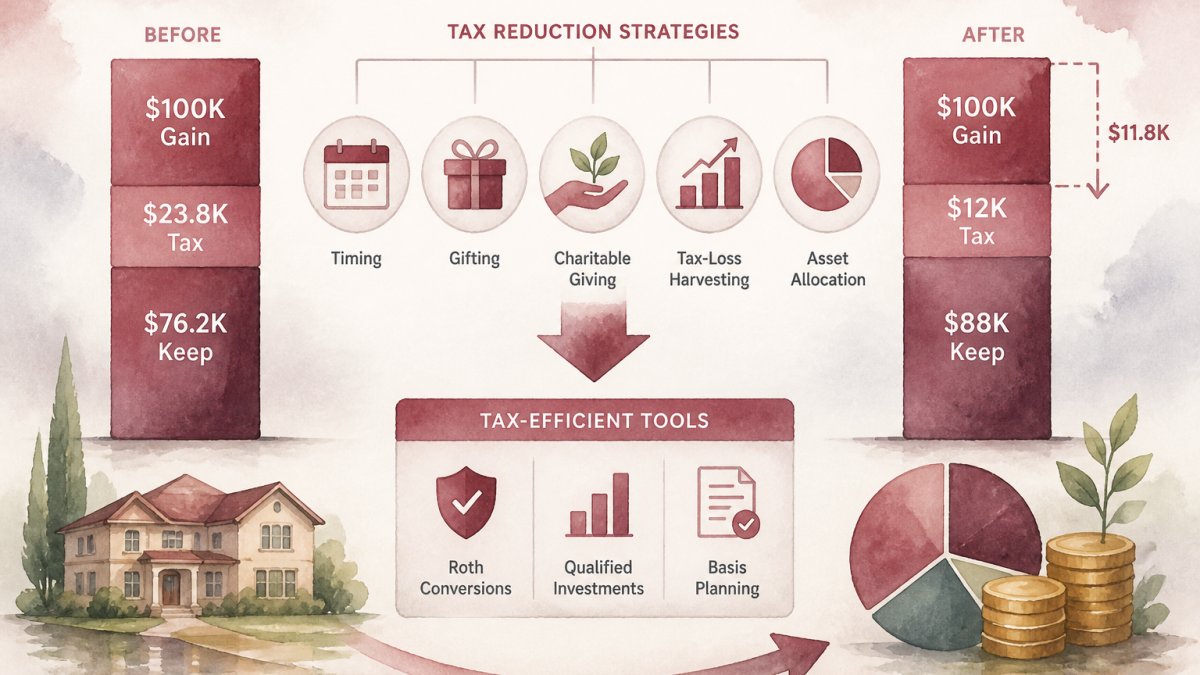
Charitable donations and home sale exclusions are two powerful tools to reduce capital gains tax. Donating appreciated securities directly to qualified charities lets you avoid capital gains tax entirely on those securities while claiming a deduction for their full fair market value.
For homeowners in Mamaroneck and across New York, the federal exclusion allows you to exclude up to $250,000 of capital gains ($500,000 if married filing jointly) when you sell your primary residence, provided you've owned and lived there for at least two of the past five years. If you intended to donate appreciated stock anyway, transfer the securities themselves rather than cash proceeds: you avoid the capital gains tax on the appreciation and the charity receives the full value.
Combining loss harvesting, charitable gifts of appreciated securities, and careful timing of home sales creates a comprehensive approach to reducing your capital gains tax burden. Working with a tax professional near you in Mamaroneck ensures you execute these strategies correctly under both federal and New York State rules.
Reducing capital gains tax requires understanding how New York treats your investment profits and taking deliberate action before year-end. At Paldino Company CPA, we help individuals and small business owners in Westchester County implement these strategies year-round. Schedule an Appointment to discuss your specific situation and build a plan tailored to your financial goals.
Frequently Asked Questions
How can I reduce capital gains tax in 2026?
You can reduce capital gains tax through loss harvesting (selling investments at a loss to offset gains), using the primary residence exclusion when selling a home, donating appreciated assets to charity, and timing the realization of gains across tax years. Tax-loss carryforwards from prior years can also reduce current-year gains. Consult a tax professional to determine which strategies fit your situation.
Does New York have a separate capital gains tax rate?
New York taxes capital gains as ordinary income rather than applying a separate, lower rate based on holding period. Your capital gains are subject to the state's graduated income tax rates, which range from 4% to 10.9%. This differs from federal treatment, where long-term capital gains may qualify for preferential rates. Understanding both state and federal rules is essential for effective tax planning.
Can charitable giving reduce capital gains taxes?
Yes. Donating appreciated securities or property directly to a qualified charity lets you avoid capital gains tax on the appreciation while claiming a charitable deduction. This strategy is especially valuable for assets with large unrealized gains. You receive a deduction for the full fair market value, and the charity receives the asset tax-free. Work with a tax advisor to ensure the donation qualifies and is properly documented.