 how-to
How to Switch Accountants Mid-Year: A Step-by-Step Guide
Table of Contents
- How to Switch Accountants Mid-Year: Key Steps
- Switching Accountants Checklist: What Not to Forget
- Letter to Change Accountants Template and Documents to Give a New Accountant
- Frequently Asked Questions
Last Updated: October 13, 2026
How to Switch Accountants Mid-Year: Key Steps
Switching accountants mid-year is doable with a clear process.
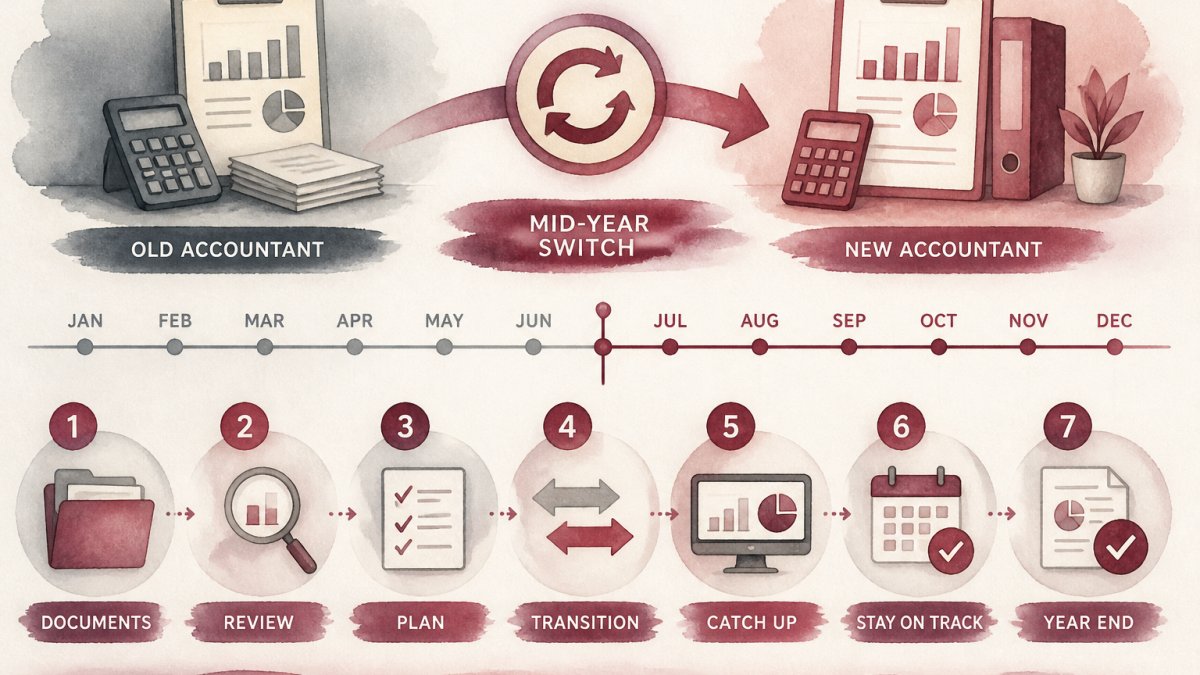
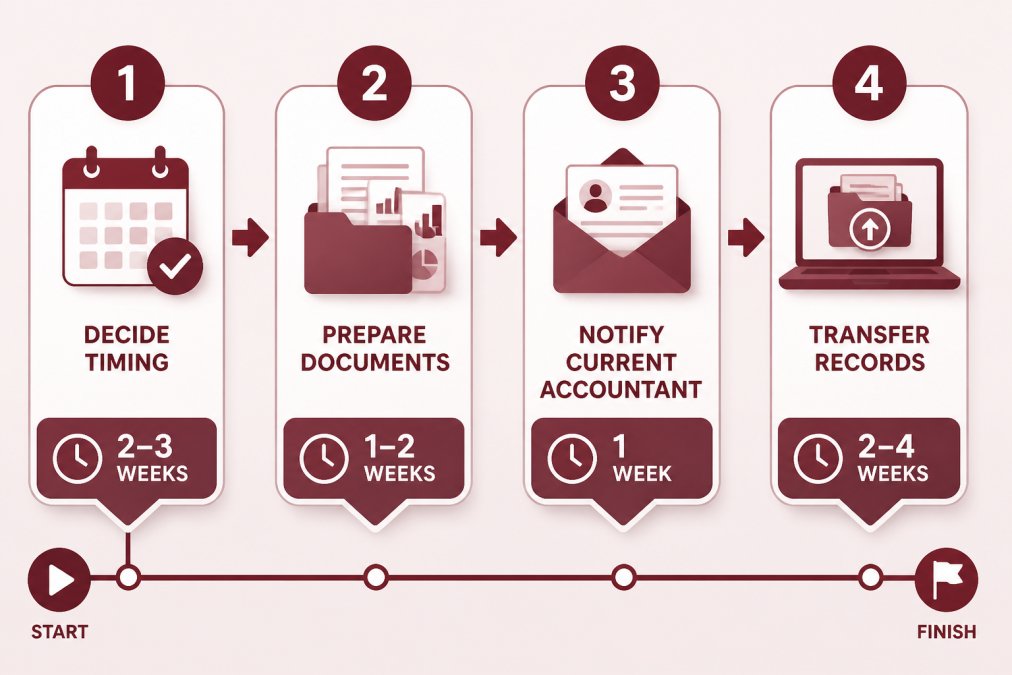
Time your switch for late spring or early summer so your new accountant understands your situation before tax season.
Gather your financial documents: prior year tax returns, current year income records, receipts and invoices, bank and credit card statements, and correspondence with your current accountant.
Notify your current accountant in writing, stating your last day and requesting a final summary and copies of all records.
Give your new accountant copies, not originals, and explain any ongoing issues. The transition typically takes two to four weeks once they have all materials.
Switching Accountants Checklist: What Not to Forget
A switching accountants checklist keeps you organized before, during, and after the transition.
Before You Switch:
- Confirm your new accountant's availability and request a written engagement letter
- Review your current accountant's final bill
- Gather all current-year financial records
- Note pending tax issues and deadlines
During the Switch:
- Send formal notice and request a complete file transfer in writing
- Verify your new accountant received all documents and your correct contact information
- Discuss any questions about prior year filings
After the Switch:
- Schedule a review meeting to discuss your financial goals
- Set up a document-sharing system and ask about year-round support
- Confirm deadlines for quarterly filings
Common mistakes include forgetting to request final documentation, failing to notify the IRS on Form 8821, or not confirming receipt of sensitive files.
Letter to Change Accountants Template and Documents to Give a New Accountant
A letter to change accountants formalizes the transition and protects both parties. Here's a template:
[Your Name/Business Name]
[Your Address]
[Date]
[Current Accountant Name]
[Firm Name]
[Address]
Dear [Accountant Name]:
I am writing to notify you that I will be transitioning my accounting services effective [Date, typically 30 days from letter date]. Please consider this my formal notice of termination of our engagement.
I request that you prepare a final accounting summary and transfer all records to my new accountant, [New Accountant Name], at [New Accountant Address], including tax returns, workpapers, client files, and correspondence.
Please confirm receipt of this letter and provide an estimated date for file transfer completion.
Thank you for your service.
Sincerely,
[Your Signature]
[Your Printed Name]
Documents to Give Your New Accountant:
- Prior three years of tax returns (personal or business)
- Current year income statements and P&L reports
- Bank and credit card statements for business accounts
- Invoices and receipts for major transactions
- Loan documents and payment schedules
- Investment statements and 1099 forms
- Correspondence from the IRS, state tax agencies, or your prior accountant
- Business formation documents
- Any prior audit reports or tax notices
Organize these by category and year to speed up your new accountant's review.
In Mamaroneck and throughout the region, many business owners delay switching accountants out of fear.
The right accountant becomes a partner in your financial success. Schedule an appointment with Paldino Company CPA to discuss how we help individuals and small business owners in Mamaroneck and Westchester County.
Frequently Asked Questions
Can you switch accountants in the middle of the year?
Yes, you can switch accountants mid-year without penalty. The best time is typically after your quarterly estimated tax deadline or before your next major filing deadline. Switching mid-year allows your new accountant time to understand your situation and provide better guidance for the remainder of the tax year. Plan the transition during a slower period if possible to minimize disruption to both your old and new accountant.
What documents should you request from your current accountant when switching?
Request all prior-year tax returns, current-year records to date, general ledger, balance sheet, income statement, bank statements, receipts, invoices, and any correspondence with tax authorities. Ask for copies of work papers, especially if there were adjustments or special items. Request documentation of any estimated tax payments made and any tax positions taken. Having complete records ensures your new accountant has full context and prevents gaps in your tax preparation.
How long does it take to switch accountants?
The transition typically takes 2 to 4 weeks, depending on the complexity of your situation and how quickly your current accountant responds. Simple individual returns may transfer in 1 to 2 weeks. Small business accounts with multiple entities or complex transactions may take 4 to 6 weeks. The timeline includes notifying your current accountant, gathering documents, your new accountant reviewing records, and resolving any questions. Starting the process early gives everyone adequate time and reduces year-end rush pressure.