 Ultimate guide
Annual Compliance Requirements for New York Businesses
Last Updated: October 25, 2026
Quick Summary
Annual compliance requirements for new york businesses include state and federal tax returns filed each year, while the Biennial Statement for LLCs and corporations is filed every two years with the Department of State. Missing a biennial statement cycle can drop your entity out of good standing.
- The Biennial Statement is filed every two years, not annually, for LLCs and corporations.
- The filing window opens in the anniversary month of formation.
- Missing a biennial statement cycle can drop the entity out of good standing.
- An extension extends the time to file, not the time to pay.
- Confirm federal and state due dates each year because they shift on weekends and holidays.
Table of Contents
- New York Business Compliance Checklist
- New York LLC Biennial Statement
- New York Small Business Tax Filing Checklist
- Frequently Asked Questions
New York Business Compliance Checklist
Annual compliance requirements for New York businesses are the recurring state filings, tax returns, and registrations that keep an entity in good standing, and the most misunderstood item is the biennial statement, filed every two years, not every year. At Paldino Company CPA in Mamaroneck, NY, we see this confusion constantly: the New York State Department of State business entity FAQs specify a Biennial Statement for domestic and foreign business corporations, contradicting the "annual report" language in search results.
| Filing | Who Files | Frequency | Where It Goes |
|---|---|---|---|
| Biennial Statement | LLCs and corporations | Every two years | NY Dept. of State |
| State tax return | Entities with NY tax obligations | Annually | NY Dept. of Taxation and Finance |
| Federal return | All entities | Annually | IRS |
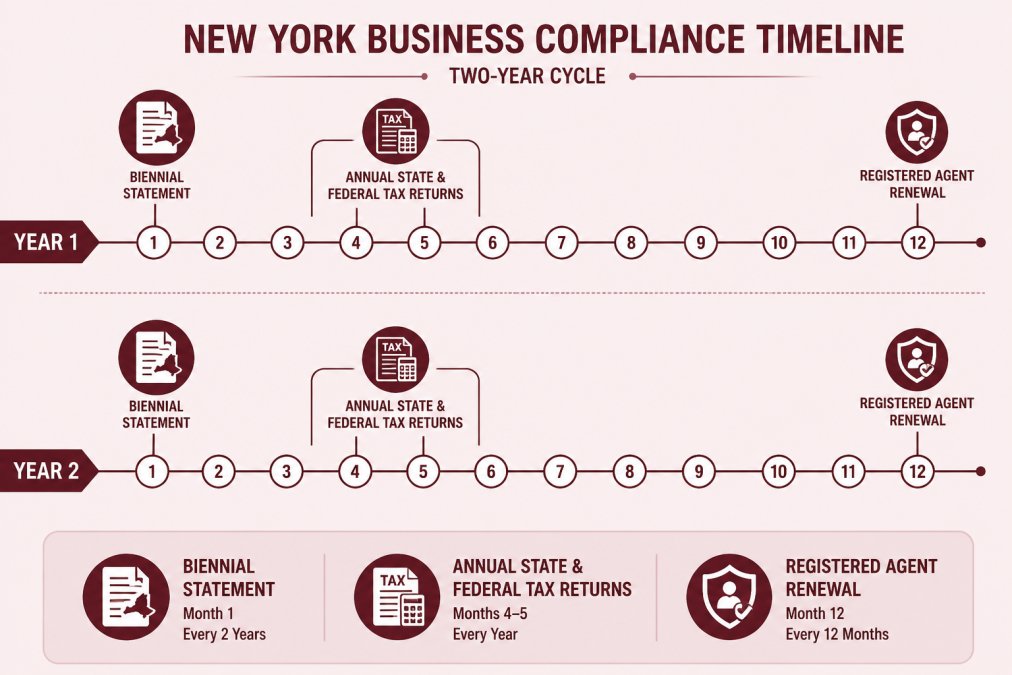
Skipping a biennial statement cycle can drop the entity out of good standing. Our tax compliance services help you stay current with state and federal filing requirements.
New York LLC Biennial Statement
An LLC files a Biennial Statement with the Department of State every two years to confirm its address and registered agent; missing it can lead to dissolution. The window opens in the anniversary month of formation, and the state publishes the exact due date on its site.
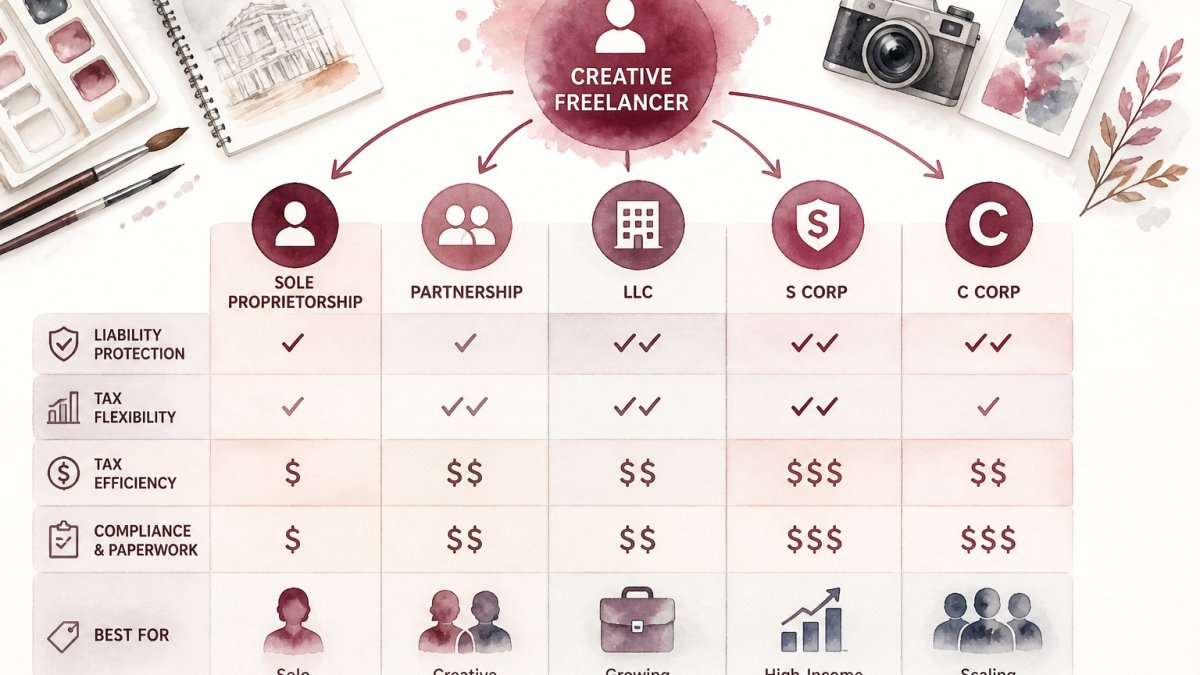
Unsure which entity type you registered? Our small business start-up and entity selection guidance covers how formation choices affect filing obligations.
New York Small Business Tax Filing Checklist
Small business tax filing in New York runs on two tracks: federal and state returns, each with its own deadlines and forms.
- Confirm entity type and tax classification
- Reconcile books and gather income, expense, and asset records
- File federal and New York State returns by their due dates
- Retain copies of every filing
The IRS publishes current due dates and extension rules on IRS filing and payment deadlines, and the New York State Department of Taxation and Finance lists state deadlines and forms on its own site. Confirm both each year, because dates shift when they fall on a weekend or holiday.
See what a small business tax preparation service includes; if a filing was missed, our Mamaroneck, New York page explains how we help clients work back into compliance.
An extension extends the time to file, not the time to pay, assuming otherwise means interest and penalties.
Frequently Asked Questions
Do New York LLCs have to file an annual report?
No. New York LLCs file a Biennial Statement every two years with the Department of State, not an annual report. Business corporations follow the same two-year cycle. This is a common point of confusion because many search summaries describe New York filings as annual. Missing the biennial deadline can lead to a late fee and, eventually, dissolution. Mark the filing month on your calendar and confirm your current address on file with the state.
What tax returns does a small business in New York need to file?
The New York small business tax filing checklist depends on your entity type. Sole proprietors and single-member LLCs report on personal returns, partnerships and S-corps file entity returns with K-1s, and C-corps file corporate returns. Most businesses also handle sales tax filings if they sell taxable goods or services. A CPA can confirm which returns apply to your structure and filing frequency.
What happens if a New York business misses a required filing?
Consequences range from late fees and interest to loss of good standing, which can block loans, contracts, and renewals. Repeatedly missing the biennial statement can result in the Department of State dissolving the entity. The fix is usually to file the overdue item, pay any penalty, and request reinstatement if needed. Acting quickly keeps the problem small, so review your compliance calendar quarterly rather than once a year.
Compliance in New York rewards the owner who keeps a calendar instead of a shoebox. If your filings have drifted, or you want a team that stays with you through the year rather than appearing once in April, Paldino Company CPA offers year-round tax help, virtual CFO services, and entity guidance for individuals and small businesses across Mamaroneck and Westchester County. Get started with Paldino Company CPA and put your compliance calendar on solid footing.