 ultimate-guide
Best Entity Structure for Creative Freelancers
Table of Contents
- Entity Structure Options for Creative Freelancers
- New York Business Registration Requirements
- Decision Framework: Which Structure Fits Your Situation
- Frequently Asked Questions
Last Updated: September 24, 2026
Entity Structure Options for Creative Freelancers
Choosing the best entity structure for creative freelancers affects your taxes, liability protection, and annual compliance burden. Your choice determines personal liability exposure, tax obligations, and reinvestment efficiency.
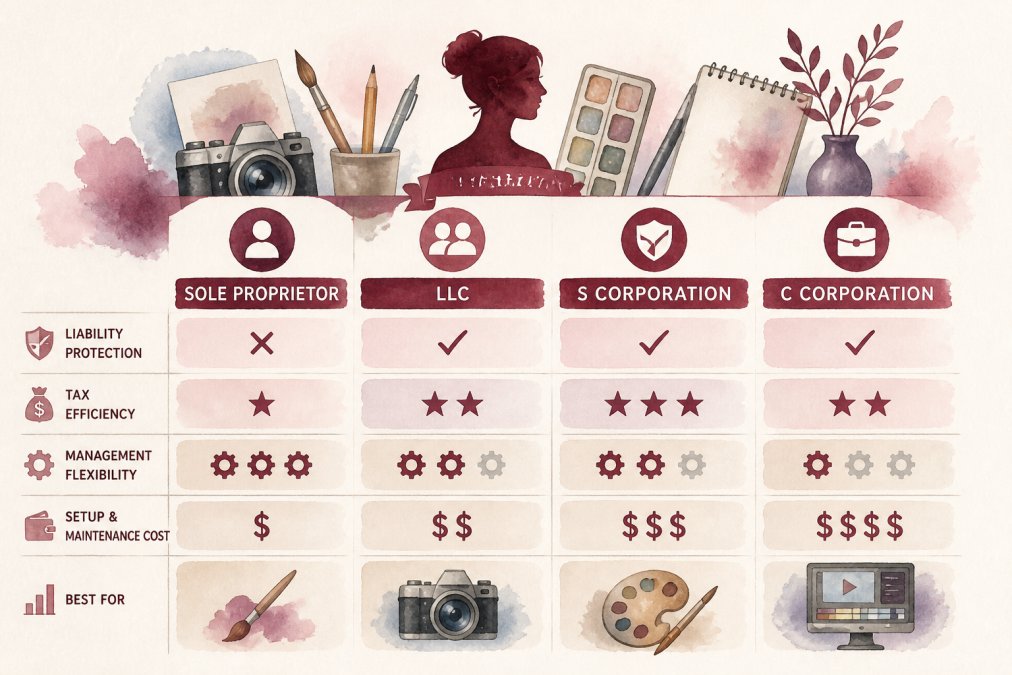
Most freelancers start as sole proprietors (filing Schedule C, paying self-employment tax). An LLC or S Corp can offer benefits like liability protection and a professional image, though both require annual compliance and fees.
The right choice depends on income level, liability concerns, and tolerance for complexity. Paldino Company CPA helps creative freelancers in Mamaroneck and throughout New York evaluate these trade-offs.
New York Business Registration Requirements
New York LLCs require filing Articles of Organization with the Department of State (takes a few weeks, involves a state fee), maintaining an operating agreement, and filing annual reports.
New York requires a registered agent to receive legal documents; many freelancers use a service instead of listing their home address. You'll also need a free EIN from the IRS, obtainable online.
S Corps require forming an LLC or corporation first, then electing S Corp status via Form 2553. You must pay yourself a reasonable W-2 salary with the remainder as distributions, significantly increasing compliance burden, only worthwhile above a certain income threshold.
Decision Framework: Which Structure Fits Your Situation
Sole Proprietorship suits those earning under $40K with minimal liability risk and zero complexity tolerance. You report on Schedule C with no state filings, but face personal liability and full self-employment tax.
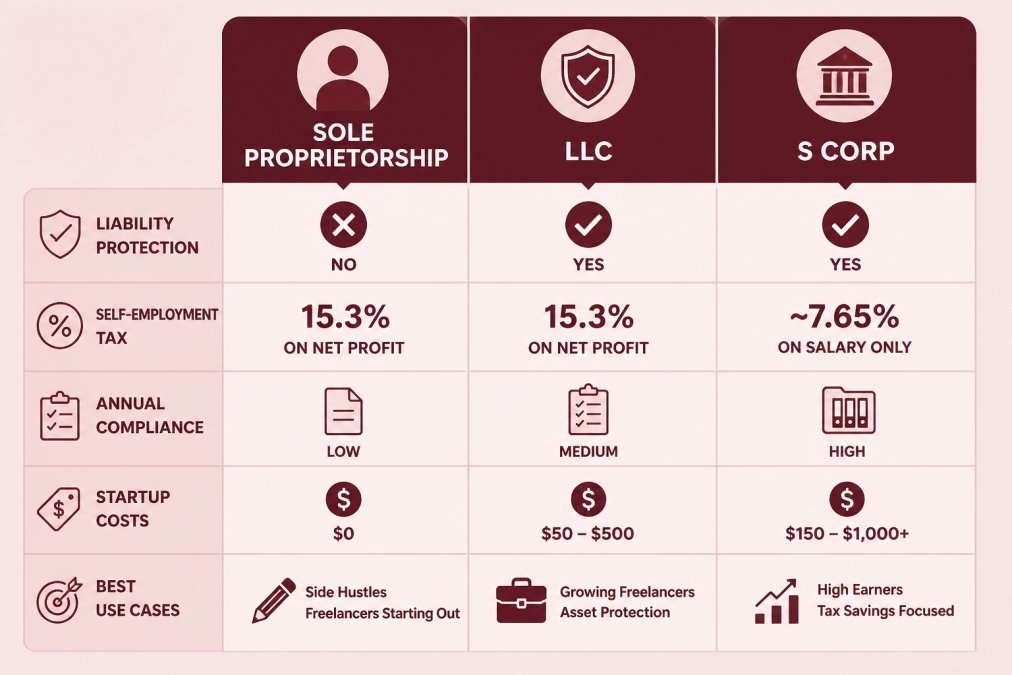
LLC is most common for freelancers earning $40K-$150K. It provides liability protection, flexible tax treatment, and costs $25-$200 to form in New York, but requires annual compliance and filing fees.
S Corp makes sense at $150K+ income: pay yourself a W-2 salary and take distributions to avoid self-employment tax on the latter. Requires payroll service, quarterly filings, and accounting support.
| Structure | Best For | Liability Protection | Self-Employment Tax | Annual Compliance |
|---|---|---|---|---|
| Sole Proprietorship | Under $40K income, minimal risk | None | Full net income | None |
| LLC | $40K-$150K income, liability concern | Yes | Full net income | Annual report |
| S Corp | $150K+ income, significant tax savings | Yes | Salary + distributions | Payroll + quarterly filings |
The decision isn't permanent, many freelancers upgrade from sole proprietor to LLC to S Corp as income grows. Evaluate your situation now to avoid overpaying taxes or carrying unnecessary risk.
Get professional guidance early to avoid locking into the wrong structure. Paldino Company CPA specializes in helping creative freelancers in New York and Westchester County evaluate entity options, optimize taxes, and stay compliant year-round. Schedule an appointment to discuss your situation.
Frequently Asked Questions
Is an LLC better than a sole proprietorship for creative freelancers?
An LLC offers personal liability protection that a sole proprietorship does not, separating your personal assets from business debts. However, an LLC requires annual compliance filings and state fees, while a sole proprietorship has minimal overhead. If you have significant client work, intellectual property, or want to scale, an LLC provides valuable protection. For low-risk, early-stage work, a sole proprietorship may be sufficient initially. The best entity structure for creative freelancers depends on your income level, risk tolerance, and growth plans.
Do I need to register my freelance business in New York State?
If you operate as a sole proprietor under your own name, formal registration is not required in New York. However, if you use a business name different from your legal name, you must file a Doing Business As (DBA) certificate. If you form an LLC, you must file Articles of Organization with the New York Department of State. Registering protects your business name and establishes your legal entity. Consult a professional to confirm your specific registration needs based on your chosen structure.
How does an S Corp election impact freelance tax liability?
Electing S Corp status allows you to pay yourself a reasonable salary and take remaining profits as distributions. This structure can be considered at higher income levels. However, S Corps require payroll processing, quarterly estimated tax payments, and additional tax filings, increasing complexity and cost. The tax savings must outweigh the administrative burden. An S corp tax election for freelancers makes sense at higher income levels; consult a tax professional to calculate your specific benefit.