 Ultimate guide
Coordinated Tax and Investment Planning Strategies
Last Updated: November 19, 2026
Quick Summary
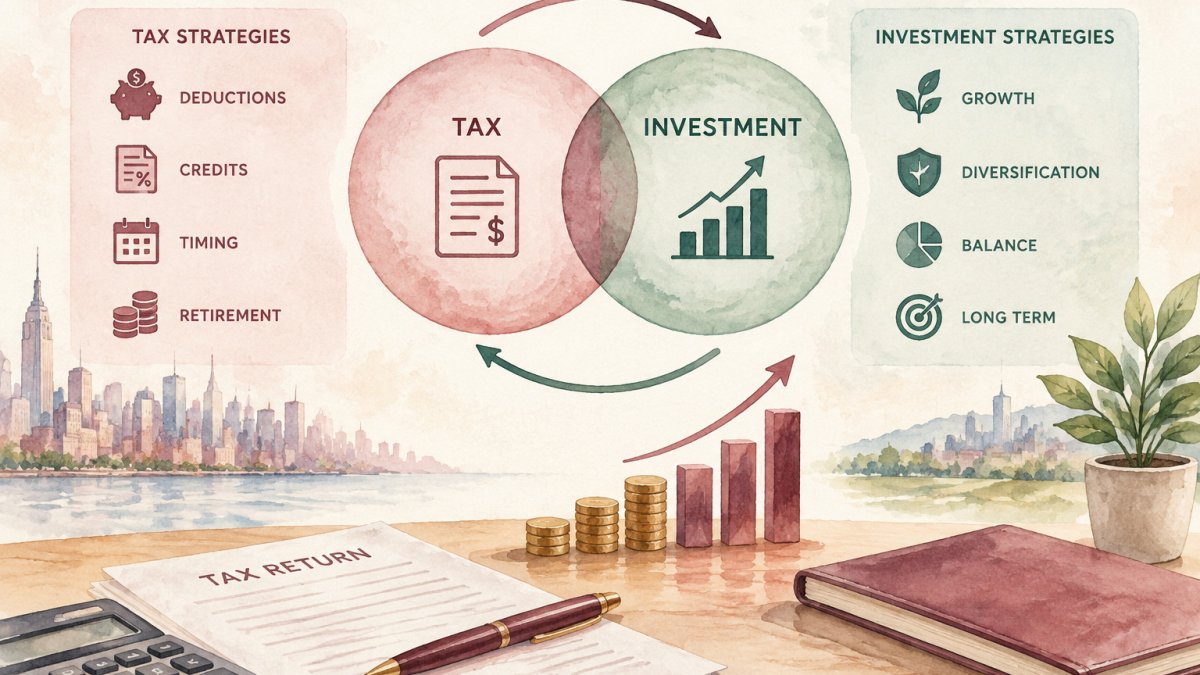
Tax and investment planning means making each portfolio decision with its tax effect in view, rather than treating tax returns and investments as separate jobs. Coordinated planning asks what a move does to both the portfolio and the tax picture before acting. Only 19% of surveyed high-net-worth investors reported integrating tax, legal, and investment planning.
- Place tax-inefficient holdings like bonds and high-turnover funds in tax-deferred accounts.
- Broad index funds with low distributions often suit taxable brokerage accounts.
- The wash sale rule disallows a loss if you buy a substantially identical security within 30 days before or after the sale.
- Consider rebalancing with new contributions or harvested losses before selling appreciated positions.
- Review a December trade against your tax projection before executing it.
Table of Contents
- Why Tax and Investment Planning Should Work Together
- Asset Location Strategy: Placing Investments in the Right Accounts
- Tax-Loss Harvesting and Tax-Aware Portfolio Rebalancing
- Frequently Asked Questions
Why Tax and Investment Planning Should Work Together
Most investors treat their tax returns and their portfolios as two separate jobs. The tax preparer files once a year, and the investment manager picks funds. The coordination between them is often thin, which means decisions made in one area quietly undermine the other. Research from Creative Planning and WSJ Intelligence wealth planning survey found that only 19% of surveyed high-net-worth investors reported having integrated tax, legal, and investment planning. Investors ready to coordinate their returns with their portfolio can explore tax preparation and planning services from a Mamaroneck, New York CPA firm.
This gap can show up in practice: a sale made for investment reasons can trigger an unbudgeted tax bill, or a rebalance can realize gains in the wrong year. Coordinated planning asks one question before each move: what does this do to both the portfolio and the tax picture? Investors nearing retirement can review tax and financial planning strategies written for Boomers and Gen Xers that address this stage directly.
Asset Location Strategy: Placing Investments in the Right Accounts
Asset location means deciding which holdings sit in taxable brokerage accounts, which sit in tax-deferred accounts such as traditional IRAs and 401(k)s, and which sit in tax-free accounts such as Roth IRAs. The same portfolio can produce very different after-tax returns depending on that placement.
Generally, tax-inefficient holdings such as bonds and high-turnover funds fit better in tax-advantaged accounts, while broad index funds with low distributions often suit taxable accounts. Check the IRS guidance on individual retirement arrangements for current contribution and account rules before making changes.
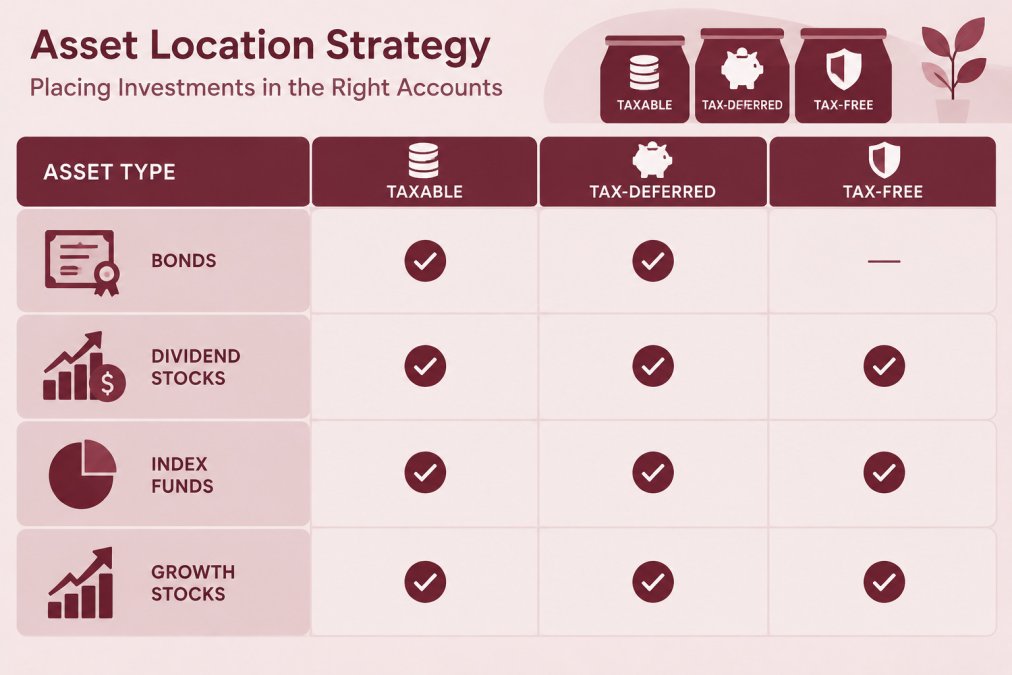
The article distinguishes three account types, each suited to different holdings.
| Account type | Examples named | Typical holdings |
|---|---|---|
| Taxable brokerage | Brokerage account | Broad index funds with low distributions |
| Tax-deferred | Traditional IRA, 401(k) | Bonds and high-turnover funds |
| Tax-free | Roth IRA | Holdings where tax-free growth helps |
Tax-Loss Harvesting and Tax-Aware Portfolio Rebalancing
Tax-loss harvesting means selling investments at a loss to offset realized gains elsewhere. Readers who want to see how tax-aware long-short investing is changing this approach can find that explained in a dedicated article. The timing matters. The IRS wash sale rule disallows a loss if you buy a substantially identical security within 30 days before or after the sale, so review those rules before repurchasing. The year-end stock strategies guide covers wash sale rules and loss timing in more detail. IRS Publication 550 on investment income and expenses covers how capital gains and losses are reported.
Rebalancing carries the same tradeoff: selling appreciated positions can create a tax bill, so consider rebalancing with new contributions or harvested losses first. Coordinated planning reviews these decisions alongside your tax projection, so a December trade can reflect both your portfolio goals and your tax position.
Frequently Asked Questions
How do you coordinate tax planning with an investment portfolio?
Coordination means making tax and investment decisions together rather than separately. Before buying or selling, review how the trade affects capital gains, your marginal tax rate and your overall tax liability. Place investments in the accounts where they are taxed most favorably, time realizations with your income in mind, and rebalance using tax-aware methods. Working with a CPA who reviews both sides of the plan each year helps keep these decisions aligned.
What is tax-efficient investing?
Tax-efficient investing aims to keep more of your returns after taxes. It involves choosing investments that generate fewer taxable distributions, holding long-term assets to benefit from long-term capital gains treatment, and using tax-advantaged accounts appropriately. The goal is not to avoid tax entirely but to manage when and how income and gains are recognized so that after-tax returns improve over time.
How often should you review your tax and investment plans?
Most households benefit from a review at least once a year, ideally before year-end when there is still time to realize losses, make charitable gifts or adjust retirement contributions. Major life events such as a job change, home sale, inheritance or business sale also warrant a review. Coordinating these reviews with your tax preparer keeps the investment side and the tax side current.