 ultimate-guide
New York Business Tax Filing Requirements 2026 Guide
Table of Contents
- New York Business Tax Filing Requirements 2026: Deadlines, Forms, and What to File
- New York Sales Tax Nexus Rules for 2026
- Estimated Tax Payments for NY Businesses and Small Business Bookkeeping Services in Westchester County
- Frequently Asked Questions
Last Updated: September 27, 2026
New York Business Tax Filing Requirements 2026: Deadlines, Forms, and What to File
New York business tax filing requirements 2026 center on three obligations: sales tax returns, estimated income tax payments, and the annual filing that reconciles them. This guide from Paldino Company CPA covers each deadline and form for Mamaroneck business owners.
New York business tax filing means reporting and remitting sales tax collected, then settling income tax through quarterly estimates and an annual return. The New York State Department of Taxation and Finance publishes the authoritative schedule and forms.
Sales tax filing frequency depends on volume: higher-volume filers file quarterly, smaller operations often annually. Missing a date triggers compounding penalties and interest.
| Filing Type | Typical Frequency | Form | Who Files |
|---|---|---|---|
| Sales tax return | Quarterly | ST-100 | Businesses collecting sales tax |
| Sales tax return | Annual | ST-101 | Lower-volume sellers |
| Estimated income tax | Quarterly | CT-400 / IT-2105 | Corporations and pass-throughs |
| Annual reconciliation | Yearly | CT-3 / IT-201 | All taxable entities |
New York Sales Tax Nexus Rules for 2026
New York sales tax nexus rules determine whether an out-of-state seller must register and collect. Physical presence, an office, inventory, or staff, creates nexus immediately, and economic activity can trigger it once a seller crosses the state's receipts and transaction thresholds.
Once nexus exists, the seller registers, collects tax at the applicable local rate, and files on the schedule the state assigns. Westchester County rates differ from New York City rates, so Mamaroneck businesses must apply the correct local rate at the point of sale. New York State Department of Taxation and Finance registration guidance
Estimated Tax Payments for NY Businesses and Small Business Bookkeeping Services in Westchester County
Estimated tax payments for NY businesses are quarterly prepayments toward the year's income tax liability. Corporations generally file Form CT-400; pass-through entities and individuals use Form IT-2105. Underpayment triggers interest, so align estimates with actual profit.
This is where reliable small business bookkeeping services in Westchester County earn their keep. Clean, reconciled books make quarterly estimates accurate instead of guesswork and shorten the year-end scramble. At Paldino Company CPA, organized records mean faster filing and fewer surprises, the real value of bookkeeping near me in Mamaroneck is numbers you can trust every quarter.
Frequently Asked Questions
What are the key business tax deadlines for New York State in 2026?
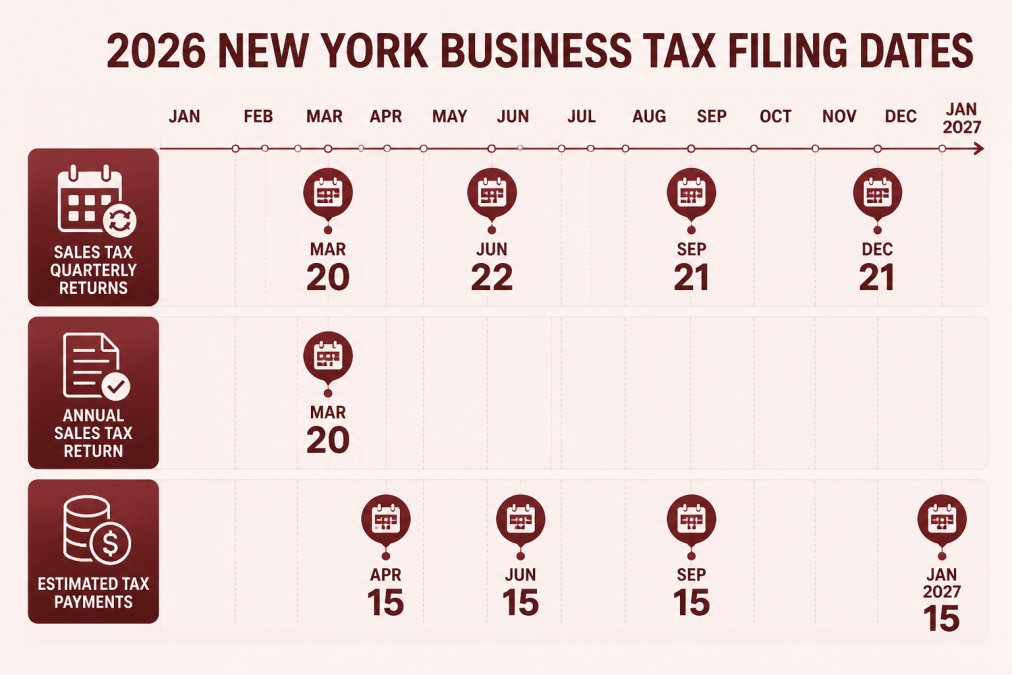
Quarterly sales tax returns are due March 20, June 22, September 21, and December 21. The annual sales tax return is due March 20. Estimated tax payments are due April 15, June 15, September 15, and January 15, 2027. Corporate and personal income tax returns follow federal deadlines. Check the New York State Department of Taxation and Finance website for exact dates and any changes.
How does nexus affect my New York sales tax filing obligations?
Nexus means you have a sufficient connection to New York, such as a physical presence or economic activity exceeding the state's threshold. If you have nexus, you must collect and remit New York sales tax. The economic nexus threshold is set by the state; check the New York State Department of Taxation and Finance for the current figure. Register with the state once you establish nexus.
What records should Westchester County businesses keep for 2026 tax filings?
Keep income records, expense receipts, bank statements, sales tax records, and asset purchase documents. Good records support accurate filings and deductions. If you use small business bookkeeping services in Westchester County, they can help organize these records. The New York State Department of Taxation and Finance recommends retaining records for at least three years, but check their guidelines for specific retention periods.
New York's filing calendar does not pause for busy seasons, and a single missed date can cost more than the tax itself. Paldino Company CPA offers year-round tax help, virtual CFO services, and bookkeeping tailored to Mamaroneck and Westchester County businesses, so your filings stay current and your estimates stay accurate. Schedule an Appointment with Paldino Company CPA and get financial clarity that lasts all year.